Banks Could Start Holding XRP Due To This Simple Change
Banks have mostly stayed on the sidelines when it comes to holding XRP directly, even as interest in digital assets continues to increase. That hesitation has not been due to a lack of utility or demand but to strict reg...
Archive context
Older archive item. Useful for background and entity history, but not a fresh market-moving signal.

Banks have mostly stayed on the sidelines when it comes to holding XRP directly, even as interest in digital assets continues to increase. That hesitation has not been due to a lack of utility or demand but to strict regulatory capital rules that made holding XRP economically impractical for regulated institutions.
However, a small adjustment in how XRP is treated under global banking rules could remove that barrier and change how banks interact with the cryptocurrency.
Why Banks Can’t Hold XRPThe main obstacle preventing banks from holding XRP has been its treatment under the global banking framework known as Basel III. Basel III is an international regulatory framework developed after the 2008 financial crisis that introduces higher quality and quantity of capital requirements in the international banking sector.
Right now, XRP currently falls into the Type 2 crypto exposure under Basel III, which is set up with rules for assets that pose higher risks. Under these rules, most cryptocurrencies, including XRP, fall into a high-risk category that carries a punitive capital requirement. Banks are required to apply a 1,250% risk weight to such assets, implying they must set aside far more capital than the value of the XRP itself.
This means that under the Basel III framework, for every $1 of XRP exposure, a bank must hold $12.50 in capital. This dynamic was recently explained by a crypto commentator with the name Stern Drew on the social media platform X.
In a post on X, Drew explained that this capital inefficiency alone accounts for years of institutional hesitation. The issue has not been demand nor technology, but the regulatory capital treatment that made holding XRP irrational from a balance sheet perspective.
The Regulatory Inflection PointThe conversation around XRP’s regulatory status is becoming increasingly important to its long-term outlook. Interestingly, Drew’s analysis goes further by pointing to what he describes as an inflection point that markets may be overlooking. Now that legal and regulatory clarity surrounding cryptocurrencies is improving, XRP could be reclassified into a lower-risk category under Basel III.
The endgame is that XRP is on a clear path to becoming a Tier-1 digital asset for global institutions, which is mostly for tokenized traditional assets and stablecoins with strong mechanisms. If that reclassification occurs, the economics will change immediately. XRP would become acceptable for direct balance sheet exposure, allowing banks to custody, deploy, and settle using the asset without the need of excessive capital.
This is not a discussion about short-term price movements but about capital mechanics that determine whether large pools of institutional money can participate in holding XRP at all. In this case, liquidity provisioning of XRP by banks would change from off-balance-sheet usage to direct institutional ownership.
Why this matters
This altcoin story adds another data point to the current market tape and is useful when read alongside nearby source coverage.
Original source
Read on NewsBTCRelated market context
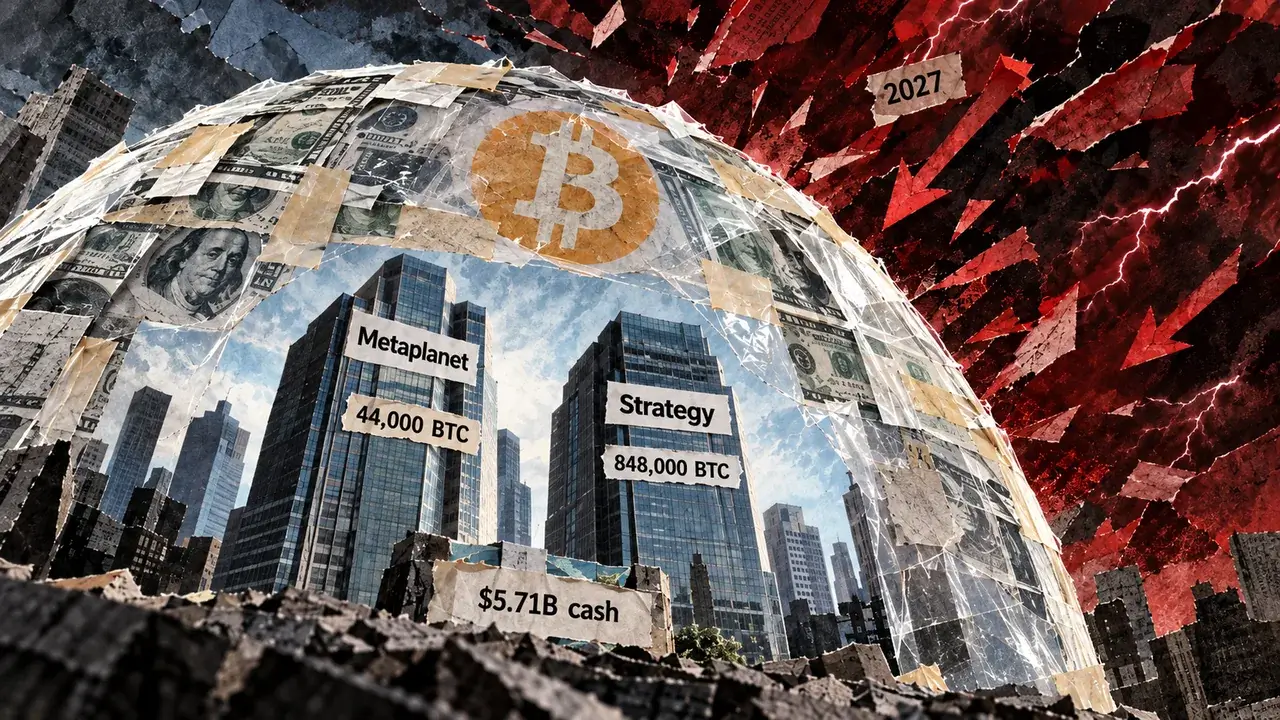
Bitcoin companies are learning that holding forever takes cash
Metaplanet sold 10,000 BTC and bought back 11,000 at a higher average price to show it was willing to sell its Bitcoin. The Japane...
Brazil’s BRL 22T CSD BR Moves Fund Records to XRP Ledger in Live Tokenization Push
Key Takeaways: CSD BR is leveraging the XRP Ledger to reflect real-time fund holdings. Over BRL 22 trillion in registered assets i...

What Is Crypto Spot Trading?
For example, a token can be up 70% and still be a terrible trade if you have no idea when to take profits. Likewise, a 30% dip can...

Being right about Bitcoin won’t save your 3x leveraged ETF position
Bitcoin's next recovery could vindicate your investment thesis but leave your leveraged fund deep in the red, because the fund's d...

Stealing $1.5B in crypto is easy, cashing out is the trap
North Korean hackers stole around $1.5 billion from Bybit in February 2025. While the hack itself has been widely covered and anal...

IMF Flags $300T Tokenization Gap, Warns 24/7 Markets Could Amplify Market Risks
Key Takeaways: About $300 billion – $350 billion are traded in tokenized repos every day, which remains significantly smaller than...