SEC Rejects DeFi Development Corp’s $1B Solana Bid Over S-3 Filing Eligibility
DeFi Development Corp has withdrawn its $1 billion registration filing with the U.S. Securities and Exchange Commission (SEC) after the regulator found the company ineligible to use the streamlined S-3 form. The setback...
Archive context
Older archive item. Useful for background and entity history, but not a fresh market-moving signal.
DeFi Development Corp has withdrawn its $1 billion registration filing with the U.S. Securities and Exchange Commission (SEC) after the regulator found the company ineligible to use the streamlined S-3 form.
The setback stems from a missing internal controls report in the company’s most recent Form 10-K.
The company, which is listed on Nasdaq and formerly operated under the name Janover, had filed the S-3 registration on April 25. The aim was to raise capital for general corporate purposes, including purchasing more Solana (SOL) tokens.
But the SEC found that the filing was ineligible because DeFi Development Corp failed to include a management report on internal controls over financial reporting in its most recent Form 10-K.
DeFi Development Corp Cites Investor Protection in Withdrawing SEC FilingIn a notice submitted to the SEC this week, the company requested to withdraw the registration under Rule 477 of the Securities Act, stating that “no securities have been issued or sold under the Registration Statement.”
News: @defidevcorp has withdrawn its $1B shelf offering following SEC comments about a missing internal controls report in its Form 10-K. Part of the offering was intended to support its Solana treasury strategy. The company plans to refile in the future. pic.twitter.com/GSBTNFFicj
— SolanaFloor (@SolanaFloor) June 11, 2025It also emphasized that the filing had not been declared effective by the Commission.
DeFi Development Corp said the decision to withdraw aligns with “the public interest and the protection of investors.” The firm plans to refile a resale registration statement in the future once it addresses the compliance issue.
The company acknowledged that the fees paid to the SEC for the registration would not be refunded but requested that they be credited toward a future filing.
Despite the setback, DeFi Development Corp is not walking away from its plans. It said it plans to file a resale registration statement in the future.
The firm had originally disclosed that some of the funds raised could go toward acquiring more Solana tokens, while also warning that price volatility might affect their value if converted back into cash.
The company said that the unused registration fees from the filing will be credited toward future filings under SEC Rule 457(p). However, it acknowledged that no refunds would be issued.
“The Company understands that the Commission has determined that [it] does not meet the eligibility requirements for the use of Form S-3 at this time,” the filing stated, citing the missing internal controls report as the reason for ineligibility.
While no timeline has been provided for the updated filing, the firm made clear its intention to pursue the offering again in compliance with SEC standards.
For now, the Solana investment plan is on hold, pending the resolution of the regulatory issue.
DeFi Development Corp Raises $42M for Solana Strategy in AprilDeFi Development Corp had aimed to use the proposed $1 billion S-3 filing to build a significant Solana treasury, mirroring strategies like MicroStrategy’s Bitcoin accumulation.
The plan centered on acquiring SOL tokens with the intention of generating returns through staking rewards, returns that would only materialize if Solana’s price appreciated over time.
The company made its position clear in the filing, stating that the raised capital would be directed toward Solana purchases and staking yield.
While the SEC’s rejection leaves the future of that plan uncertain, DeFi Development has already made moves in the Solana ecosystem.
As disclosed in an April 7 announcement, the firm raised $42 million via a private offering of convertible notes and warrants tied to its Solana strategy.
The notes carry a 2.5% annual interest rate, maturing in 2030, with conversion terms dependent on reaching a $100 million market cap.
The move follows a leadership shift in April 2025, following the acquisition of over 728,000 shares by former Kraken executives. Joseph Onorati, Kraken’s ex-chief strategy officer, now leads the firm.
Under the new direction, DeFi Development adopted Solana as a reserve asset, echoing the playbook of Bitcoin-heavy treasuries, but targeting an asset they see as earlier in its adoption cycle.
The post SEC Rejects DeFi Development Corp’s $1B Solana Bid Over S-3 Filing Eligibility appeared first on Cryptonews.
Why this matters
This altcoin story adds another data point to the current market tape and is useful when read alongside nearby source coverage.
Original source
Read on CryptonewsRelated market context
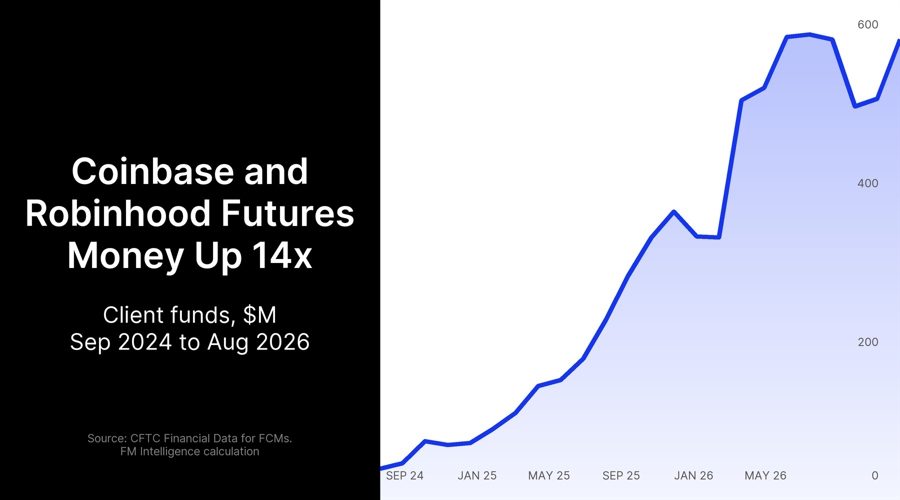
Coinbase and Robinhood Futures Arms Now Hold More Client Money Than the US Retail Forex Pool
The futures brokers of Coinbase and Robinhood held $581.4 million of segregated client money at the end of August. That is more th...

Evernorth XRP Treasury Merger Brings 473 Million XRP to Nasdaq as XRPN Debuts October 12
The transaction gives public-market investors another route to gain exposure to XRP through a company that actively manages its di...
Tokenized stocks can carry the same rights without the same trading protections
Tokenized stocks eligible for the SEC’s September exemption must carry equivalent shareholder rights, yet their trading venues can...
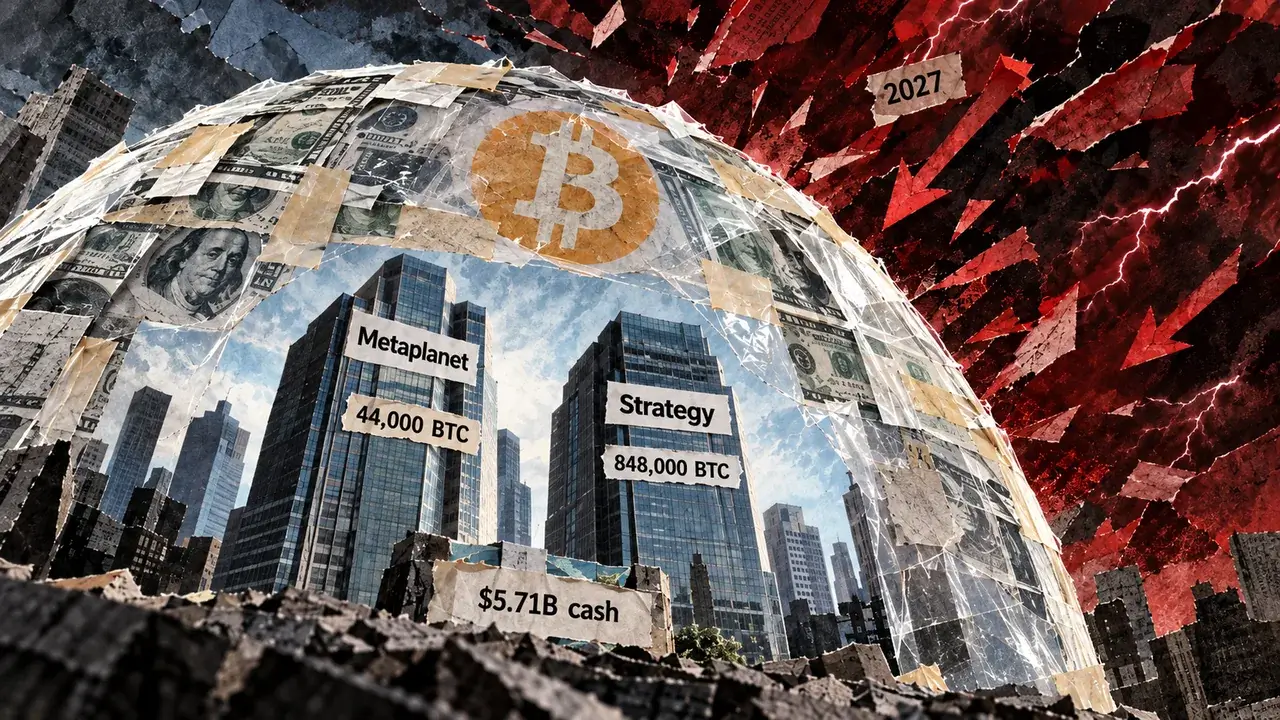
Bitcoin companies are learning that holding forever takes cash
Metaplanet sold 10,000 BTC and bought back 11,000 at a higher average price to show it was willing to sell its Bitcoin. The Japane...
Brazil’s BRL 22T CSD BR Moves Fund Records to XRP Ledger in Live Tokenization Push
Key Takeaways: CSD BR is leveraging the XRP Ledger to reflect real-time fund holdings. Over BRL 22 trillion in registered assets i...

Stealing $1.5B in crypto is easy, cashing out is the trap
North Korean hackers stole around $1.5 billion from Bybit in February 2025. While the hack itself has been widely covered and anal...