XRP is becoming collateral for real loans and the first market is already dominated by whales
XRP is beginning to support live dollar borrowing on Ethereum, though the market remains heavily concentrated among a handful of borrowers. A Morpho market backed by FXRP, a tokenized representation of XRP, had about 7.1...
Archive context
Older archive item. Useful for background and entity history, but not a fresh market-moving signal.

XRP is beginning to support live dollar borrowing on Ethereum, though the market remains heavily concentrated among a handful of borrowers.
A Morpho market backed by FXRP, a tokenized representation of XRP, had about 7.18 million RLUSD in outstanding loans against 10.76 million FXRP as of Oct. 1. The three largest addresses accounted for almost all of that debt, limiting how far the activity can be read as broad adoption.
The market, launched in August through Flare, lets XRP holders mint FXRP, move it to Ethereum, and borrow Ripple's RLUSD stablecoin without immediately selling their XRP exposure.
That adds a new credit use case for XRP, but also introduces bridge, collateral, and redemption dependencies that borrowers do not face when holding native XRP directly.
Three borrowers dominate XRP’s emerging credit marketThe early borrowing activity is heavily concentrated among a small number of participants.
The three largest addresses account for 93% of roughly $7.2 million in outstanding debt, giving a handful of positions outsized influence over the market's size. A large repayment could sharply shrink borrowing, while another loan from the same wallets could lift the total without bringing in many new users.
The concentration may be even greater than the address count suggests. On-chain records identify wallets rather than their owners, so several addresses could belong to the same investor or institution.
Funding is similarly concentrated. Sentora RLUSD Main supplied about 8.53 million RLUSD, providing nearly all of the liquidity available to borrowers at the time observed. Even so, the FXRP market represents only about 2.03% of Sentora's broader vault allocations, leaving room to commit more capital if demand increases.
Sentora can supply up to 10 million RLUSD under the current limit. That gives borrowers room to take on more debt, though the spare capacity says little about whether a wider group of XRP holders will actually use it.
The same concentration could become more important if XRP price weakens.
Morpho allows lenders to liquidate a position once the value of its debt rises above 77% of the collateral backing it. The three biggest borrowers remain well away from that point. Based on their current debt and collateral, the largest position could withstand roughly a 45% decline in the FXRP-to-RLUSD ratio, while the next two have buffers of about 38%.
Some smaller borrowers have less room. One position with about 121,000 RLUSD of debt against 133,000 FXRP could reach its liquidation threshold after roughly a 21% decline, assuming the position otherwise remains unchanged.
The market recorded some liquidations in September but showed no realized or unrealized bad debt as of Oct. 1. A sharper move would provide a more meaningful test because a liquidator taking over one of the largest positions would suddenly have to absorb a sizeable amount of FXRP.
That would not necessarily mean the underlying XRP is immediately sold. A liquidator could hold the FXRP, sell it, move it back toward Flare, or redeem it for native XRP.
For now, the bigger issue is how quickly a few large wallets can reshape the market. New borrowers spreading the debt across more addresses would make the $7.2 million total more representative of broader demand. If activity remains concentrated, a single large repayment, new loan, or liquidation could materially change the market almost overnight.
Native lending could broaden XRP credit without creating new buyersThe concentration in Morpho may prove temporary as developers prepare to bring lending directly onto the XRP Ledger.
XRPL’s proposed lending architecture, which is currently undergoing security reviews, would allow fixed-term credit to originate on the network rather than requiring XRP holders to mint FXRP, bridge it to Ethereum, and borrow through Morpho.
Removing those steps could make XRP-backed credit easier to access and give institutions another way to use XRPL assets for financing and liquidity management. It would also introduce a different credit model from Morpho’s overcollateralized loans, with underwriting handled before fixed-term loans are created.
More lending, however, would not necessarily translate into fresh demand for XRP. Existing holders could simply deploy XRP they already own, while institutions could recycle existing balances through lending markets. Outstanding debt could therefore rise substantially without a corresponding increase in the number of XRP owners or the amount of new capital entering the token.
Related Reading Ripple bets XRPL lending can give XRP a future beyond payments as price strugglesThat makes borrower composition as important as loan volume. A market that grows because the same large holders increase their borrowing would deepen XRP’s utility without demonstrating broader adoption. Growth spread across new borrowers, larger lending pools, and sustained activity after repayments would provide stronger evidence that credit is widening the asset’s economic use.
Native lending will provide the next test. If the amendments clear their security reviews and gain validator approval, XRP holders would have a direct lending route on XRPL alongside the existing Ethereum-based Morpho market.
The comparison will show whether reducing cross-chain friction attracts a broader borrower base or simply gives existing XRP holders another way to leverage the same capital.
The post XRP is becoming collateral for real loans and the first market is already dominated by whales appeared first on CryptoSlate.
Why this matters
XRP is showing up inside the Market Structure theme, so this story is worth tracking for follow-through rather than treating it as a one-off headline.
Original source
Read on CryptoSlateRelated market context
Ledger Launches Bitcoin Loans, Letting Holders Borrow Without Selling
Unveiled at TOKEN2049 Singapore, the Morpho-powered Crypto Loan feature lets users borrow stablecoins against wrapped Bitcoin whil...

Lido plans Morpho Blue fork ‘Lido Lend’ for new lending protocol in Q4 2026
Lido's entry into lending could enhance DeFi's appeal to passive investors, but governance and risk management will be critical ch...

Ethereum holds near $2,700 as $414.1 million in longs sit in liquidation zones
Ethereum trades near $2,700 as $148.3 million in crypto positions are liquidated and $414.1 million in ETH longs sit in liquidatio...
Ledger Launches Wrapped-Bitcoin Loans Through Morpho
The wallet app defaults to 50% loan-to-value and charges a 1% borrowing fee, while pledged collateral remains subject to liquidati...
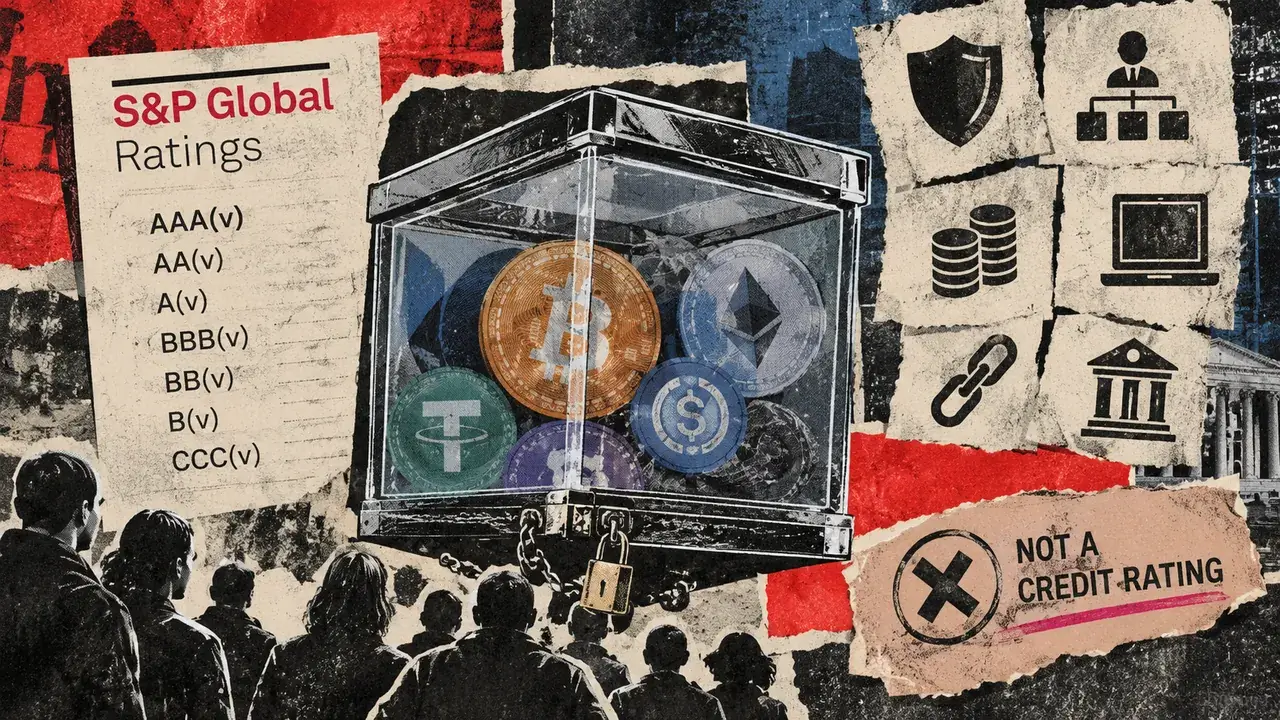
S&P brings ratings-style scrutiny to $10 billion crypto vault market as $6 million Base incident exposes risks
S&P Global is bringing ratings-style risk assessments to crypto lending vaults as the fast-growing market confronts fresh security...

Why Abstract is killing its Ethereum L2 instead of launching a token to save it
Abstract will shut down on Dec. 15 despite onboarding more than 400,000 users, hosting 144 apps, and landing brands including Disn...