Bitcoin As Mutuality And Global Barter
Bitcoin is a system that benefits from mutual cooperation like barter versus the current money system of extraction.Barter is an economic system in which money is, for all intents and purposes, absent. I give you guitar...
Archive context
Older archive item. Useful for background and entity history, but not a fresh market-moving signal.
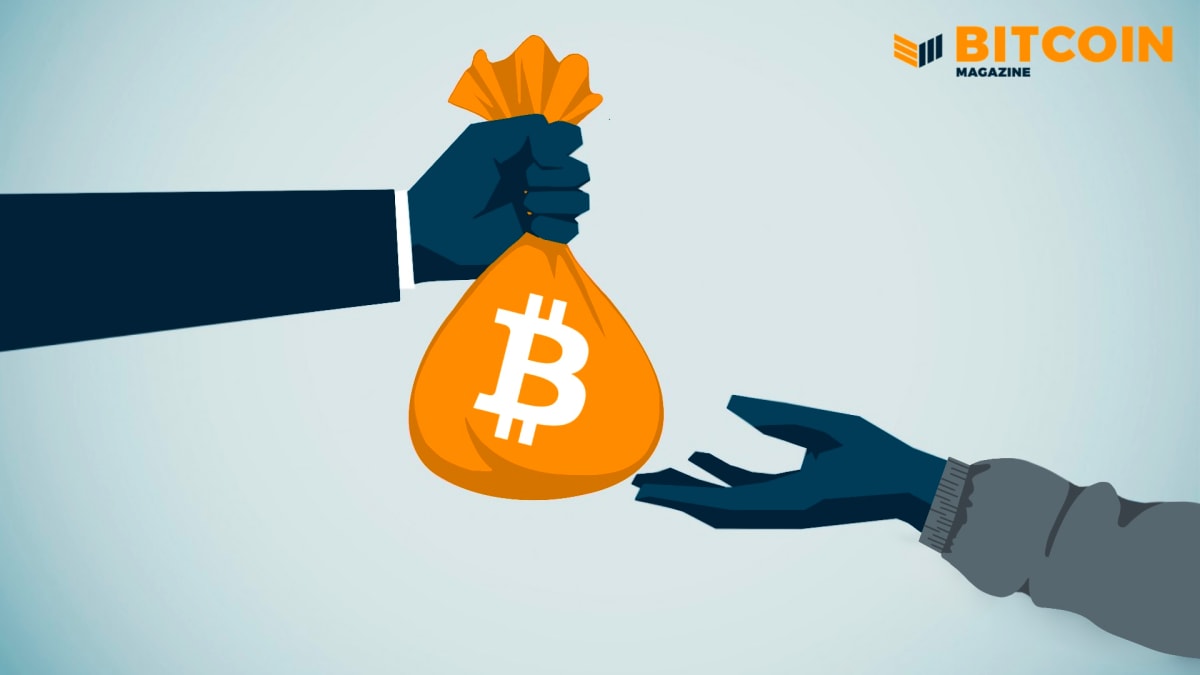
Bitcoin is a system that benefits from mutual cooperation like barter versus the current money system of extraction.
Barter is an economic system in which money is, for all intents and purposes, absent. I give you guitar lessons, you give me chickens. There is no medium of exchange, other than the actual goods, services, expertise, etc. It wasn’t all that long ago that people lived in communities in which such mutuality formed the foundations of human organization. Much has changed. Bitcoin offers us a chance to reclaim mutuality, the very spirit of barter, as our human birthright.
The Nature Of Money In Human CivilizationMoney is extractionary. More accurately, human beings employ money in an extractionary manner. Because of this, the process of accumulating money is both self-reinforcing while simultaneously community-negating. With the increasing power that comes with money’s accumulation comes an attendant decrease in the perceived need for community. The more money one gets, the more power and influence one experiences, the more one wants to accumulate so as to compliment this ever-expanding power, the more one exploits rather than engages in community, ad infinitum. According to Forbes, the three richest men in America hold more wealth than do the poorest 50%. Their combined net worth is over half a trillion dollars. This gives these men (and others like them) the ability to extract anything they want from people and institutions. Because of this dynamic, these individuals exist outside of the community. The concept of mutuality is alien to them for it is not applicable to their needs. They needn’t build relationships within a community because money provides the ability to extract what they desire without relationships. Herein narcissism and psychopathology blossom and flourish. Indeed, because money rejects community and because those in control of money have no need for community other than as a way to meet objective needs, it is a means through which sociopathology and sadism are in fact realized. Now extrapolate this on a global scale and imagine where it leads. Money eschews compassion
for corruption, connection for contempt, cooperation for coercion. Money is a virus, infecting all those who experience its intoxication by moving them incrementally away from mutuality and imperceptibly toward sociopathology.
Barter As CommunityContrary to money, barter is community. In a system of barter, acknowledgment of mutuality, of commonality, is essential. Without such relationalism, one dies. As but one of myriad examples of this premise, we all recognize that barter’s relativity is subject to the ideals and social contract of community (such an agreement need not exist with money). Relative to my guitar lessons, a doctor’s expertise is more valuable. The doctor and I need to negotiate a fair trade: “How about three months of lessons for you to treat my sprained ankle.” All of this is transacted over coffee. Because we are part of a community, because mutuality exists at the core of the transaction, the doctor self-sabotages by trying to extract too much in return for her expertise. The doctor is thus compelled to engage in community because she cannot extract payment objectively. This virtuous dynamic is self-reinforcing, and over time the doctor becomes increasingly connected to and reliant upon community – emotionally, psychologically, spiritually, economically. Neuroplasticity is predictive of this dynamic. Everyone who lives and transacts in this community becomes reliant not simply upon each other as sources of objective needs, but more significantly as agents of human connection and contact. The virtuous cycle precipitated by barter helps those in the community flourish and thrive. Now project this on a global scale.
Bitcoin As Borderless Global BarterMutualism is defined as “... the doctrine or practice of mutual dependence as the condition of individual and social welfare …” Bitcoin and mutualism are thus one and the same, for in Bitcoin we are entirely dependent upon one another vis-a-vis the network, and this interdependence is productive of the individual good.
With Bitcoin, while individual sovereignty is sacrosanct, the collective agreement of individual sovereignty is cooperative. As such, Bitcoin and the community can be both trustless and interdependent, permissionless and subject to an evolving social contract, transparent and private, impregnable and ubiquitous, entirely secure and entirely open. Bitcoin is strengthened, the network is strengthened, by the community. The more nodes, the more adoption, the more secure and powerful the network.
Remember, the essence of barter is mutuality. Bitcoin promotes mutuality because it is invitational rather than exclusive. Monopolization of Bitcoin as a currency is counterintuitive because Bitcoin facilitates mutuality in transaction, not exclusivity. In a world in which peer-to-peer relationships are essential and productive of network growth, in a global system of barter, extractionary actions become disempowering. Bitcoin moves us toward mutualism at first because of self-interest and later because of normalization. In other words, just as in a system of community barter, extraction and accumulation ends up being self-sabotaging. In time, the norm of mutuality becomes self-reinforcing. Thus Bitcoin is itself a virtuous cycle incarnate.
The ideals of barter, the ideals of community, are life-sustaining. Bitcoin is an agent for a world dying to be reborn.
This is a guest post by Dan Weintraub. Opinions expressed are entirely their own and do not necessarily reflect those of BTC Inc or Bitcoin Magazine.
Why this matters
This bitcoin story adds another data point to the current market tape and is useful when read alongside nearby source coverage.
Original source
Read on Bitcoin MagazineRelated market context

Polygon Open Money Stack Expands to TRON, Extending Network Access to Regulated U.S. Payment Rails
Dubai, UAE – October 8, 2026 – Polygon Labs today announced that Polygon Open Money Stack now supports the TRON network, giving fi...

Money20/20 USA 2026: How Bitcoin, Stablecoins and AI Are Reshaping the Future of Finance
Bitcoin Magazine Money20/20 USA 2026: How Bitcoin, Stablecoins and AI Are Reshaping the Future of Finance Fintech has moved beyond...
XRPL’s $1.34 billion stablecoin base doesn’t tell us how much XRP users need
Tracked stablecoins on the XRP Ledger totaled $1.338 billion on Oct. 7. For XRP holders, the critical question is how much activit...
Polygon Opens Its Money Stack To TRON’s $94 Billion USDT Market
TL;DR: Polygon Open Money Stack now supports TRON, giving payment and fintech businesses a single infrastructure layer for bank tr...
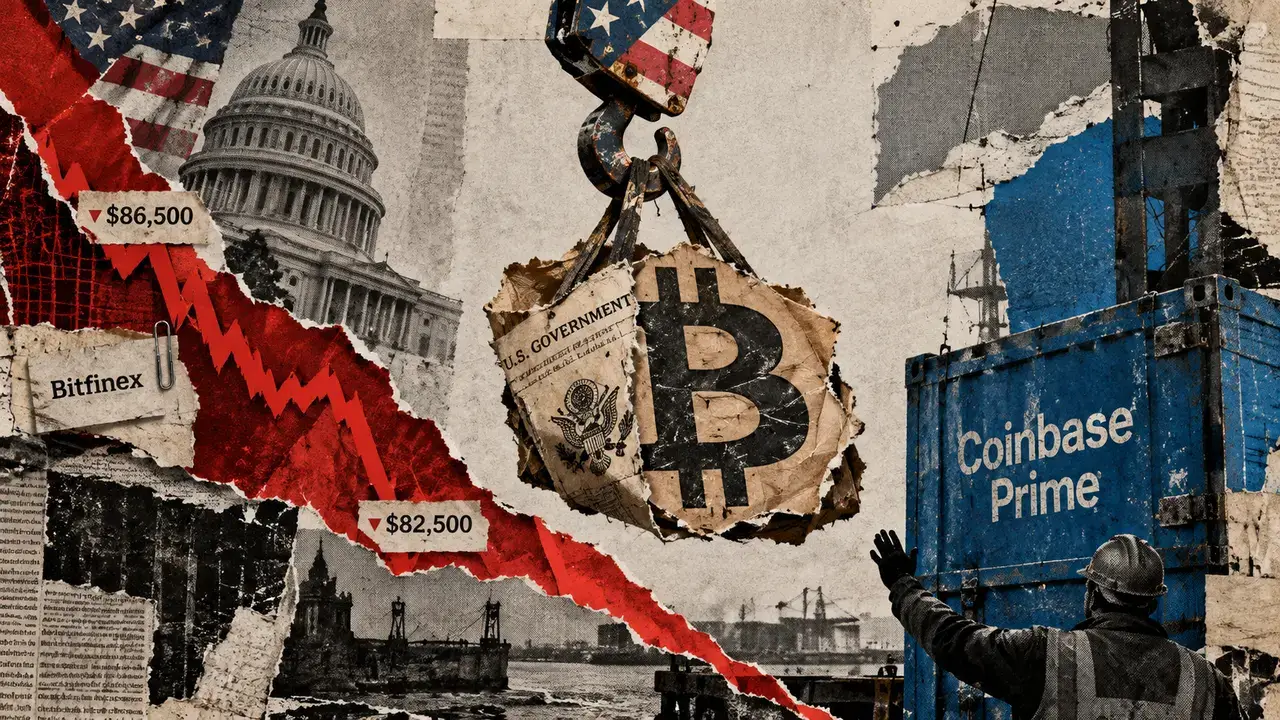
US government moves another $1 billion in Bitcoin as BTC slides $4,000
US government-linked wallets moved over $1 billion in Bitcoin on Oct. 8 as BTC prices fell and more coins reached Coinbase Prime....

Securitize Rolls Out 1:1-Backed Tokens of Apple, Nvidia and 10 Other U.S. Stocks on Solana
Securitize launched Securitize Stocks on Thursday, a line of tokenized U.S. equities for eligible investors in the U.S., the Europ...