Bitcoin Wins As Trump Pumps GDP, Suppresses Oil: Arthur Hayes
Arthur Hayes argues that the US move to seize control of Venezuelan oil is less about geopolitics than electoral math and that the resulting policy mix of hotter nominal growth and capped energy costs is structurally bul...
Archive context
Older archive item. Useful for background and entity history, but not a fresh market-moving signal.

Arthur Hayes argues that the US move to seize control of Venezuelan oil is less about geopolitics than electoral math and that the resulting policy mix of hotter nominal growth and capped energy costs is structurally bullish for Bitcoin and high-beta crypto.
In a Jan. 6 essay titled “Suavemente,” the BitMEX co-founder frames the current moment through a deliberately simple lens: US politicians optimize for re-election, and the median voter optimizes for perceived economic wellbeing. “The question is, does the American colonization of Venezuela make Bitcoin/crypto number go up or down?” Hayes writes.
Hayes’ core claim is that US political control is decided at the margins, and those margins respond overwhelmingly to the economy and inflation, particularly “food and energy” inflation. “Above all else… the only issue that the median voter cares about is the economy,” he writes. “It is easy to pump the economy, and by that, I mean nominal GDP. That is just a question of how much credit Trump can create.”
But Hayes insists the same playbook can backfire if inflation follows, especially at the pump. “The key metric for Americans is the price of gasoline,” he writes, arguing that limited public transportation makes gas prices a daily referendum on economic management. In that framework, Venezuela’s value is straightforward: suppress oil, suppress gasoline, and keep the “run the economy hot” promise intact without triggering voter backlash.
He highlights what he calls a “10% rule”: “when the national average price of gasoline rises 10% or more in the three months preceding an election versus the average price in January of the same calendar year, control of one or more branches of government switches teams.” That dynamic, in his telling, creates two regimes that matter for markets: nominal GDP/credit up with oil up, or nominal GDP/credit up with oil flat-to-down.
Why Bitcoin “Wins” If Oil Stays ContainedHayes’ bullish conclusion rests on the idea that oil prices constrain the durability of money printing, not the mechanics of Bitcoin itself. “Because of the energy used running computers engaged in proof of work mining, Bitcoin is the purest monetary abstraction there is,” he writes. “Therefore, the price of energy is irrelevant to the price of Bitcoin as all miners will face a parallel shift up or down in the price at the same time. The price of oil only matters regarding its ability to force politicians to stop printing money.”
In his setup, the stress signals are macro-market ones: the 10-year Treasury yield and the MOVE Index, a measure of bond-market volatility. He argues that when oil rises far enough to push yields “close to 5%,” volatility spikes, leverage unwinds, and policymakers are pressured into a pivot.
Hayes points to a prior episode as a template for reflexivity: “If you remember, Trump threatened tariffs so high… markets tanked, and the MOVE Index spiked to an intraday high of 172. The next day after the spike, Trump… ‘paused’ the tariffs, and markets bottomed then recovered violently.”
Absent that stress, Hayes’ base case is aggressive credit expansion with oil “subsided if not outright fall,” which he ties directly to Bitcoin upside. He cites his “USD Liquidity Conditions Index” as evidence that Bitcoin’s trend tracks dollar liquidity, concluding: “As the amount of dollars expands, the price of Bitcoin and certain cryptos will sky rocket.”
The essay also reads like a positioning memo. Hayes says his fund, Maelstrom, entered 2026 with “almost maximum risk,” low dollar-stable exposure, and an intention to rotate: “To obtain outperformance versus BTC and ETH, I will sell BTC to fund privacy positions and sell ETH to fund DeFi.” He names Zcash (ZEC) as the “privacy beta,” saying the fund is “already long a fuck ton of that” from 3Q25.
At press time, Bitcoin traded at $93,841.
Why this matters
Bitcoin is showing up inside the Mining theme, so this story is worth tracking for follow-through rather than treating it as a one-off headline.
Original source
Read on NewsBTCRelated market context

Ethereum ETFs Lose $201.9 Million As Bitcoin Funds Return To Inflows
TL;DR: US spot Ethereum ETFs recorded $201.9 million in net outflows on October 6, according to Farside Investors. Bitcoin ETFs mo...

Ethereum Price Prediction: Layer-2 Trouble Deepens as Another Network Shuts Down
Blast’s decision to close its Layer-2 network sharpens the question of Ethereum price and prediction: does activity ultimately con...

Tether Celebrates 12 Years, USD₮ Surpasses 700M Users
Key Takeaways: Tether marked the 12th anniversary of the world’s largest stablecoin by market cap, USD₮. The company claims that U...

Bitcoin Price Set for a Boost: Arthur Hayes Bets on an AI Boom Bust
As Bitcoin price slid toward $83,800, $4000 million in leveraged crypto longs were liquidated within one hour. This is a sharp rem...
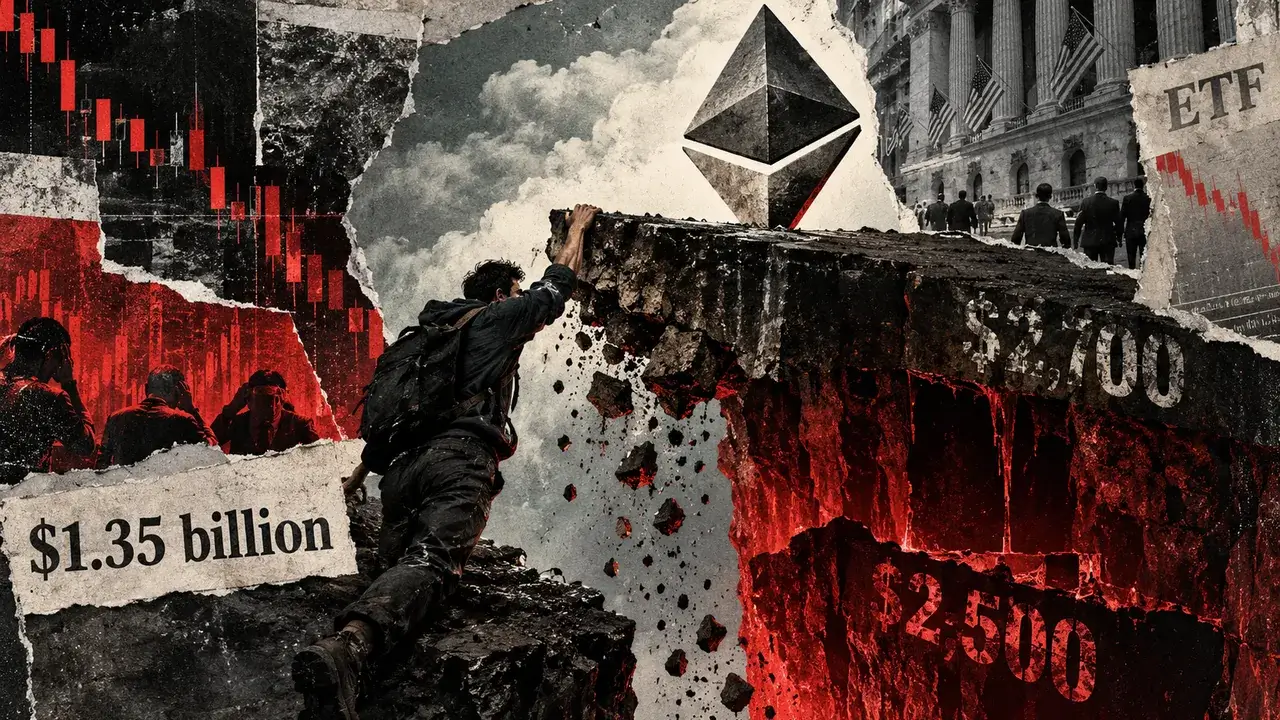
Ethereum falls 6%, leaving $1.35 billion in long bets at risk of liquidation
Ethereum’s slide toward $2,500 has put about $1.35 billion of leveraged long positions at increasing risk of liquidation. CoinMark...

Ethereum (ETH) Price Prediction: ETH Eyes Recovery From $2,600 as $2,666-$2,689 Becomes Resistance
Ethereum price is holding around $2,618 as buyers attempt to preserve the latest recovery, but the market is approaching a decisiv...