In Good Hands: Bitcoin Builds A Better Future
Bitcoin is still a young protocol by every measure. These adolescent years are arguably more formative than any other period in its short history because the stakes are already quite high for a groundbreaking project wit...
Archive context
Older archive item. Useful for background and entity history, but not a fresh market-moving signal.
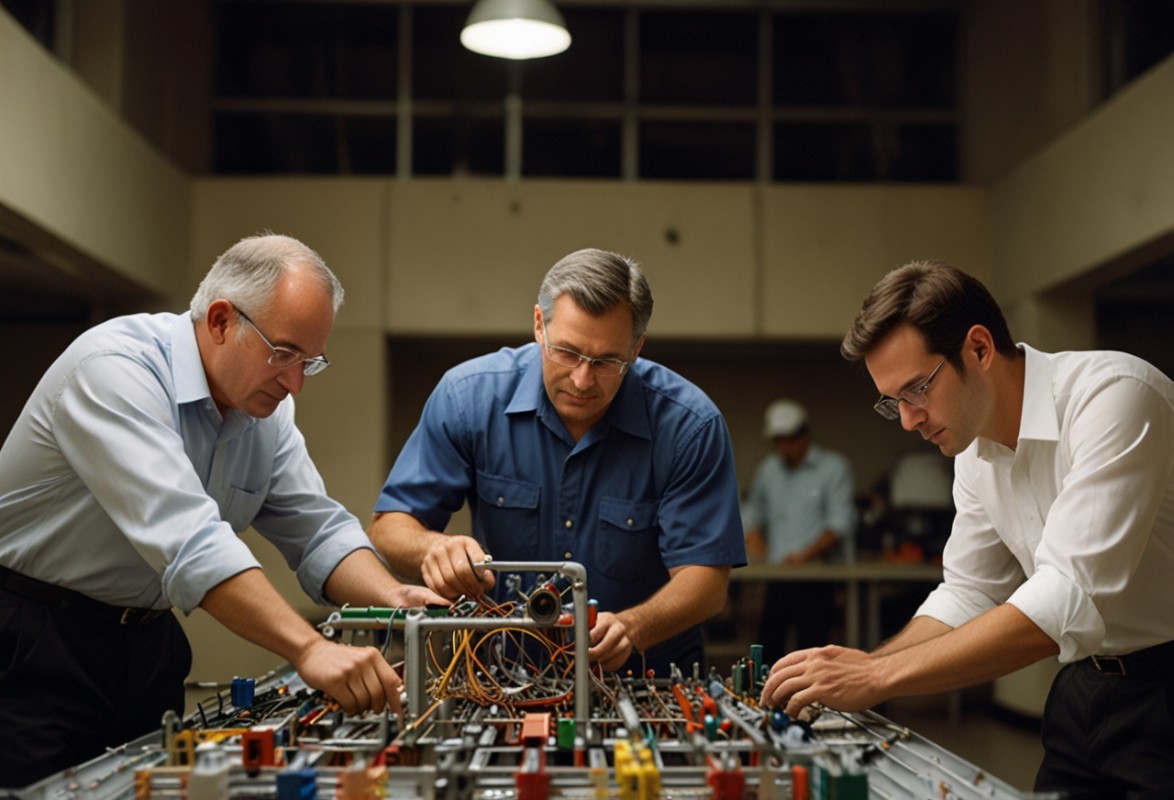
Bitcoin is still a young protocol by every measure. These adolescent years are arguably more formative than any other period in its short history because the stakes are already quite high for a groundbreaking project with less than two decades of testing and growth. As I have watched new investors, developers, users and marketers flock to Bitcoin over the past 18 months, the fundamental reasons why a so-called Bitcoin Renaissance matters seems to be given a backseat.
Over this period of time I have been asked countless questions like “What do you think of this new L2?” or “Will this new L2 actually work?” In almost every case, my answer has been, “I don’t know.” Building on Bitcoin is hard, and many people do not know how. Thus, it is hard to know what exactly someone is building, let alone if it will work, if they themselves do not know what they are doing. But this reality has certainly not discouraged founders and investors from trying to earn a profit.
In short, this new era of Bitcoin activity is largely defined by marketing instead of real innovation.
Engineering First, Marketing SecondMy academic and professional background is in mathematics and cryptography, not marketing. I understand the importance of developing a strong brand for a winning product or protocol, but marketing alone is at best not enough and at worst very dangerous. Innovative ideas need strong foundations, not fluff. Satoshi’s last forum post started with the words every Bitcoin builder should take to heart: “There’s more work to do [...]” Bitcoin projects backed by marketing are doomed to fail and disserve their users, investors, and the community as a whole.
One symptom of this dynamic is a simple lack of whitepapers. While these documents are often boring and seem optional to most people, whitepapers are intended to be a tool for explaining new ideas as clearly as possible to invite critiques, imitations, and actual implementation. But well-written whitepapers seem to be an afterthought for most of these new projects claiming to build on Bitcoin. Instead, the industry landscape has become defined by marketing materials.
Signals of this type of project are easy to spot. Rhetoric like “bitcoin powered,” "bitcoin aligned," or "bitcoin hybrid" are often used. In many cases, this language is communicated to veil the fact that these protocols are not actually built on Bitcoin. In other cases, this marketing is used to distract from the reality that nobody – even the founders – know what they’re building, but they want to leverage the Bitcoin brand anyway.
What comes to mind when I consider this unfortunate reality is a principle from the world of cryptography called security through obscurity. In short, this idea means nobody knows how a given thing works, so it might actually be secure. To be clear, this is not something for a serious engineering team to aspire to.
At Botanix Labs, we are building an EVM-equivalent layer with a testnet running on Bitcoin at the time of publishing. Instead of launching with a new token and chasing exchange listings, we are focused on building a simple and secure protocol. Instead of playing marketing games, we are focused on building an ecosystem of self-sovereign applications people want to use.
We started conceptualizing the Spiderchain in late 2022.
We launched a testnet in November 2023.
We plan to launch the first version of our mainnet this summer.
We believe that building is the best way to help Bitcoin succeed.
We Are The WatchmenScrutinizing new Bitcoin projects is not an activity that is only accessible to the most experienced software engineers and cryptographers. Anyone using Bitcoin can and should ask simple questions, like:
- “Who has the keys?”
- “Is this Sybil resistant?”
- “Can operators execute a hostage attack?”
- “What are your basic security assumptions?”
But all of these questions should already be answered with plain English in a whitepaper. Any project without a clear design, without clearly documented security risks, and without clearly worded analysis of its tradeoffs and objectives is part of the problem. Unfortunately, this seems to quickly have become the norm in Bitcoin’s second-layer landscape. At Botanix Labs, we carefully articulate our protocol design, attack vectors, and more in our whitepaper, which is available on our homepage.
Cyperpunks write code. But the surge in new second-layer Bitcoin protocols (many of which are undeserving of that title) have forgotten this simple truth. Regulators and auditors cannot and should not be relied on to correct this. We, the Bitcoin community, should remain focused on the long-term mission and ignore short-term gimmicks.
What someone builds should matter more than how they market it. And for any serious project building on Bitcoin, marketing is never more important than security. Normalizing this principle across all corners of the Bitcoin industry is a responsibility shared by every single person in Bitcoin.
The Fight Against FiatBitcoin is a movement, not a money grab. And I believe that we can and should do better than the ideas and projects that are being offered to the market in this ongoing Bitcoin Renaissance. Do not stay silent. Do not accept this behavior. Do not expect that the market will remove these bad actors on its own.
We are in a fight against a fiat regime that desperately needs us to fail in building a decentralized, permissionless financial system that runs on Bitcoin for centuries. But most new Bitcoin-branded projects are not thinking more than 12 months into the future.
In what sense does this improve the world or achieve our shared mission?
Satoshi Nakamoto exited the world of Bitcoin by writing, “I've moved on to other things. [Bitcoin] is in good hands.” Those hands are our hands, and everyone who cares about the future of money should be vigilant to ensure that they remain good.
Why this matters
This bitcoin story adds another data point to the current market tape and is useful when read alongside nearby source coverage.
Original source
Read on Bitcoin MagazineRelated market context
Why XRP’s 63 billion circulating tokens don’t tell buyers what’s for sale
For XRP buyers, available supply depends on the price they are willing to pay. The token's roughly 63.09 billion circulating suppl...
Europol says crypto’s quantum upgrade could take years and urges work to start now
Europol, the EU’s law enforcement agency, is urging the cryptocurrency industry to begin preparing wallet and protocol upgrades fo...

Vitalik Warns AI Math Could Threaten Crypto Keys Before Quantum Computing Arrives
Key Takeaways: Vitalik Buterin states that the rise of today’s cryptography is outpaced by AI-accelerated mathematics. In addition...

Building the Berkshire Hathaway of Bitcoin | Twenty One Capital CEO Rapha Zagury
Bitcoin Magazine Building the Berkshire Hathaway of Bitcoin | Twenty One Capital CEO Rapha Zagury Twenty One Capital holds roughly...
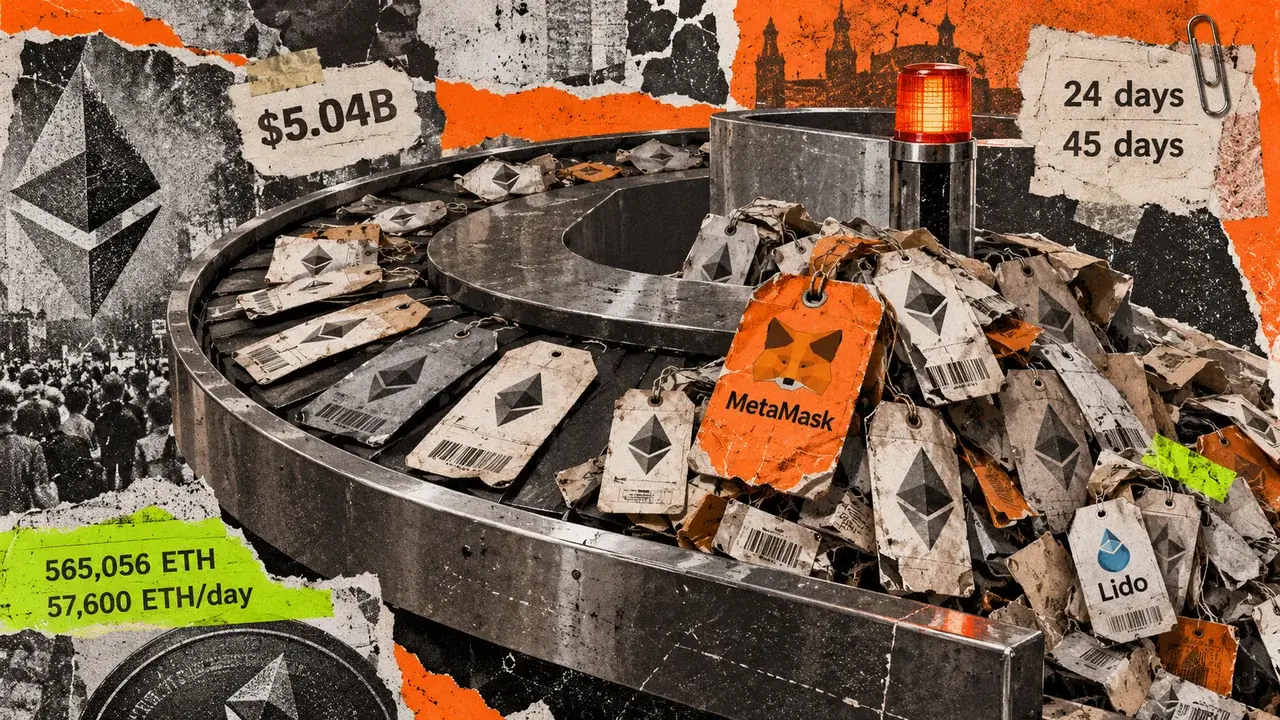
A $1,000 MetaMask incident could turn Ethereum’s staking queue into a $5 billion traffic jam
MetaMask's precautionary validator exits are turning a roughly $1,000 reward diversion into a test of Ethereum's staking capacity....

Citrini Research Says Tokenized Assets and AI Agents Make Crypto a Fundamentals Trade
Citrini Research published a report on Thursday arguing that AI agents and tokenized assets have opened a new paradigm of “fundame...