Italy Proposes Raising Bitcoin Capital Gains Tax to 42%
On October 16, Italian Deputy Economy Minister Maurizio Leo announced these adjustments at a press conference in Palazzo Chigi. He spoke about the government’s recently approved budget plan, highlighting the proposed inc...
Archive context
Older archive item. Useful for background and entity history, but not a fresh market-moving signal.

On October 16, Italian Deputy Economy Minister Maurizio Leo announced these adjustments at a press conference in Palazzo Chigi. He spoke about the government’s recently approved budget plan, highlighting the proposed increase in capital gains taxes on Bitcoin.
“We are proposing to increase the withholding tax on Bitcoin capital gains from 26% to 42%,” Leo said. In the 2019 budget, Italy proposed a number of tax revisions, including this one.
In addition to the Bitcoin tax increase, the Italian government plans to remove the revenue thresholds for the DST. The tax was previously only imposed on businesses with global sales of at least €750 million and digital service revenues in Italy of at least €5.5 million.
Leo stressed that these thresholds would be removed in the new bill, allowing the tax to be applied to more domestic digital service providers. “On the web tax, we are working to remove the ceiling of €750 million globally and €5 million in Italy,” he explained.
Italy’s Budget for 2025: Funding from Banks and InsuranceThese tax revisions are part of the Italian government’s larger goal of balancing the budget by 2025. The €30 billion ($33 billion) budget will be mostly supported by charges on banks and insurers. The new measures are likely to generate significant income, with the government projecting a €3.5 billion collection from financial institutions.
Prime Minister Giorgia Meloni confirmed on October 15 that the funds raised would be directed toward improving public services and supporting the country’s most vulnerable populations. She promised the populace that no new taxes would be levied against them and that the money earned would go toward improving social welfare and healthcare. The proposed budget, including these tax changes, still requires approval from the Italian parliament. A final vote is expected before the end of the year.
The nation has already changed its bitcoin tax laws in recent years. As part of the 2023 budget, the Senate increased the capital gains tax on cryptocurrency trading to 26% for transactions over €2,000 in late 2022. Italy’s shifting strategy to regulate the quickly expanding digital economy continues with these latest suggestions.
European Crypto Regulations Seek Balance in Innovation and SecurityThe latest European cryptocurrency regulations provide a comprehensive framework for balancing innovation and cyber protection. These policies primarily aim to tighten Know Your Customer (KYC) and anti-money laundering (AML) standards, as well as to improve transparency and safety in cryptocurrency marketplaces.
The legislation also focuses on the issuance and trade of digital assets, providing crypto firms with clearer standards for compliance. This regulatory revamp is projected to have an influence on not only financial institutions but also tech companies and blockchain innovators, posing both problems and chances for growth. The revised tax policies may have an impact on investing strategy.
Due to more stringent compliance standards, the regulations may make it harder for cryptocurrency businesses to operate, even though they are expected to boost investor trust and enhance market stability. Nonetheless, the long-term goal of creating a crypto environment that is safer and more dependable might draw in more institutional investors. According to several industry insiders, the actions are a crucial step toward cryptocurrencies becoming widely accepted in Europe.
The decision indicates a rising desire among European officials to create a more controlled environment for digital money, aligning it with traditional financial systems. The legislation is set to change Europe’s cryptocurrency ecosystem by balancing innovation with the requirement for responsibility and security. Overall, these moves represent a substantial shift in how cryptocurrencies are governed in the European Union, potentially setting a precedent for other countries.
Why this matters
This bitcoin story adds another data point to the current market tape and is useful when read alongside nearby source coverage.
Original source
Read on Brave New CoinRelated market context

NY Seeks $1.37 Billion Judgment Against Operators of NovaTech Crypto Ponzi Scheme
Bitcoin Magazine NY Seeks $1.37 Billion Judgment Against Operators of NovaTech Crypto Ponzi Scheme New York Attorney General Letit...
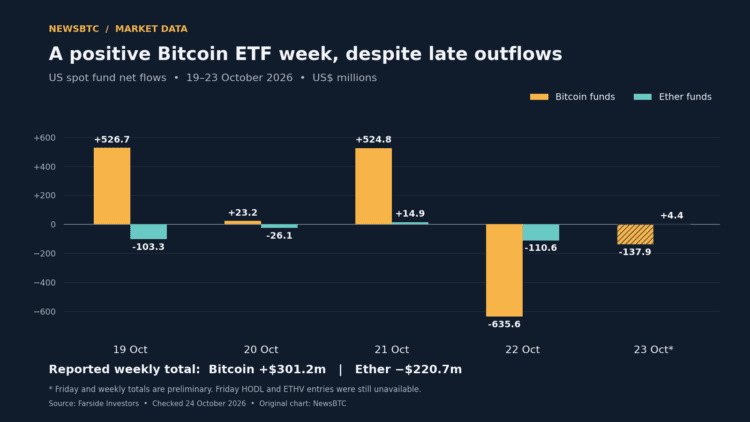
Bitcoin ETF Week Stays Positive After Nearly $774 Million In Late Outflows
TL;DR: Farside’s preliminary figures show US Bitcoin funds retaining a $301.2 million weekly inflow despite two days of withdrawal...
Crypto Industry Group Pushes Congress For Small-Payment Tax Relief And Clearer Rules
TL;DR: The Blockchain Association has asked congressional leaders to advance bipartisan crypto tax changes, including a de minimis...
Irish Central Bank Fines Coinbase Unit €3.25 Million Over Customer Fund Safeguards
TL;DR: Ireland’s central bank imposed a €3.25 million penalty on Coinbase Ireland over electronic-money safeguarding and outsourci...

Tokenized assets pull in more than $1 billion in fresh capital in 30 days
The surge in tokenized asset investments highlights growing interest in digital finance, but reliance on key players and measureme...

South Korea set to delay crypto gains tax to 2029, marking fourth postponement since 2020
The delay in South Korea's crypto tax may boost investor confidence but highlights ongoing regulatory and infrastructure challenge...