No Fork Required: Bitcoin’s First Quantum-Safe Transaction Just Happened
Bitcoin Magazine No Fork Required: Bitcoin’s First Quantum-Safe Transaction Just Happened Should fund managers dealing in Bitcoin be worried about the threat of quantum computing? The short answer is yes — but there’s ti...
Archive context
Older archive item. Useful for background and entity history, but not a fresh market-moving signal.
Bitcoin Magazine
No Fork Required: Bitcoin’s First Quantum-Safe Transaction Just Happened
Should fund managers dealing in Bitcoin be worried about the threat of quantum computing?
The short answer is yes — but there’s time to prepare and solutions are already being found.
One of them? Post-quantum Bitcoin transactions on the mainnet. And the first one happened this week thanks to the Starknet Foundation.
JUST IN: The first post-quantum resistant Bitcoin transaction was mined today.
"It required no soft forks. It required no hard forks. It required no core protocol upgrades. And it's live today." pic.twitter.com/YyZbHhm8HI
Speaking at Bitcoin Asia in Hong Kong on Thursday, Damian Chen, VP of growth at the Starknet Foundation, demonstrated how funds vulnerable to future quantum attacks can be secured without requiring a network-wide fork, thanks to the company’s latest solution.
“This is a monumental moment,” Chen said. “This is the first post-quantum-resistant Bitcoin transaction on bitcoin mainnet today. It required no soft forks; it required no hard forks; it required no core protocol upgrades, and it’s live today.”
The transaction happened using a method created by StarkWare researcher Avihu Levy. It works like this: Bitcoin transactions sit briefly in a public queue before confirmation. During that window, they expose cryptographic material that a sufficiently powerful quantum computer could use to forge a signature and steal the funds before the transaction is confirmed.
But rather than accepting the first valid signature, his method generates millions of signature candidates until it finds one with a specific structural property that doesn’t expose that vulnerable material while waiting in the mempool.
This “signature grinding” is deliberately computationally expensive — a single transaction takes hours to produce — but that cost is what makes it resistant to quantum shortcuts.
Touting Quantum safe Bitcoin transactions — dubbed “QSB” — to institutions, Chen said that even if attackers have a fund’s private keys, they couldn’t make a fraudulent transfer.
“QSB introduces a new hash authorization, and so an attacker with a sufficiently capable computer, even if they have your exposed public key, even if they derive your private key from your public key, even if they try to use that to authorize a spend to move your coins out of your wallet, those things are not enough for them to do so,” he said.
It’s worth noting that ordinary Bitcoin nodes currently don’t recognize this non-standard transaction format, so it couldn’t go into the public mempool and instead had to be handed straight to a miner willing to accept it — with mining company MARA’s Slipstream service being the one that mined the QSB transaction.
Quantum researchers have warned that a time will come when Bitcoin’s software — which underpins the biggest and strongest computer network in the world — will need to be upgraded to deal with quantum computing.
While some crypto VC firms have urged action, top Bitcoin developers have argued that many of today’s quantum computers have limited capabilities, and have only demonstrated trivial computations.
Still, they have noted that their development could arrive unexpectedly — just like advances with artificial intelligence — and have started developing some solutions.
Chen added: “The question to me has never been when will quantum arrive. We all know quantum will arrive at one stage, but the question to me has always been, how long will it take for you to be ready when quantum does arrive?”
This post No Fork Required: Bitcoin’s First Quantum-Safe Transaction Just Happened first appeared on Bitcoin Magazine and is written by Mathew Di Salvo.
Why this matters
Bitcoin is showing up inside the Security Incidents theme, so this story is worth tracking for follow-through rather than treating it as a one-off headline.
Original source
Read on Bitcoin MagazineRelated market context
The Quantum Issue: Bitcoin Quantum Exposure at Block 950,000
Bitcoin Magazine The Quantum Issue: Bitcoin Quantum Exposure at Block 950,000 At block 950,000, 6.90 million BTC are cryptographic...

Pudgy Penguins Team to Shutter Ethereum Layer 2 Network Abstract
Another Ethereum Layer 2 chain bites the dust: Just days after the creators of the once-hyped Blast said they’re shutting down the...

Ethereum Price Prediction: Layer-2 Trouble Deepens as Another Network Shuts Down
Blast’s decision to close its Layer-2 network sharpens the question of Ethereum price and prediction: does activity ultimately con...

THORChain Co-Founder Will Ask Its Treasury About Refunding Fees From Stolen Crypto
THORChain co-founder Chad Barraford said he will ask the protocol’s Treasury about sending part of what its developer fund earned...
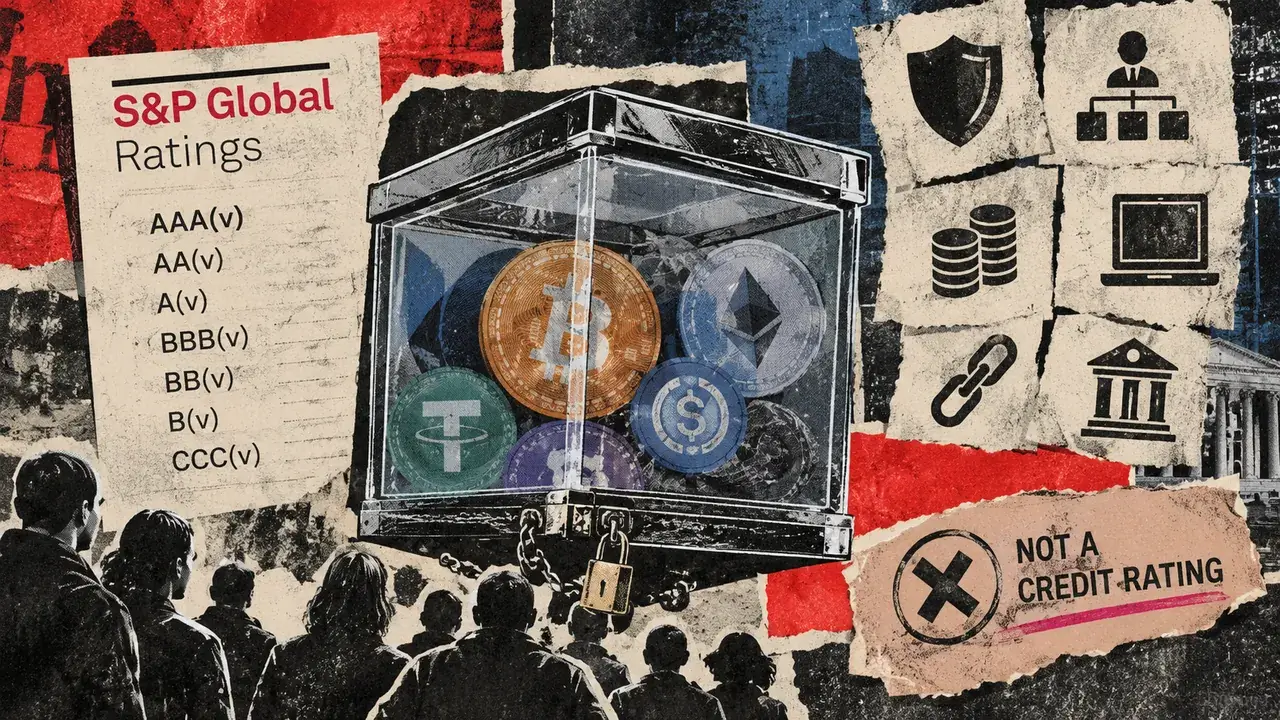
S&P brings ratings-style scrutiny to $10 billion crypto vault market as $6 million Base incident exposes risks
S&P Global is bringing ratings-style risk assessments to crypto lending vaults as the fast-growing market confronts fresh security...

Cardano’s Programmable Token Standard Goes Live With Built-In KYC and Freeze Controls
The Cardano Foundation announced on Wednesday at TOKEN2049 that CIP-0113, Cardano’s programmable token standard, is live on Cardan...