President Trump Has Got A Bold Vision For Bitcoin In America
Follow Casey on X. With his return to the presidency, Donald Trump has positioned himself as a key figure in the Bitcoin conversation. His keynote at Bitcoin 2024 laid out ambitious plans for integrating Bitcoin into the...
Archive context
Older archive item. Useful for background and entity history, but not a fresh market-moving signal.
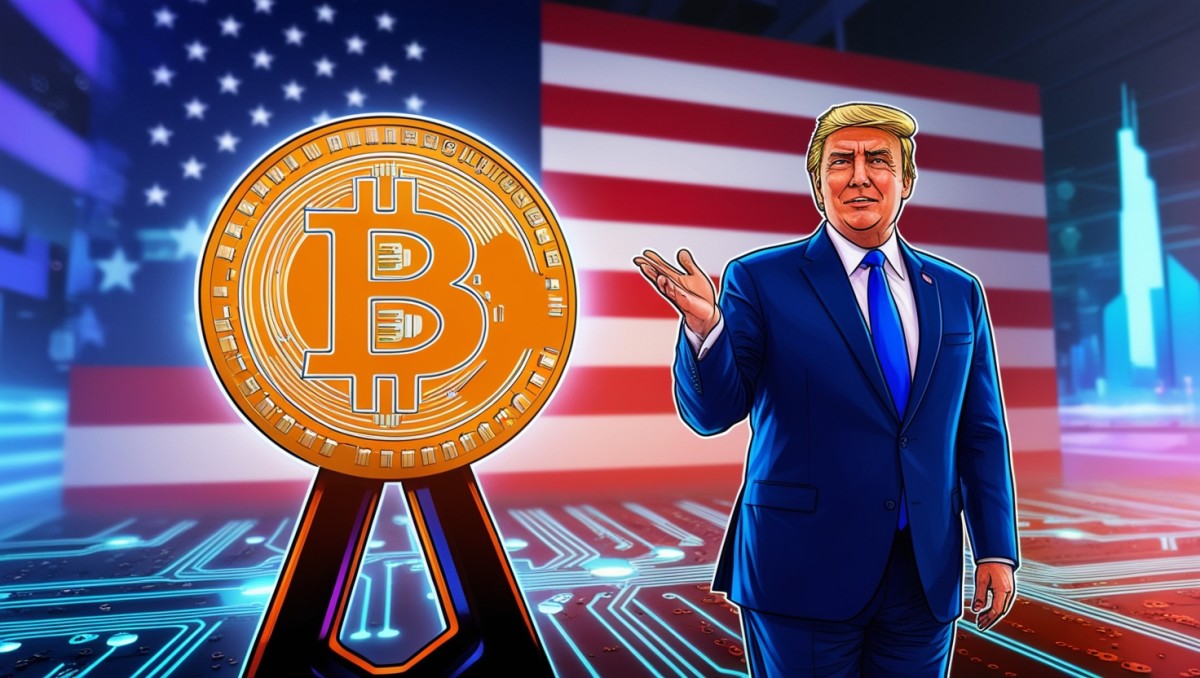
With his return to the presidency, Donald Trump has positioned himself as a key figure in the Bitcoin conversation. His keynote at Bitcoin 2024 laid out ambitious plans for integrating Bitcoin into the U.S. economy, making him the first U.S. president to openly champion the cryptocurrency in such a way. As his second term begins, the Bitcoin community is eager to see how his promises will evolve into concrete policies, with hopes of a friendlier regulatory environment and a more secure, innovative financial system.
The PromisesTrump’s speech at Bitcoin 2024 highlighted a series of initiatives aimed at embracing Bitcoin and blockchain technology:
- Ending the “anti-crypto stance” from previous administrations, with a commitment to revising the approach to regulation.
- Establishing a Presidential Crypto Advisory Council to shape the national strategy for Bitcoin and blockchain innovation.
- Rejecting the idea of a Central Bank Digital Currency (CBDC).
- Securing and holding government-owned bitcoin, with plans to create a strategic stockpile.
- Freeing Ross Ulbricht, the founder of the Silk Road online marketplace, who has been imprisoned since 2013.
- The removal of SEC Chairman Gary Gensler.
While Trump’s commitment to Bitcoin is undeniably encouraging for the community, translating ambitious promises into effective policy presents a challenging path forward. His call for removing SEC Chairman Gary Gensler resonated with Bitcoin advocates, many of whom blamed Gensler for restrictive policies. Although it’s unclear if Trump’s influence played a role, Gensler’s announcement of his November departure signals a changing regulatory tide. Trump’s proposal to establish a Crypto Advisory Council holds potential, but its success will depend on bipartisan cooperation and a clear, actionable mandate. Without these elements, it risks becoming a hollow political gesture. Additionally, his opposition to a Central Bank Digital Currency (CBDC) aligns well with privacy advocates and decentralization proponents, and there does seem to be support from within the Republican party for this policy. In regards to Ross Ulbricht, President Trump has many avenues to explore, from a commuted sentence to a presidential pardon. Whether it happens “day one” or within the early days of Trump’s second term, Ulbricht’s freedom is on the horizon.
As with any sweeping political vision, enthusiasm must be tempered with pragmatism. Turning promises into actionable policies takes time, especially within the labyrinth of established financial systems. Regulatory reforms move slowly, often hindered by entrenched interests and complex legislative processes. Nonetheless, Trump’s vocal advocacy of Bitcoin marks a cultural shift in American politics. Even if not every initiative reaches full fruition, his presidency could significantly alter public perceptions and policy discourse surrounding Bitcoin, embedding the cryptocurrency deeper into the national conversation.
Should political inertia or opposition delay progress, the Bitcoin community has tools to remain proactive and engaged. Active participation in shaping policy will be key—advocating for legislative clarity and innovation-friendly frameworks can help ensure Bitcoin’s potential is realized. Keeping a vigilant eye on regulatory shifts, including how Trump’s administration addresses existing SEC cases and cryptocurrency classifications, will also be crucial. Flexibility and readiness to accept incremental progress could yield meaningful wins, especially in resisting CBDCs and strengthening the government’s bitcoin holdings strategy.
Ultimately, Trump’s pro-Bitcoin stance represents a historic pivot toward integrating Bitcoin into U.S. governance. While challenges and delays are inevitable, the presence of a Bitcoin advocate in the White House offers unprecedented opportunities. The next few years will test whether America can truly become a beacon for Bitcoin innovation or whether political realities will slow the revolution. Either way, Bitcoin now has a powerful ally at the highest level of government—a hopeful signal for its future trajectory in the United States and beyond.
This article is a Take. Opinions expressed are entirely the author's and do not necessarily reflect those of BTC Inc or Bitcoin Magazine.
Why this matters
This bitcoin story adds another data point to the current market tape and is useful when read alongside nearby source coverage.
Original source
Read on Bitcoin MagazineRelated market context
CFTC Chair Says New Crypto Rulemaking Will Prevent Another FTX-Style Collapse
Bitcoin Magazine CFTC Chair Says New Crypto Rulemaking Will Prevent Another FTX-Style Collapse Pro-crypto regulator Mike Selig has...

82 Million Galaxy Devices Will Support USDC Transfers This October
USDC is set to become Samsung Wallet’s default dollar stablecoin as Coinbase expands its partnership with the smartphone maker. Th...

Bitcoin rebounds above $81,000 after Trump rules out Iran strikes
Bitcoin's rebound highlights market sensitivity to geopolitical tensions, underscoring the fragile balance between crypto and glob...

Money20/20 USA 2026: How Bitcoin, Stablecoins and AI Are Reshaping the Future of Finance
Bitcoin Magazine Money20/20 USA 2026: How Bitcoin, Stablecoins and AI Are Reshaping the Future of Finance Fintech has moved beyond...

Bitcoin Rebounds Above $81,000 After Trump Rules Out Iran Strikes Before Midterms
Crude retreated around the president's statement, but bitcoin remained down 1.9% over 24 hours in late trading.... Read the full s...

Securitize’s Chongwu Du says tokenized finance will run on a few blockchains, not one
Tokenized finance's reliance on multiple blockchains could enhance resilience and innovation, fostering a more diverse financial e...