Reports Claim Chivo Bitcoin Wallet Is Flagging Wasabi Transactions in El Salvador
According to several reports, the Salvadoran government-issued bitcoin wallet, Chivo, has been freezing wallets and requesting that owners verify the source of funds. The founder of El Zonte’s Bitcoin Beach stated that t...
Archive context
Older archive item. Useful for background and entity history, but not a fresh market-moving signal.
According to several reports, the Salvadoran government-issued bitcoin wallet, Chivo, has been freezing wallets and requesting that owners verify the source of funds. The founder of El Zonte’s Bitcoin Beach stated that the government’s bitcoin wallet software is flagging and freezing wallets that receive transactions from Wasabi, a non-custodial bitcoin wallet that utilizes Coinjoin technology to obscure onchain transaction monitoring.
Bitcoin Beach Founder Says Salvadoran Government Is ‘Bowing to U.S. Pressure to Thwart Privacy’
Bitcoin (BTC) is now legal tender in El Salvador, and the government offers infrastructure services such as bitcoin automated teller machines (ATMs) and a mobile bitcoin wallet called Chivo. The Chivo wallet has faced criticism in the past, and the International Monetary Fund (IMF) has raised concerns about the wallet’s regulatory oversight. Recently, the founder of El Zonte’s Bitcoin Beach and other community members reported that Chivo wallets were being flagged and frozen.
“This week a local carpenter we know had his wallet frozen for $1000 transactions,” the Bitcoin Beach Twitter account stated on April 3. “They asked him to prove the origin of funds. The friction will push people back to the traditional banking system. Their bank transactions receive less scrutiny than [bitcoin] transactions. Small normal legitimate transactions that they the need to spend hours trying to justify.” In another tweet, Bitcoin Beach reported that the Chivo software is flagging and freezing wallets that receive transactions from Wasabi, and apparently, they are “bowing to U.S. pressure to thwart privacy.”
Furthermore, the founder of Bitcoin Beach, Mike Peterson, addressed the issue during a live broadcast. “We as bitcoiners need to keep putting pressure on Chivo, on the government, on these people because they are getting pressure from this other direction,” Peterson stated. According to reports, Chivo wallet users who have their funds flagged and frozen must provide documentation on the origin of the money. However, not everyone subscribes to the theory that Chivo is blocking Coinjoin transactions originating from Wasabi.
“I have sent post mix coins to Chivo addresses without any problems,” explained the Twitter account Escape to El Salvador. “I’m not saying the person Mike paid didn’t get their account frozen, but there simply is no proof that it was because of that. Believe it or not, there are many people who say things on the internet w/o verifying,” the individual added. Wasabi is a bitcoin wallet that enables users to mix their unspent transaction outputs (UTXOs) with others using a technique called Coinjoin. Additionally, blockchain analysis firms like Chainalysis have claimed that Wasabi’s mixed transaction method can be de-anonymized or de-mixed.
Following Bitcoin Beach’s tweets about the matter, a Twitter account named Peter Pan remarked, “El Salvador is not winning…” However, the Bitcoin Beach Twitter account disagreed with the assertion, insisting, “El Salvador is definitely winning- just bumps in the road along the way. Still the easiest place to live on a bitcoin standard by a large margin.”
What do you think about the situation with Chivo freezing wallets and requesting proof of the origin of funds? Do you believe this is a necessary step for regulatory oversight, or do you think it goes against the spirit and core tenets of bitcoin privacy? Let us know in the comments section below.
Why this matters
This bitcoin story adds another data point to the current market tape and is useful when read alongside nearby source coverage.
Original source
Read on Bitcoin NewsRelated market context
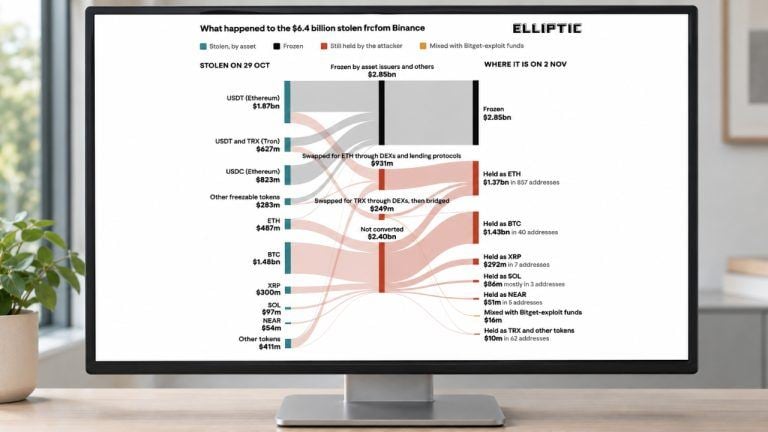
Binance Hack Funds Spread Across 12,000 Wallets in Under Four Days
Funds stolen from Binance passed through approximately 12,000 wallets in under four days, Elliptic found. The operation spanned 11...
Arbitrum’s Security Council Can Move a Wallet’s Funds Without Its Key, Binance Freeze Shows
Arbitrum’s Security Council did not need the private key of the address it emptied on Oct. 30, according to a walkthrough Zealynx...

A THORChain Bug Has Slowed North Korean Hackers Laundering Stolen Binance Funds
The emergency stop on THORChain that, per Chainalysis, held up North Korean hackers trying to move money stolen from Binance was s...
Quickex Launches Private Swap to Reduce Direct On-Chain Linkage Between Wallets
PANAMA CITY, November 3rd, 2026 — Quickex, a cryptocurrency swap service operating since 2018, has launched Private Swap, a featur...
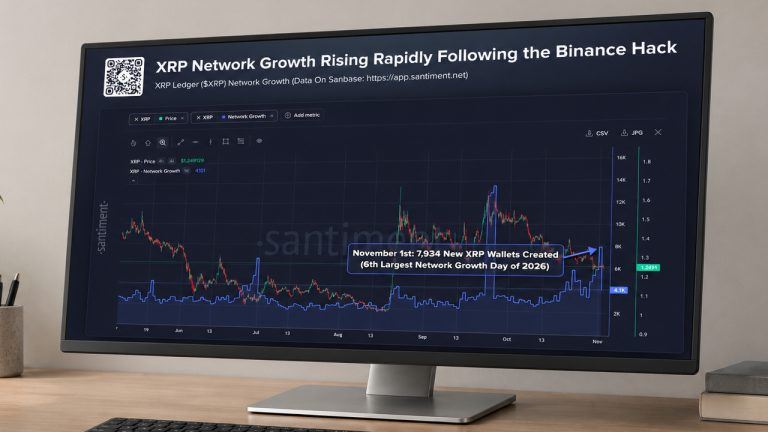
XRP Adds Nearly 8,000 New Wallets in a Day Following $6 Billion Binance Hack
XRP recorded one of its strongest days for new wallet creation this year after the Binance hack, according to Santiment. The incre...

XRP Ledger adds 7,934 new wallets on November 1, sixth-highest day of 2026
The surge in XRP Ledger wallet activations may indicate growing interest in its ecosystem, potentially signaling a shift from spec...