Salvadoran President Nayib Bukele Takes Aim at Bitcoin Detractors, Says the Ones Who Are Afraid ‘Are the World’s Powerful Elites’
It’s been over a year since El Salvador codified bitcoin as legal tender in the Latin American country, and by popping the ‘orange pill,’ the country was propelled into the international spotlight. At the end of Septembe...
Archive context
Older archive item. Useful for background and entity history, but not a fresh market-moving signal.
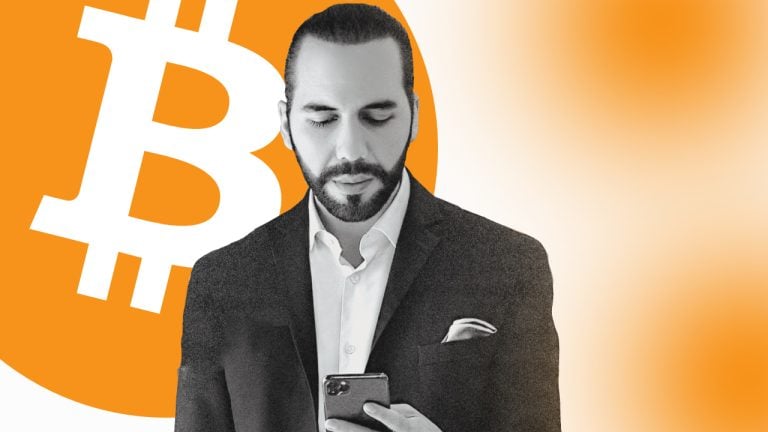
It’s been over a year since El Salvador codified bitcoin as legal tender in the Latin American country, and by popping the ‘orange pill,’ the country was propelled into the international spotlight. At the end of September, the 41-year-old Salvadoran president Nayib Bukele penned an opinion editorial that takes aim at the detractors who think it was the wrong decision, those who think it was a good decision but for the wrong reasons, and opponents who “are afraid of our decision.”
Nayib Bukele’s Opinion Editorial Tells People to ‘Stop Drinking the Elite’s Kool-Aid’
According to Salvadoran president Nayib Bukele, if the bitcoin experiment his country is participating in succeeds, a great number of other countries worldwide will follow in the Latin American country’s footsteps. Bukele said this in a recently penned opinion editorial called “Stop Drinking the Elite’s Kool-Aid,” which was published on September 30, 2022, in English and Spanish. In the editorial, Bukele criticized three camps of detractors and he believes that most of them are simply afraid of El Salvador’s innovative decisions.
“The most vocal detractors, the ones who are afraid and pressuring us to reverse our decision, are the world’s powerful elites and the people who work for or benefit from them,” Bukele explains in his article. “They used to own everything, and in a way they still do; the media, the banks, the NGOs, the international organizations, and almost all the governments and corporations in the world.”
Bukele also denies the many headlines published by media outlets such as “Bloomberg, Forbes, Fortune, Financial Times, Deutsche Welle, BBC, Al Jazeera, The Guardian, The New York Times, and The Washington Post” that claim the “whole country’s economy was destroyed by a $50 million loss.” The Salvadoran president says the claims are baloney and mostly because the country has not sold a single bitcoin since it started acquiring a stash of BTC.
“So the argument that we have lost $50 million worth of bitcoin is false, because we simply have not sold any bitcoin,” Bukele’s editorial insists. “And even if we were to accept that argument as true, then it would be ridiculous to conclude that an economy of $28 billion per year will go bankrupt or into default because of a 0.2% ‘loss’ in one year, when in 2021 our economy grew 10.3%, or by $4 billion. This is using the IMF’s own numbers.”
Bukele’s opinion piece further adds:
In 2021, our GDP rose 10.3%, income from tourism rose 52%, employment went up 7%, new businesses up 12%, exports up 17%, energy generation up 19%, energy exports went up 3,291%, and internal revenue went up 37%, all without raising any taxes. And this year, the crime and murder rate have gone down 95%.
The Salvadoran bureaucrat details that he understands that bitcoin is a very large experiment and he believes it’s absurd to claim that the country has already failed. His recent statements are similar to Bitcoin’s inventor, when Satoshi said: “I’m sure that in 20 years there will either be very large transaction volume or no volume.” Similarly, El Salvador has joined the grand experiment and time will tell if the Latin American country’s bet succeeds or fails. If it does succeed, Bukele’s editorial asserts that many countries will follow El Salvador’s lead.
“El Salvador is the epicenter of Bitcoin adoption, and thus, economic freedom, financial sovereignty, censorship resistance, unconfiscatable wealth, and the end of the kingmakers, their printing, devaluating, and reassigning the wealth of the majorities to interests groups, the elites, the oligarchs, and the ones in the shadows behind them, pulling their strings,” Bukele’s article concludes. “If El Salvador succeeds, many countries will follow. If El Salvador somehow fails, which we refuse to, no countries will follow.”
What do you think about Salvadoran president Nayib Bukele’s recent opinion editorial? Let us know what you think about this subject in the comments section below.
Why this matters
This bitcoin story adds another data point to the current market tape and is useful when read alongside nearby source coverage.
Original source
Read on Bitcoin NewsRelated market context
U.S.-Sanctioned Moscow Exchange Will List Bitcoin on Dec. 1 as Russia Pulls Crypto Trading Home
Bitcoin Magazine U.S.-Sanctioned Moscow Exchange Will List Bitcoin on Dec. 1 as Russia Pulls Crypto Trading Home Moscow Exchange,...
Core Scientific (CORZ) to Exit Bitcoin Mining by Year-End as Colocation Hits $215 Million
Bitcoin Magazine Core Scientific (CORZ) to Exit Bitcoin Mining by Year-End as Colocation Hits $215 Million Core Scientific will co...
South Korea Pushes 22% Crypto Tax to 2029 in Fourth Delay, Offers Three-Year Loss Carryforward
Bitcoin Magazine South Korea Pushes 22% Crypto Tax to 2029 in Fourth Delay, Offers Three-Year Loss Carryforward South Korea’s gove...
Keel (KEEL) Sells Entire Bitcoin Treasury for $192 Million, Will Sell BTC Daily
Bitcoin Magazine Keel (KEEL) Sells Entire Bitcoin Treasury for $192 Million, Will Sell BTC Daily Keel Infrastructure sold its enti...

CFTC data shows speculators pile into 5-year Treasury shorts for week of November 3, 2026
Speculators' increased 5-year Treasury shorts may signal expectations of rising interest rates, impacting borrowing costs and econ...
Speculators increase short positions on five-year Treasury futures: CFTC data
Rising short positions on Treasury futures suggest market anticipation of higher yields, impacting interest rate expectations and...