Stella Assange, Wife Of Imprisoned WikiLeaks Founder, Fights For Power Against Authority At Bitcoin Amsterdam
At Bitcoin Amsterdam, Stella Assange advocated for her husband Julian’s freedom, drawing parallels between Bitcoin and WikiLeaks.Disclaimer: Bitcoin Magazine is owned and operated by BTC Inc, the organizer of Bitcoin Ams...
Archive context
Older archive item. Useful for background and entity history, but not a fresh market-moving signal.

At Bitcoin Amsterdam, Stella Assange advocated for her husband Julian’s freedom, drawing parallels between Bitcoin and WikiLeaks.
Disclaimer: Bitcoin Magazine is owned and operated by BTC Inc, the organizer of Bitcoin Amsterdam.
Stella Assange, wife of Julian Assange, the founder of classified document publisher WikiLeaks who has been confined to a London prison since 2019, took the stage at the Bitcoin Amsterdam event today in a keynote presentation titled “Free Assange.” She described the parallels between Bitcoin as a permissionless form of value transaction and WikiLeaks’ mission to disseminate vital information to the public, outlining that Julian’s battle for freedom is one that should resonate with adopters of Bitcoin.
“I was thinking about how to talk about freeing Julian here, and Julian told me, he explained Bitcoin to me back in 2011,” Stella Assange began, adding that Julian had been moved to solitary confinement last weekend after testing positive for COVID-19. “He explained the technology behind it, but he also gave me a big picture understanding of the significance of Bitcoin… I think (that explanation) is also a pathway to understanding the kind of parallel tracks of WikiLeaks and Bitcoin, and the future of Bitcoin and how that’s tied to what’s being done to Julian.”
Stella went on to recount the most infamous publications from WikiLeaks, including the “Spy Files” and files related to the U.S. prison at Guantanamo Bay from 2011. She outlined the role that Julian and the publishing platform played in spurring the Occupy Wall Street movement, and said that Julian called Bitcoin “the real Occupy Wall Street.” In 2013, WikiLeaks helped former NSA contractor Edward Snowden release mass surveillance disclosures, with Snowden himself going on to advocate for Bitcoin as a freedom tool.
She underscored the groundbreaking changes that WikiLeaks brought to the field of journalism in the age of the internet through its ability to protect anonymous sources online and its decisions to publish large amounts of information quickly and freely.
“In that sense, Bitcoin and Bitcoin technology are trying to fight censorship in a very similar way to how WikiLeaks has fought censorship using cryptography,” she explained. “(Julian) was an incredible pioneer and changed the way journalism is done. And he did that because Julian of course was a Cypherpunk, he’s a cryptographer and he understood that the major newsrooms had no idea how to protect their sources when they were operating on the internet.”
Stella also outlined the role that Bitcoin played in supporting WikiLeaks as centralized financial institutions attempted to silence it following its major document releases in 2011.
“Overnight practically, PayPal, Visa, Mastercard, they just shut off WikiLeaks from 97% of its revenue which came through (donations via the platforms),” she recalled. “And how was it done? It was done completely extralegally. It was a phone call from a few senators in the U.S. to these companies, and they just shut it off.”
She added that, by enabling freedom of information, Bitcoin is one of the emerging tools that can safeguard against eroding freedom of information in the digital age.
“Bitcoin breaks Orwell’s dictome, ‘He who controls the present, controls the past. And he who controls the past, controls the future,’” she said.
Finally, in an appeal for support in Julian’s ongoing legal fight, Stella argued that the U.S. is relying on vague and outdated language from the Espionage Act of 1917 to pursue a 175-year sentence were he extradited there. She suggested that those who similarly challenge authority with a permissionless monetary system like Bitcoin could one day face similar fates.
“What’s being done to Julian is not a legitimate use of the legal system,” she said. “It is bending the rules, it is corrupting the rules in order to keep him there and, in so doing, it is corrupting the whole system… Anyone that challenges the hegemonic order with innovation is up against that level.”
Why this matters
This bitcoin story adds another data point to the current market tape and is useful when read alongside nearby source coverage.
Original source
Read on Bitcoin MagazineRelated market context
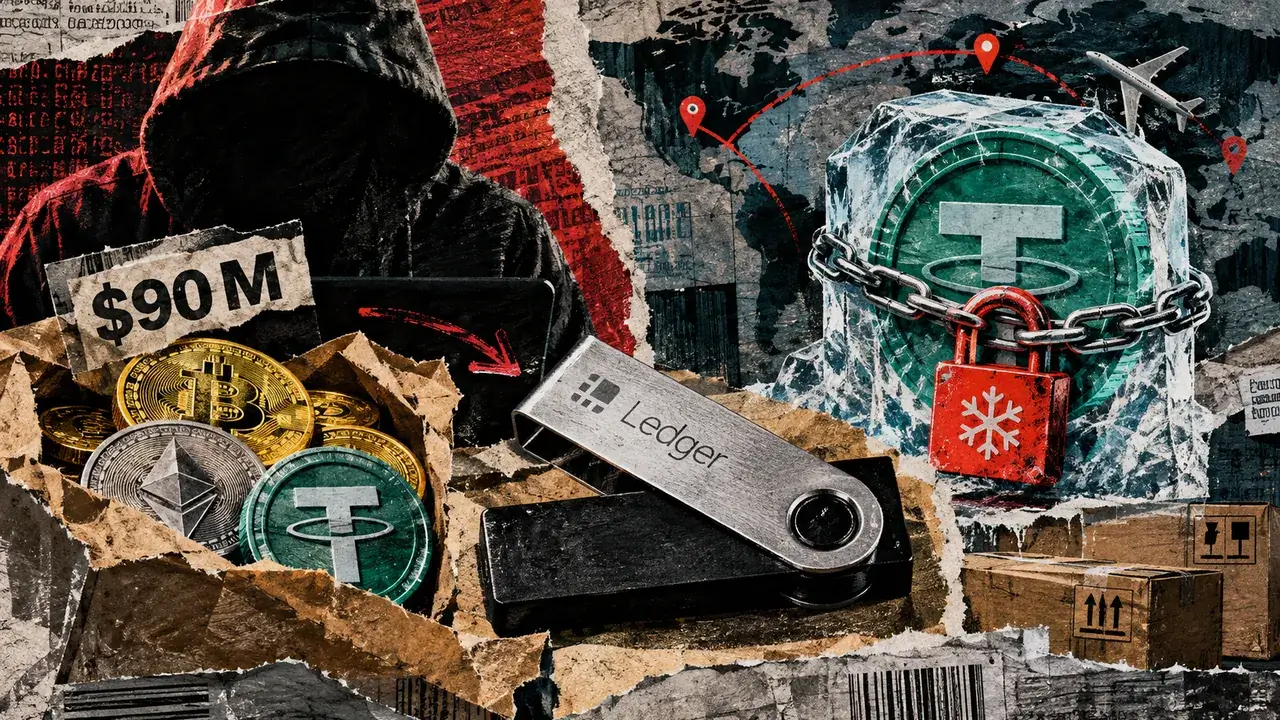
Ledger hack scare nears $90 million as Tether moves to freeze stolen USDT
Suspected Ledger wallet thefts are approaching $90 million as Tether freezes USDT stablecoin linked to the incident, according to...

Stealing $1.5B in crypto is easy, cashing out is the trap
North Korean hackers stole around $1.5 billion from Bybit in February 2025. While the hack itself has been widely covered and anal...

Curve Finance: Ethereum’s Glamsterdam upgrade may boost DeFi execution
The Glamsterdam upgrade could enhance DeFi efficiency, potentially boosting Ethereum's market appeal and influencing future price...

Decrypt and Myriad announce self-custodial Information Exchange on Solana
The integration of self-custodial finance with media could reshape user engagement, but raises concerns about editorial independen...

AI Could Weaken Ethereum Security as Cryptographic Risks Grow, Vitalik Buterin Warns
Buterin urged developers to prepare for potential AI vulnerabilities in both conventional and quantum-resistant cryptography, whil...

Ledger Theft Funds Shift Into USDD, Beyond Tether’s Freeze Controls
Tron records show a 2 million USDT conversion through USDD’s stability module; Bitquery estimates Tether froze $10 million across...