The BITCOIN Act of 2024
Following the announcement on July 27th at the Bitcoin conference in Nashville, the “Boosting Innovation, Technology, and Competitiveness through Optimized Investment Nationwide” or BITCOIN Act of 2024, introduced by Sen...
Archive context
Older archive item. Useful for background and entity history, but not a fresh market-moving signal.
Following the announcement on July 27th at the Bitcoin conference in Nashville, the “Boosting Innovation, Technology, and Competitiveness through Optimized Investment Nationwide” or BITCOIN Act of 2024, introduced by Senator Cynthia Lummis of Wyoming, seeks to firmly establish Bitcoin as a strategic asset in the United States’ financial arsenal. At its core, the Act proposes the creation of a Strategic Bitcoin Reserve (SBR) and a structured Bitcoin Purchase Program, and comprehensive national custody policy. While the bill is quite brief, what follows is a breakdown of the Act's key provisions, their implications, and the innovative funding mechanisms employed.
The Strategic Bitcoin ReserveThe establishment of the SBR signifies a paradigm shift in how the United States government manages and custodies Bitcoin at the Federal level. Mirroring many of the best practices currently discussed in the field, such as geographically distributed keys, a cold storage mandate, and independent proof-of-reserves audits, the SBR creates a decentralized network of secure Bitcoin storage facilities across the United States. (Notably not mentioned, however, is a multi-signature system, however it is not explicitly prevented either.) The Act thereby aims to protect against breaches and vulnerabilities to a single catastrophic event.
Bitcoin Purchase ProgramThe Act lays out a plan to acquire up to 1,000,000 Bitcoins over a five-year period, capping purchases at 200,000 Bitcoins annually, and then holding such reserves for twenty years. Furthermore, the Act places limits on the use and sale of the reserve following the holding period. During the minimum holding period, no Bitcoin held by the Federal government in the SBR may be sold, swapped, auctioned, encumbered, or otherwise disposed of for any purpose other than retiring outstanding Federal debt instruments.
Funding the Bitcoin Purchase ProgramIn order to minimize the impact on taxpayers, the Act employs several methods to finance the acquisition of Bitcoin, ensuring economic sustainability without increasing Federal debt.
It first proposes an amendment to the Federal Reserve Act to reallocate discretionary surplus funds from the Federal Reserve Banks. This reduces the discretionary surplus funds from $6.825 billion to $2.4 billion. The Federal Reserve is then required to remit net earnings to the Treasury, and the Act redirects the first $6 billion towards purchasing Bitcoin.
Furthermore, the Act also involves an adjustment in the valuation of gold certificates held by the Federal Reserve. Currently, the Federal Reserve holds gold certificates which are marked at $42.22/oz, while the market price of gold is closer to $2,400 today. Essentially, this forces the Federal Reserve to mark-to-market the gold certificates, then remit the gain on the gold to the Treasury for the purpose of funding the initial acquisition.
State ParticipationThe Act contemplates accepting State-level Bitcoin holdings into the national framework through voluntary participation. This aspect allows individual states to store their Bitcoin holdings within the SBR in segregated accounts. By offering this option, the Federal government allows (but does not require) States to add Bitcoin to their own treasuries, without having to reinvent and reimplement a robust security plan.
States participating in the program maintain exclusive and segregated title to their Bitcoin, and the right to withdraw or transfer their Bitcoin holdings from the SBR, subject to the terms of their contractual agreement and any applicable Federal regulations, but are not subject to the Federal restrictions otherwise applicable to the SBR. This flexibility ensures that States can manage their Bitcoin treasuries in accordance with their specific financial strategies and needs.
Implications & Next StepsBy tapping into existing financial resources and leveraging the economic value of gold, the BITCOIN Act aims to acquire Bitcoin without directly burdening taxpayers or increasing federal debt. This multifaceted approach underscores the innovative financial strategies the Act employs to integrate Bitcoin into the national reserve system, setting the stage for a comprehensive Bitcoin policy throughout all levels of the United States government.
Readers who wish to support the Act should contact their legislators, either directly or through a tool such as this one built by the Satoshi Action Fund.
This is a guest post by Colin Crossman. Opinions expressed are entirely their own and do not necessarily reflect those of BTC Inc or Bitcoin Magazine.
Why this matters
This bitcoin story adds another data point to the current market tape and is useful when read alongside nearby source coverage.
Original source
Read on Bitcoin MagazineRelated market context

U.S. Government Sends $1 Billion in Seized Bitfinex Bitcoin to Unlabeled Wallets
A wallet holding bitcoin stolen in the 2016 Bitfinex hack sent 12,267 BTC, worth about $1.01 billion, to new addresses on Thursday...
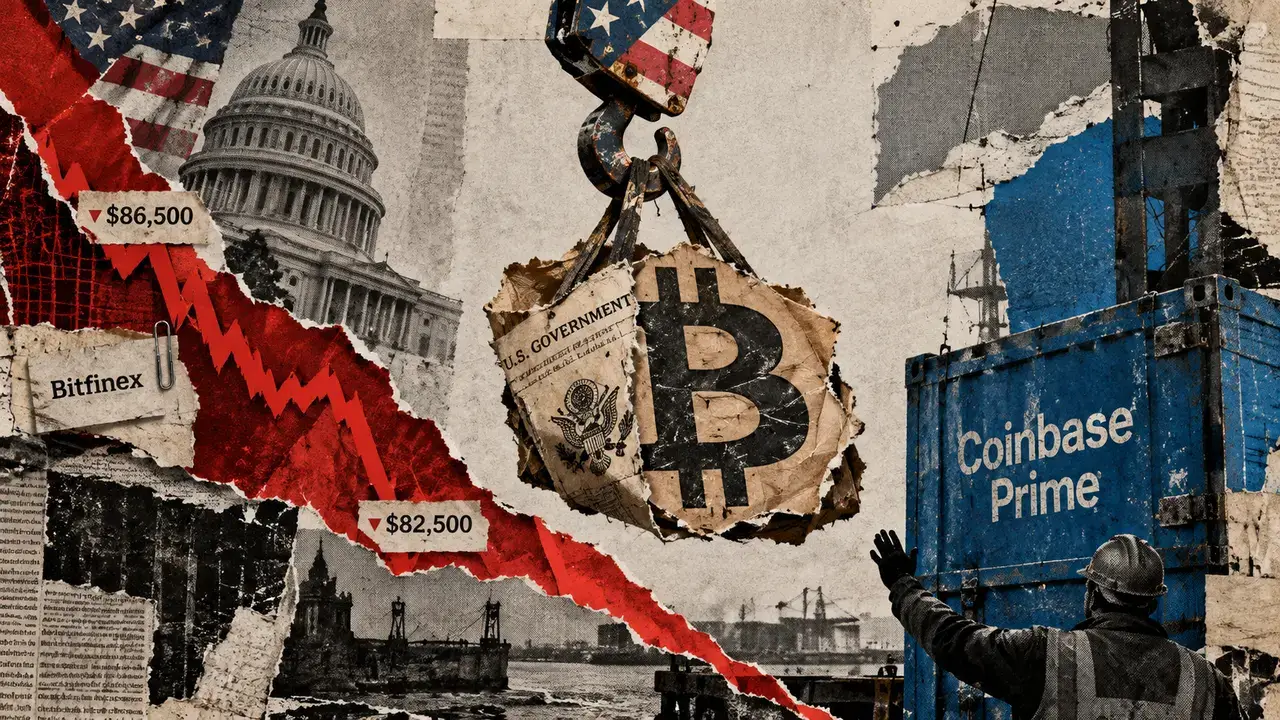
US government moves another $1 billion in Bitcoin as BTC slides $4,000
US government-linked wallets moved over $1 billion in Bitcoin on Oct. 8 as BTC prices fell and more coins reached Coinbase Prime....

US government moves 17,795 Bitcoin worth $1.5 billion in three days
The movement of such a large Bitcoin reserve by the US government could influence market dynamics and investor sentiment significa...

Bitcoin Price Prediction: Is the US Government Behind The Crypto Crash?
Bitcoin is trading at $82,400 after losing 4% over the past week, but that bounce does little to settle the question behind the se...

AI may be keeping Bitcoin’s biggest macro headwind alive after the Fed stops hiking
Bitcoin faces a new macro headwind from the artificial-intelligence boom as massive infrastructure spending competes for long-term...
US Government Shifts $1 Billion in Bitcoin, $94 Million in Tether
The U.S. government’s cryptocurrency shuffle isn’t over. Following two days of bitcoin transfers totaling $770 million, federal wa...