Voltage Now Offers One-Click Inbound Liquidity For Lightning Nodes
Voltage will supply up to 500,000 sats of inbound liquidity from its main node to its customers with one seamless click.Voltage now offers its users inbound liquidity for Lightning nodes with one click. Voltage will supp...
Archive context
Older archive item. Useful for background and entity history, but not a fresh market-moving signal.
Voltage will supply up to 500,000 sats of inbound liquidity from its main node to its customers with one seamless click.
- Voltage now offers its users inbound liquidity for Lightning nodes with one click.
- Voltage will supply 500,000 sats from its main node.
- The company hopes to expand this offering beyond just Voltage customers.
Voltage, a bitcoin infrastructure provider, has released a new and effortless way to find inbound liquidity in order to create a Lightning node, per a blog post from the company.
In just one click, Voltage users can gain 500,000 sats of inbound liquidity, courtesy of the main Voltage node. Voltage intends for this service to quickly help onboard as many merchants, businesses and node runners as possible onto the Lightning Network.
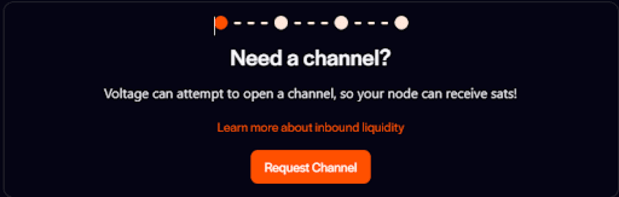
For users looking to utilize this feature, the following widget will be available at the top of Voltage’s dashboard once a node has been onboarded.
Image SourceSimply click on the “Request Channel” and the process is basically done. Voltage will then open a channel with the providing inbound liquidity and will also provide transactional details for users to verify the channel opening. Once the transaction is confirmed three times, the process is certifiably complete. After completion, the above widget will disappear from the dashboard screen.
Furthermore, the Lightning provider noted that while this service is currently only available to Voltage customers, the company looks to expand liquidity services to the broader network.
What Is Inbound Liquidity?The Lightning Network provides scalability to Bitcoin by allowing two or more participating parties to create a channel together, thereby allowing the seamless transfer of satoshis between one another. This is achieved through liquidity which is provided by participating parties which can then be transferred back and forth between the parties, ad infinitum.
However, this brings forth the issue of providing that initial liquidity which allows the parties to trade back and forth. Essentially, inbound liquidity is just funds that can be received from another participating node.
Why this matters
This bitcoin story adds another data point to the current market tape and is useful when read alongside nearby source coverage.
Original source
Read on Bitcoin MagazineRelated market context

XRPL’s $1.34 billion stablecoin base doesn’t tell us how much XRP users need
Tracked stablecoins on the XRP Ledger totaled $1.338 billion on Oct. 7. For XRP holders, the critical question is how much activit...
Bitcoin Core’s privacy fix reaches v32 code while the v31 patch remains open
Bitcoin Core has merged a privacy fix into its 32.x source branch addressing behavior that could correlate private-broadcast conne...

Stealing $1.5B in crypto is easy, cashing out is the trap
North Korean hackers stole around $1.5 billion from Bybit in February 2025. While the hack itself has been widely covered and anal...
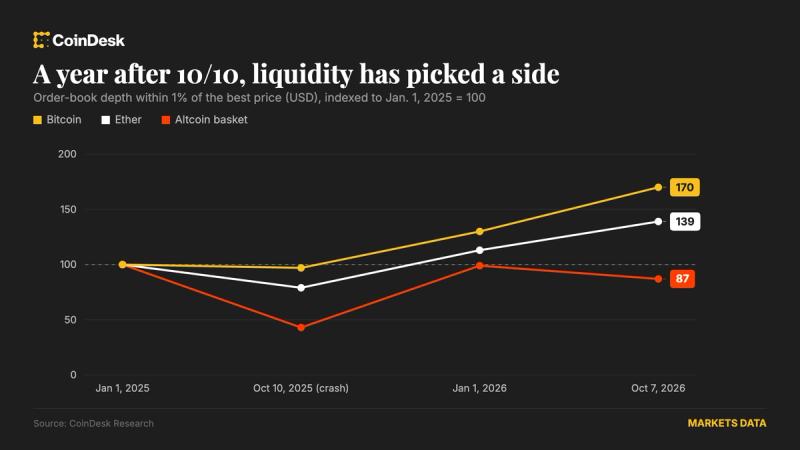
One year after 10/10, bitcoin and ether liquidity have rebuilt, but other altcoins still face risks
Bitcoin and ether order books are deeper than before the crash, while altcoin liquidity keeps eroding and spot trading remains wel...

Sui’s Hashi Launches With $500M to Turn Bitcoin Into Productive DeFi Collateral Markets
Key Takeaways: With more than $500 million in locked-in tokens, Hashi will launch its phased mainnet launch. The protocol enables...

Locked liquidity did not stop this $14 million crypto pool drain
The PancakeSwap pool for 79AU, 79thVault’s token, lost $14.35 million in USDT on Oct. 7 through two selling wallets, according to...