$247M at Risk: Coinbase Warns Stablecoin Rewards Ban Could Derail Senate Crypto Bill
Key Takeaways: Coinbase is intensifying pressure on US senators as a major crypto market structure bill heads to Senate markup this week. The exchange may withdraw support if the bill restricts stablecoin rewards beyond...
Archive context
Older archive item. Useful for background and entity history, but not a fresh market-moving signal.

Key Takeaways:
- Coinbase is intensifying pressure on US senators as a major crypto market structure bill heads to Senate markup this week.
- The exchange may withdraw support if the bill restricts stablecoin rewards beyond disclosure requirements.
- Stablecoin rewards are a critical revenue stream for Coinbase and a growing flashpoint between crypto firms and banks.
As US lawmakers prepare to debate one of the most consequential crypto bills in years, Coinbase has made its position clear: limits on stablecoin rewards could be a deal-breaker. With hundreds of millions of dollars in revenue on the line, the company is signaling it will not back legislation that undercuts a core part of its business model.
Read More: Coinbase Launches Custom Stablecoins, Partners With Kalshi to Bring On-Chain Prediction Markets
Coinbase Raises Stakes Ahead of Senate MarkupCoinbase Global Inc., the largest US-based crypto exchange, is stepping up lobbying efforts as a sweeping digital asset market structure bill moves closer to a Senate committee markup scheduled for Thursday. According to Bloomberg, Coinbase could reconsider its support for the bill if lawmakers include provisions that go beyond transparency and disclosure rules for stablecoin rewards.
At the center of the dispute is whether crypto exchanges should be allowed to offer incentives to users who hold stablecoins, such as cash-like rewards funded by issuers or partners. Coinbase argues that such programs are not equivalent to bank interest and should not be treated as such under federal law.
The bill, expected to be formally unveiled Monday, aims to define regulatory boundaries for crypto markets, including oversight of exchanges, token issuers, and decentralized finance activity. For Coinbase, however, the treatment of stablecoin rewards has emerged as a red line.
Stablecoin Rewards as a Core Revenue Pillar for CoinbaseStablecoins have quietly become one of Coinbase’s most important revenue drivers. In the most recent quarter, the company generated nearly $247 million from stablecoin-related activities, alongside more than $150 million from blockchain rewards. These figures highlight how deeply embedded rewards are in the exchange’s broader business strategy.
Products tied to widely used dollar-backed tokens, such as those offering annual yields in the low single digits, have proven popular with retail users seeking predictable returns without the volatility of other crypto assets. Removing or severely limiting these incentives would likely reduce user engagement and push customers toward offshore platforms with looser rules.
From Coinbase’s perspective, restricting rewards at the exchange level would also create an uneven playing field. While some existing laws already prevent stablecoin issuers from paying interest directly, exchanges argue they should retain flexibility to design customer rewards programs, provided risks are clearly disclosed.
Banks Push Back as Crypto Gains GroundThe banking industry sees the issue very differently. Trade groups and financial institutions have warned lawmakers that stablecoin rewards could accelerate a large-scale shift of deposits out of traditional banks. The US Treasury has previously estimated that widespread stablecoin adoption could redirect trillions of dollars away from the banking system over time.
This concern has fueled lobbying efforts to close what banks view as loopholes in earlier legislation. While existing laws restrict issuers from offering yield, they do not explicitly prohibit exchanges or third-party platforms from doing so. Banking advocates argue that allowing rewards through intermediaries undermines the spirit of those rules.
In recent weeks, pro-bank groups have increased public pressure, including media campaigns urging voters to contact senators ahead of the markup. At the same time, crypto advocacy organizations claim their supporters have sent more than 100,000 messages to lawmakers defending stablecoin rewards as a consumer-friendly innovation.
Political Timing and Regulatory Uncertainty Midterms Could Slow Crypto LegislationAlthough the bill passed committee markup, it is unclear whether it will make its way through Congress. According to analysts in Washington, the 2026 midterm elections may put a hold on the passage thus making final passage into 2027 and implementation until just before 2029.
Nevertheless, major Senate figures, who have worked on the bill, have been optimistic that something can be achieved earlier on by presenting the bill as a necessity to keep online asset innovation onshore and within the US jurisdiction.
In the case of Coinbase, time is nearly equal to a thing. The company has already applied a national trust banking charter, which would help the company to have a stronger legal foundation to implement rewards within the existing structures. However, a stricter bill could override that strategy before it bears fruit.
The post $247M at Risk: Coinbase Warns Stablecoin Rewards Ban Could Derail Senate Crypto Bill appeared first on CryptoNinjas.
Why this matters
Coinbase is showing up inside the Stablecoins theme, so this story is worth tracking for follow-through rather than treating it as a one-off headline.
Original source
Read on CryptoNinjasRelated market context
Monad Wins a Stablecoin Card Infrastructure Deal With Reap and Meru
TL;DR: Reap announced on October 26 that it would add the Monad blockchain to its stablecoin-linked card infrastructure, with Lati...

Robinhood adopts Ripple’s RLUSD stablecoin, boosting institutional operations
Robinhood's adoption of RLUSD may drive institutional interest, potentially boosting Ripple's ecosystem and influencing future mar...

Robinhood Taps Ripple's Stablecoin, Treasury Software and Trading Loans
Ripple's RLUSD stablecoin is live on Robinhood Chain and Bitstamp, and heads to the Robinhood app later this year as the companies...

S&P Dow Jones Indices partners with Kalshi to build prediction market indices
The partnership could revolutionize prediction markets by integrating institutional-grade benchmarks, potentially reshaping econom...
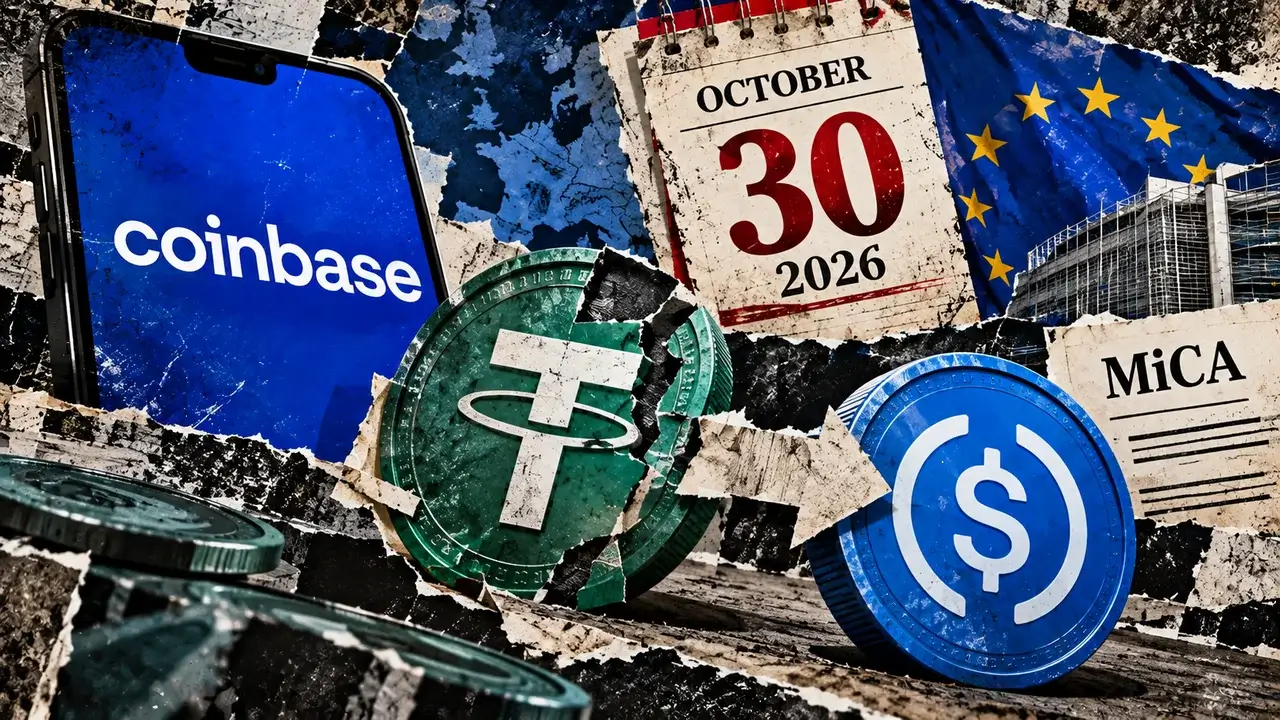
Coinbase sets 3-day MiCA deadline for USDT, PayPal and Trump-linked stablecoins
Affected retail balances will convert at market rates, with USDC used where suitable and late deposits excluded. Read the full sto...

Robinhood adopts Ripple’s RLUSD stablecoin, expands institutional services
Robinhood's integration of Ripple's RLUSD stablecoin may boost institutional confidence and demand for XRP, impacting market dynam...