A $16 Trillion Path: AR Tokens, Which Can Close the Gap Between TradFi and DeFi
Over the past year, interest in bringing real-world assets (RWAs) on-chain has grown rapidly. From tokenized U.S. Treasuries to synthetic equities, the vision is clear: to combine the stability of traditional finance (Tr...
Archive context
Older archive item. Useful for background and entity history, but not a fresh market-moving signal.

Over the past year, interest in bringing real-world assets (RWAs) on-chain has grown rapidly. From tokenized U.S. Treasuries to synthetic equities, the vision is clear: to combine the stability of traditional finance (TradFi) with the flexibility of decentralized finance (DeFi).
Yet, current RWA implementations often fall short of this promise. Many exist in legal gray areas, are locked in custodial systems, and resemble traditional securities more than crypto-native assets. These structures may live on-chain in code, but they rarely function that way in practice.
A Market Primed for Growth
The opportunity, however, is massive. According to the Boston Consulting Group, tokenized RWAs could reach a value of $16 trillion by 2030. At present, less than $23 billion of RWAs are tokenized on-chain—just a fraction of the potential.
Institutions are paying attention. BlackRock has highlighted tokenization as a focus. HSBC is expanding its tokenized product offerings. The Bank for International Settlements is running pilots with central banks in the U.S., Japan, and France.
But despite these developments, most RWA infrastructure today is being built through a TradFi lens: permissioned, centralized, and difficult to use within DeFi protocols.
DeFi Needs Real-World Exposure
Currently, most DeFi activity centers on crypto-native assets that are volatile and speculative. Without stable, real-economy assets like bonds or real estate, DeFi lacks the foundation to attract long-term capital. Sustainable growth requires more than yield farming—it needs access to assets that reflect real economic value.
Early tokenization efforts—via synthetic derivatives or regulated wrappers—struggled to deliver on that promise. They remain siloed, inflexible, and often unusable within major DeFi protocols like Aave or Uniswap.
Catch the recording of DeFi Technologies President & @ValourFunds CGO @Forson at @MaximGrp's 2025 Virtual Tech Conference.He breaks down our business, our growth strategy, and how we’re bridging TradFi and DeFi. $DEFT $DEFI.NE pic.twitter.com/dHy4TrVE5w
— DeFi Technologies (@DeFiTechGlobal) June 17, 2025Asset-Referenced Tokens: A Practical Alternative
This is where Asset-Referenced Tokens (AR tokens) present a promising path. AR tokens are fully backed by real-world assets but are designed to operate natively within the crypto environment.
Unlike traditional tokenized securities, they are not weighed down by restrictive custody models or security classifications. Instead, they align with evolving regulatory regimes like the EU’s Markets in Crypto-Assets (MiCA) framework, which treats them as crypto assets.
This approach opens the door for AR tokens to function across DeFi protocols—used as collateral, traded on decentralized exchanges, and integrated into composable systems—while remaining compliant and secure.
Designing for Crypto from Day One
DeFi’s long-term success depends on its ability to anchor itself in the real economy. That requires more than just infrastructure; it requires assets that reflect the world we live in. The convergence of regulation, institutional interest, and blockchain maturity has created the conditions to bring RWAs on-chain in meaningful ways.
But to unlock that potential, tokenized assets must be built to function like crypto from the outset. AR tokens offer a path forward—not by mimicking TradFi, but by improving it—laying the foundation for a financial system that is more open, resilient, and interoperable.
This article was written by Michael Bar Zeev at www.financemagnates.com.Why this matters
This blockchain story adds another data point to the current market tape and is useful when read alongside nearby source coverage.
Original source
Read on Finance MagnatesRelated market context

OKX Eyes 63 U.S. Stocks in Major Tokenized Trading Expansion
Key Takeaways: OKXICE informed the SEC about its plan to establish an online platform called “Tokenized Securities Venue” that wou...

Cardano Brings Compliance Rules On-Chain With CIP-0113 Launch
TL;DR: Cardano’s CIP-0113 programmable token standard is now live on mainnet. It gives issuers the ability to build controls such...

Tether signs MoU with Kazakhstan’s central bank to explore tenge stablecoins and tokenized assets
Kazakhstan's collaboration with Tether could enhance its fintech landscape, potentially boosting local currency integration in dig...

Plume Opens Onchain Access to Fidelity’s $28B Bond ETF Through New nBND Vault
Key Takeaways: Plume has introduced nBND, a tokenized vault with a primary asset of Fidelity Total Bond ETF (FBND). FBND is managi...
OKX Secures Circle, Ripple and Standard Chartered Backing at $25B Valuation
Key Takeaways: OKX raised funding with Circle, Ripple, QRT, and SC Ventures with a valuation of $25B. The deal is a continuation o...
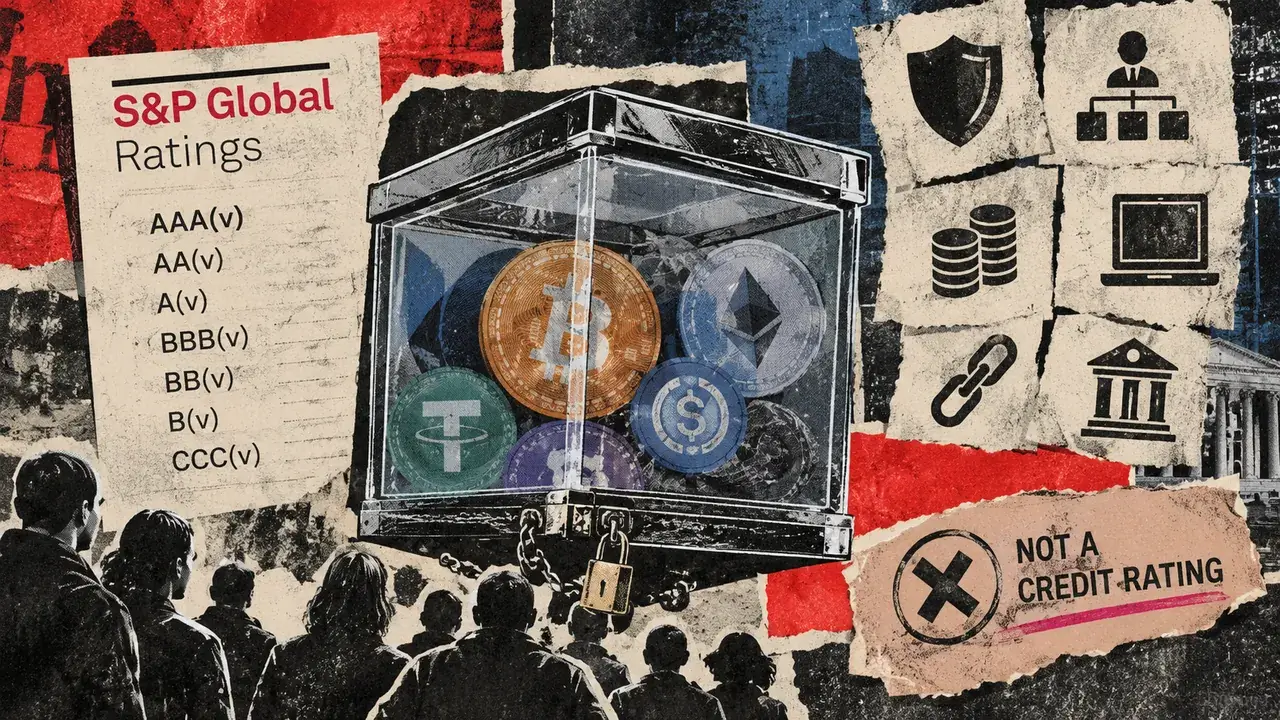
S&P brings ratings-style scrutiny to $10 billion crypto vault market as $6 million Base incident exposes risks
S&P Global is bringing ratings-style risk assessments to crypto lending vaults as the fast-growing market confronts fresh security...