Chinese L1 Blockchain Conflux Teases New Upgrade, Eyes Offshore Yuan Stablecoin
Conflux Network, a Chinese Layer 1 blockchain, is preparing to roll out a major network upgrade while stepping into the stablecoin arena with a yuan-pegged digital currency designed for international use. Key Takeaways:...
Archive context
Older archive item. Useful for background and entity history, but not a fresh market-moving signal.
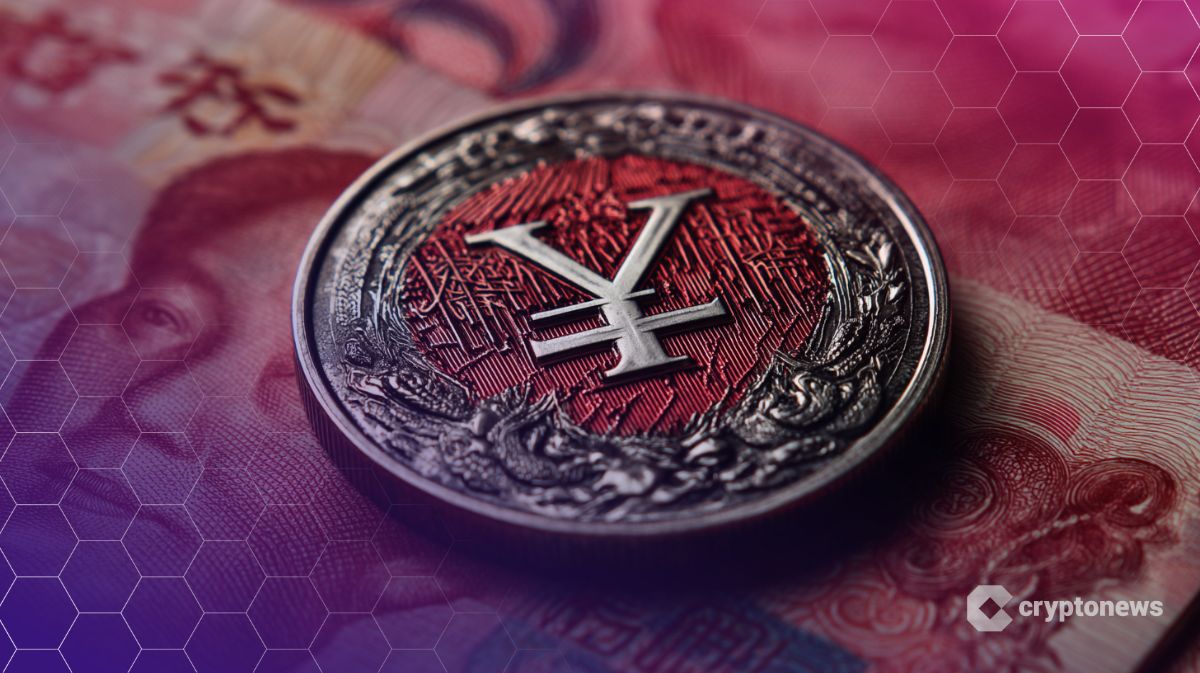
Conflux Network, a Chinese Layer 1 blockchain, is preparing to roll out a major network upgrade while stepping into the stablecoin arena with a yuan-pegged digital currency designed for international use.
Key Takeaways:
- Conflux Network is launching a yuan-pegged stablecoin to support cross-border BRI payments.
- The upcoming Conflux 3.0 upgrade aims to boost network speed to 15,000 TPS.
- CFX token surged 57% after the announcement.
During a weekend conference, Conflux revealed its collaboration with fintech company AnchorX and Shenzhen-listed Eastcompeace Technology to develop a stablecoin tied to the offshore yuan.
The announcement, posted on the Shanghai government’s website, signals a growing effort to extend China’s financial footprint across Belt and Road Initiative (BRI) countries.
These include key regional partners such as Singapore, Indonesia, Malaysia, and Kazakhstan.
Proposed Yuan Stablecoin Aims to Power BRI Cross-Border PaymentsThe proposed stablecoin is intended to facilitate cross-border payments and commerce among BRI participants, leveraging blockchain infrastructure while remaining aligned with Chinese regulatory preferences.
The move comes amid broader state-level discussions on the role of stablecoins and digital currencies in reshaping the global financial system.
Conflux also unveiled plans for Conflux 3.0, the network’s latest upgrade slated for release in August.
With a reported transaction processing speed of up to 15,000 TPS (transactions per second), the upgrade is positioned to enable large-scale settlement of real-world assets and cross-border payments.
The market responded quickly. Conflux’s native token, CFX, surged 57% in the past 24 hours, reaching $0.22 with a market cap of $1.1 billion, according to The Block.
Meanwhile, Eastcompeace’s stock rallied 10% on the Shenzhen exchange, hitting the daily limit.
Earlier this month, Conflux shared that AnchorX was developing “AxCNH,” a stablecoin backed by the offshore yuan and supported by Conflux’s infrastructure.
Daily Top Crypto Gainer – July 21@Conflux_Network $CFX | +42.7% (24h) | $0.2143
Why It’s Pumping:
CFX exploded on China-backed RMB stablecoin news, upgrade hype, and a brutal short squeeze.
Key Drivers:
• RMB Pilot: Announced at Shanghai event with AnchorX and China… pic.twitter.com/Ne6o0pb0xE
The initiative aligns with comments from People’s Bank of China Governor Pan Gongsheng, who said in June that stablecoins and CBDCs are transforming global payments.
Hong Kong’s regulatory landscape is also moving in parallel. A new licensing regime for stablecoin issuers is set to begin on August 1, adding further legitimacy to the sector.
Major Chinese firms like JD.com and Ant Group are reportedly lobbying for approval to issue yuan-backed stablecoins abroad.
Former Chinese Finance Official Pushes Yuan StablecoinsLast week, former Deputy Finance Minister Zhu Guangyao urged integrating yuan-backed stablecoins into China’s top-level financial policy, citing the growing global role of dollar-pegged stablecoins.
Speaking at a closed-door seminar, Zhu warned that U.S. dollar stablecoins serve as an extension of U.S. monetary dominance, calling them the “third phase” of the Bretton Woods system.
He pointed to explosive stablecoin transaction volumes in 2024, surpassing Visa and Mastercard, and emphasized US efforts to consolidate regulatory control through new legislation like the Lummis–Gillibrand Act.
The move, Zhu argued, enhances the dollar’s global reach and liquidity while limiting space for non-dollar stablecoin growth.
Zhu proposed that China treat Hong Kong as a regulatory sandbox, develop both offshore and domestic yuan stablecoins, and monitor how the U.S. enforces stablecoin laws, especially against foreign issuers.
He stressed that yuan stablecoins could diversify global payment systems and support currency internationalization without risking capital account liberalization.
The post Chinese L1 Blockchain Conflux Teases New Upgrade, Eyes Offshore Yuan Stablecoin appeared first on Cryptonews.
Why this matters
This blockchain story adds another data point to the current market tape and is useful when read alongside nearby source coverage.
Original source
Read on CryptonewsRelated market context
USDT’s grip on Asia-Pacific stablecoin payments loosens to 91%
The shift towards compliance-focused stablecoins in Asia-Pacific may signal a broader trend of regulatory integration influencing...

Base creator predicts tokenization supercycle led by equities, non-dollar stablecoins
The predicted tokenization supercycle could reshape financial markets, influencing Base's strategic direction and broader crypto a...

China’s P2P stablecoin wallets surge 43x, Korea’s $450B crypto economy: Asia Express
Despite ongoing bans, China has seen a big surge in peer-to-peer stablecoin use. New figures show South Korea’s $450B crypto econo...

XRP Ledger adds new controls for banks, stablecoins and tokenized funds
The feature lets businesses give separate accounts limited powers such as approving customers or making payments, while keeping th...
XRPL’s $1.34 billion stablecoin base doesn’t tell us how much XRP users need
Tracked stablecoins on the XRP Ledger totaled $1.338 billion on Oct. 7. For XRP holders, the critical question is how much activit...

Base creator Jesse Pollak says equities and non-dollar stablecoins will lead upcoming ‘tokenization supercycle’
Coinbase launched tokenized stocks on Base six weeks ago, with about $70 million to $100 million in daily volume, according to Pol...