EU Launches Blockchain Regulatory Sandbox for DLT Development
The European Commission (EC), a cabinet government and the executive body of the European Union (EU), has announced the launch of its newest regulatory sandbox for blockchain and distributed ledger technology (DLT).The E...
Archive context
Older archive item. Useful for background and entity history, but not a fresh market-moving signal.

The European Commission (EC), a cabinet government and the executive body of the European Union (EU), has announced the launch of its newest regulatory sandbox for blockchain and distributed ledger technology (DLT).
The European Blockchain Regulatory Sandbox
The newly established European Blockchain Regulatory Sandbox was launched to create a pan-European regulatory framework to promote legal certainty for projects using blockchain technology. It is facilitated by a consortium including Bird & Bird, OXYGY, WBNoDE and Spindox.
Funding for creating the sandbox was raised from the Digital Europe Programme. The initiative is expected to work for the SME over the next three years and, according to its concept, will support up to 20 projects from both the private and public sectors within the European Blockchain Services Infrastructure. Independent academic experts will oversee the whole process.
"Projects will be selected through calls for expression of interest. Every year, the most innovative regulator participating in the sandbox will also be awarded a prize," the EC stated in the press release.
Europe Sees Blockchain Potential
According to the EC, DLT and blockchain have broad potential, which is not only limited to the financial industry. The technology can support regulation and documentation in the fight against fraud.
"Companies can facilitate the exchange of non-personal data to train algorithms, and/or create unique digital twins for assets they buy, sell or insure in the mobility, energy and manufacturing sectors," the EC added.
While pilot programs conducted in the EU have shown the considerable potential of blockchain, the EC points to legal uncertainty. The regulatory sandbox has been created to lower the uncertainty, where regulators and supervisors can have an open dialogue and companies and public institutions can develop.
"The Sandbox is open to companies from all industry sectors and public entities for projects beyond a proof-of-concept stage and already close-to-market or at an early stage of being operational, involving amongst other technologies the use of DLT," the statement explained.
Initial applications are being accepted until 14 April 2023.
Watch the recent FMLS22 Executive Interview with Tobias Bauer from Blockchain Founders Fund.
Markets in Crypto-Assets Regulation
The European Union has been working since the middle of last year to regulate the cryptocurrency industry under the Markets in Crypto-Assets regulation (MiCA) proposal. MiCA seeks to regulate issuers of stablecoins and other unbacked crypto-assets such as Bitcoin. It also wants to bring operators of crypto-asset trading venues and wallets within its ambit.
Initial discussions on the MiCA started in September 2020. However, an interim legislative agreement between the EU and EC was reached just at the end of June last year. The MiCA is intended to be part of a broader digital finance package and does not cover all issues related to the cryptocurrency market: it bypasses the DeFi and NFT markets, for example.
The EU has started to take a stronger interest in blockchain technology at a time when it has declined significantly in the private sector. Venture capitalists are no longer as interested in funding the industry and only supported it with $2.3 billion in the last quarter. In the first half of 2022, funding was $30 billion, while in the second half, the amount raised came in at $7 billion, showing a definite reversal in the industry.
This article was written by Damian Chmiel at www.financemagnates.com.Why this matters
This blockchain story adds another data point to the current market tape and is useful when read alongside nearby source coverage.
Original source
Read on Finance MagnatesRelated market context

BNY Expands Regulated Crypto Custody Across The European Union Under MiCA
TL;DR: BNY has expanded its Digital Asset Custody platform to selected institutional clients across the European Union under MiCA....
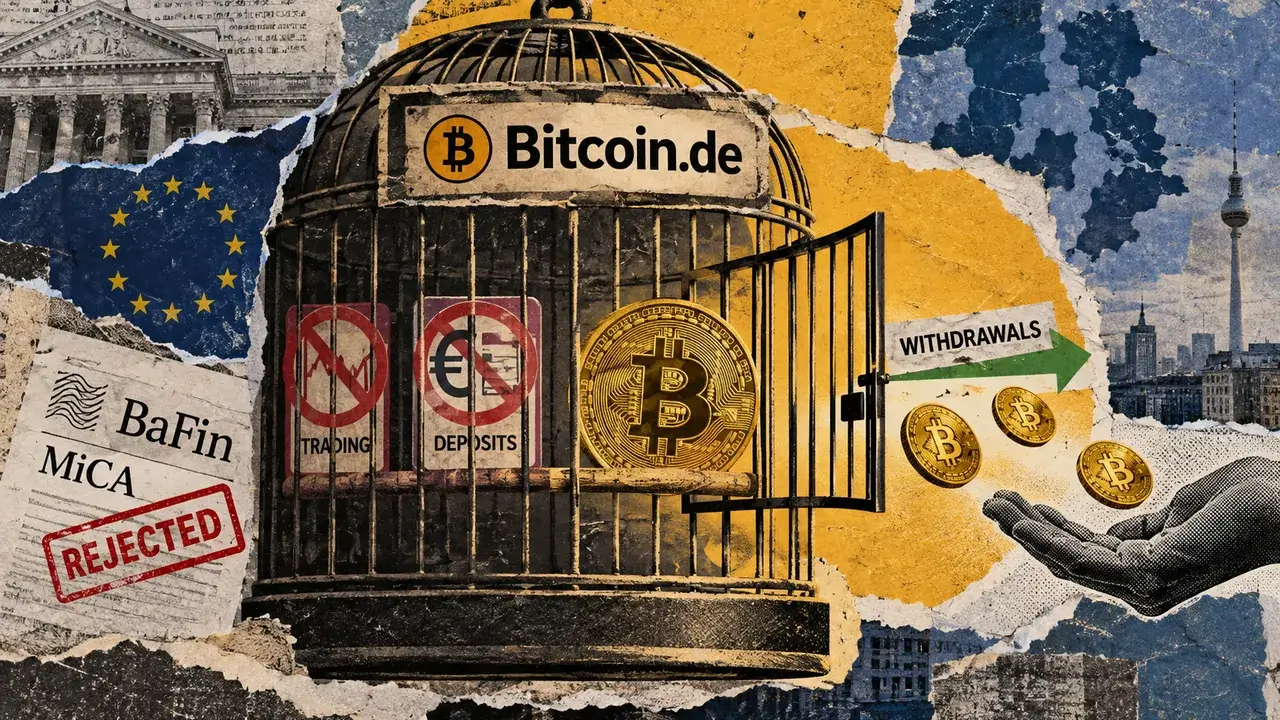
MiCA rejection forces German crypto platform into operational overhaul
Bitcoin.de is rebuilding its operating model after German regulators rejected its MiCA authorization, forcing it to outsource trad...

EU Securities Regulator Wants Crypto Platforms to Wind Down Non-MiCA Stablecoin Services
The European Securities and Markets Authority (ESMA) issued an opinion dated Oct. 8 saying licensed crypto platforms should stop s...

Sui’s Hashi Launches With $500M to Turn Bitcoin Into Productive DeFi Collateral Markets
Key Takeaways: With more than $500 million in locked-in tokens, Hashi will launch its phased mainnet launch. The protocol enables...
LiquidAcre Selects Uphold to Power Digital Asset Infrastructure and Future Tokenized Real Estate Offerings
LiquidAcre, a financial technology company building a platform designed to expand access to real-world assets and digital financia...

Citrini Research Says Tokenized Assets and AI Agents Make Crypto a Fundamentals Trade
Citrini Research published a report on Thursday arguing that AI agents and tokenized assets have opened a new paradigm of “fundame...