How staking incentivizes trust without burning energy
What if a financial system could run itself not by burning electricity, but by rewarding good behavior? That’s the promise of staking, a mechanism that powers many modern blockchains by turning users into network operato...
Archive context
Older archive item. Useful for background and entity history, but not a fresh market-moving signal.
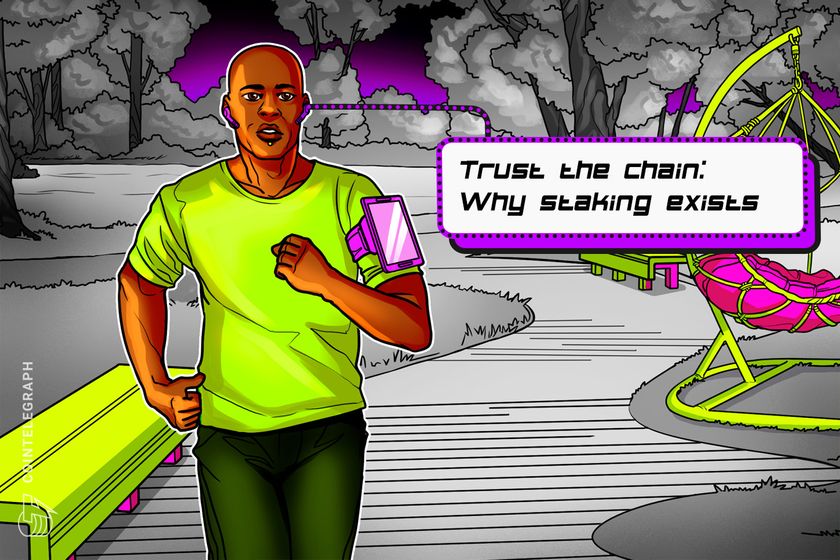
What if a financial system could run itself not by burning electricity, but by rewarding good behavior? That’s the promise of staking, a mechanism that powers many modern blockchains by turning users into network operators.
In this week’s episode of The Clear Crypto Podcast, hosts Gareth Jenkinson and Nathan Jeffay sit down with StarkWare’s Noam Nisan to unpack how this trustless engine works, why it matters and what’s really at stake.
Understanding stakingJeffay began by highlighting how staking is part of the backbone that keeps the blockchain running, and runs itself, with volunteers.
“By doing this, they’re saying, OK, we’re taking this task of running the blockchain seriously. Here's some of our money. We're putting it down. We're showing that we're serious about doing this.”To help unpack this topic further and examine the deeper mechanics behind staking, the hosts are joined by Noam Nisan, principal researcher at StarkWare and a widely respected computer scientist who has held roles at Google and Princeton.
Related: How to handle crypto trading gains and losses on your balance sheet
“So we have this general system with operators... Why would they want to do that? The system, the protocol, incentivizes them to actually run the system,” Nisan explained. “Basically, it can give them tokens for operating the system.”
Staking offers what Nisan describes as two distinct types of security: computer science-based guarantees and economic disincentives for bad actors.
“If a majority or supermajority, maybe two-thirds of the parties of the token of the staked amount are behaving properly... we can prove that the system acts correctly,” he said.
“But you also have what I would call an economic guarantee... if they destroy the system, very likely the value of the token... will go down. So they are the one losing.”PoW vs PoSJenkinson, a vocal Bitcoin (BTC) supporter, posed the classic comparison: proof-of-work vs proof-of-stake. “Do you have any strong feelings about one or the other?” he asked.
“The truth is that it’s not clear.. it's really a social question, I think.”Nisan noted that both mechanisms involve trade-offs around cost, control, and decentralization. The episode also explores the role of staking in tokenomics and system design. Nisan unpacks how fee mechanics and inflation controls, such as Ethereum’s minting curve, help keep the ecosystem in balance.
To hear the full conversation on The Clear Crypto Podcast, listen to the full episode on Cointelegraph’s Podcasts page, Apple Podcasts or Spotify. And don’t forget to check out Cointelegraph’s full lineup of other shows!
Magazine: ZK-proofs are bringing smart contracts to Bitcoin — BitcoinOS and Starknet
Why this matters
This blockchain story adds another data point to the current market tape and is useful when read alongside nearby source coverage.
Original source
Read on CointelegraphRelated market context

What happens when crypto trades stocks while Wall Street sleeps?
Wall Street closes at 4 p.m., but apparently that's becoming more of a suggestion than a rule. You can now spend the evening watch...
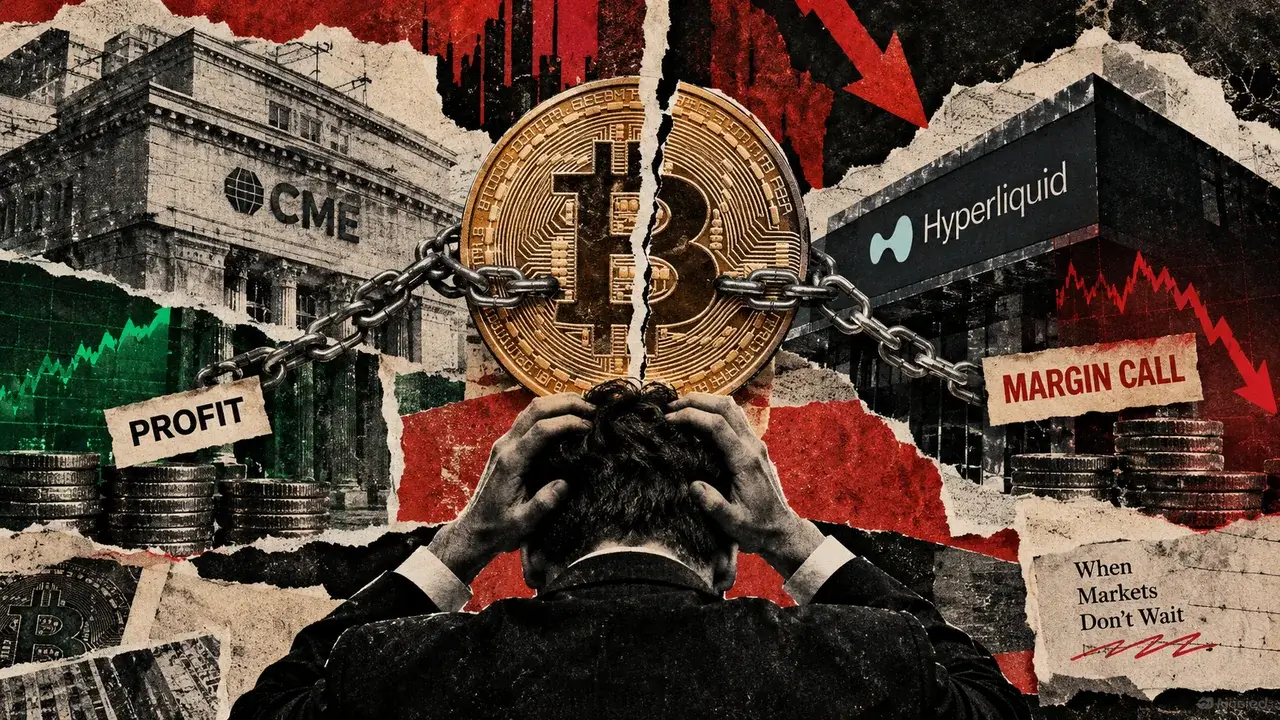
Bitcoin hedge funds face a liquidation trap when their collateral is split across markets
Here's a hypothetical situation: a hedge fund is making money, but one of its exchanges is about to liquidate its position anyway....
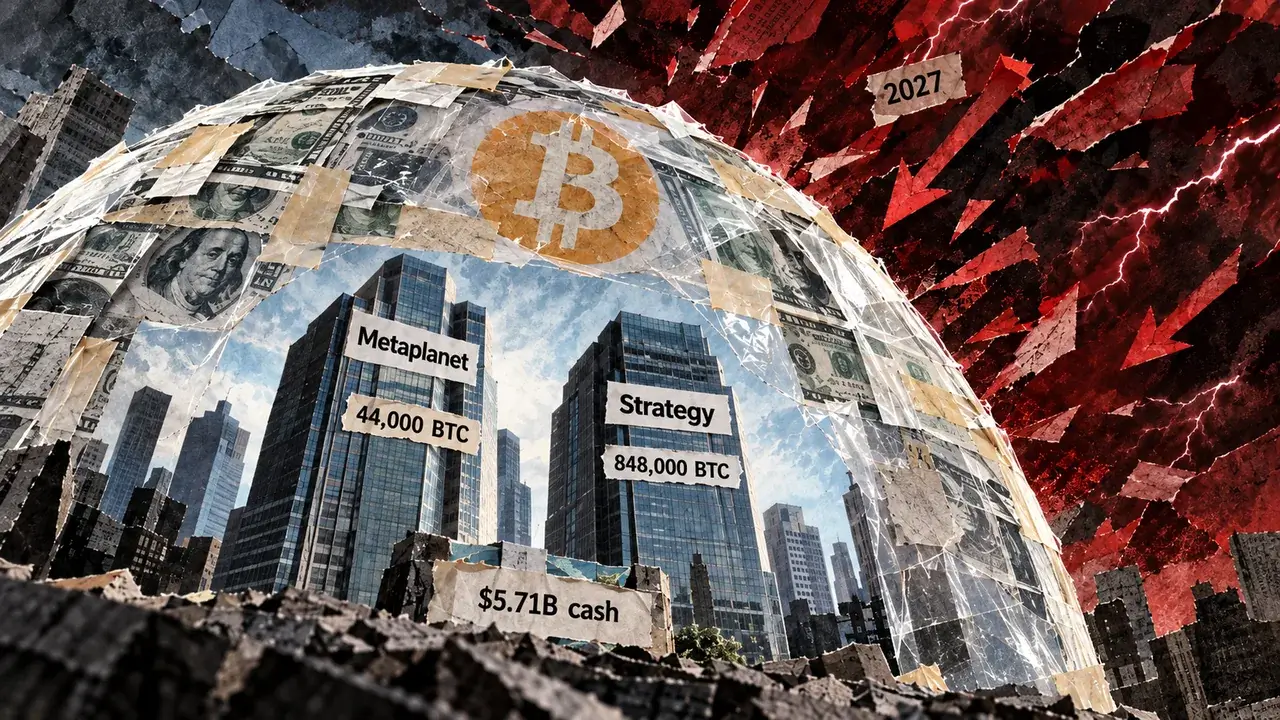
Bitcoin companies are learning that holding forever takes cash
Metaplanet sold 10,000 BTC and bought back 11,000 at a higher average price to show it was willing to sell its Bitcoin. The Japane...
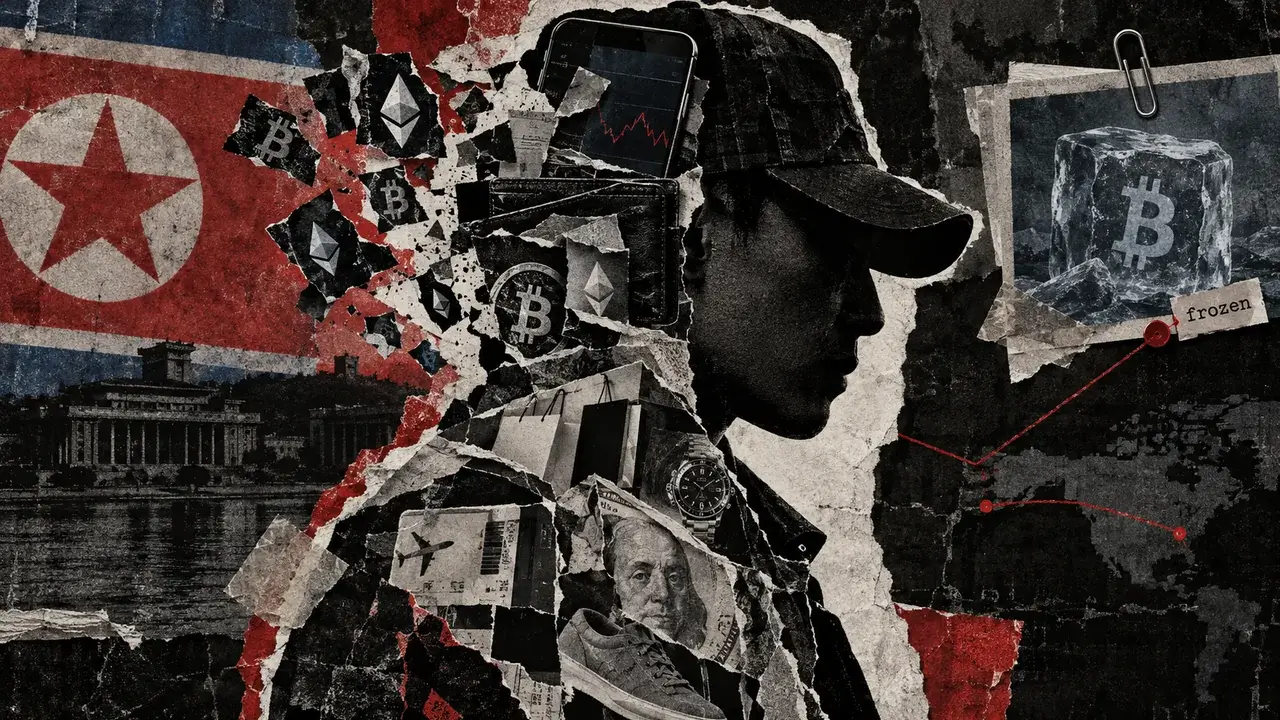
Stealing $1.5B in crypto is easy, cashing out is the trap
North Korean hackers stole around $1.5 billion from Bybit in February 2025. While the hack itself has been widely covered and anal...

What Is Crypto Spot Trading?
For example, a token can be up 70% and still be a terrible trade if you have no idea when to take profits. Likewise, a 30% dip can...

New iPhone spyware can hunt for crypto wallets and extract their data every 15 seconds
Researchers found a new iPhone spyware variant that can remotely extract cryptocurrency wallet data and sensitive credentials from...