Pi Network Takes Consensus 2026 by Storm with AI Identity Push and Web3 Utility Vision
Key Takeaways: Pi Network co-founders will be delivering presentations at Consensus 26 on the three major innovation themes of the application: AI, identity, and the Web3 utility model. Sessions highlight verified identi...
Archive context
Older archive item. Useful for background and entity history, but not a fresh market-moving signal.
Key Takeaways:
- Pi Network co-founders will be delivering presentations at Consensus 26 on the three major innovation themes of the application: AI, identity, and the Web3 utility model.
- Sessions highlight verified identity and human authentication in the web of AI.
- The project positions its blockchain and KYC system as core infrastructure for future digital economies.
Pi Network is stepping into a high-visibility moment as its founders take the stage at one of crypto’s largest global events. It’s evident that the theme is one of integration with AI, identity checks, and real-world application.
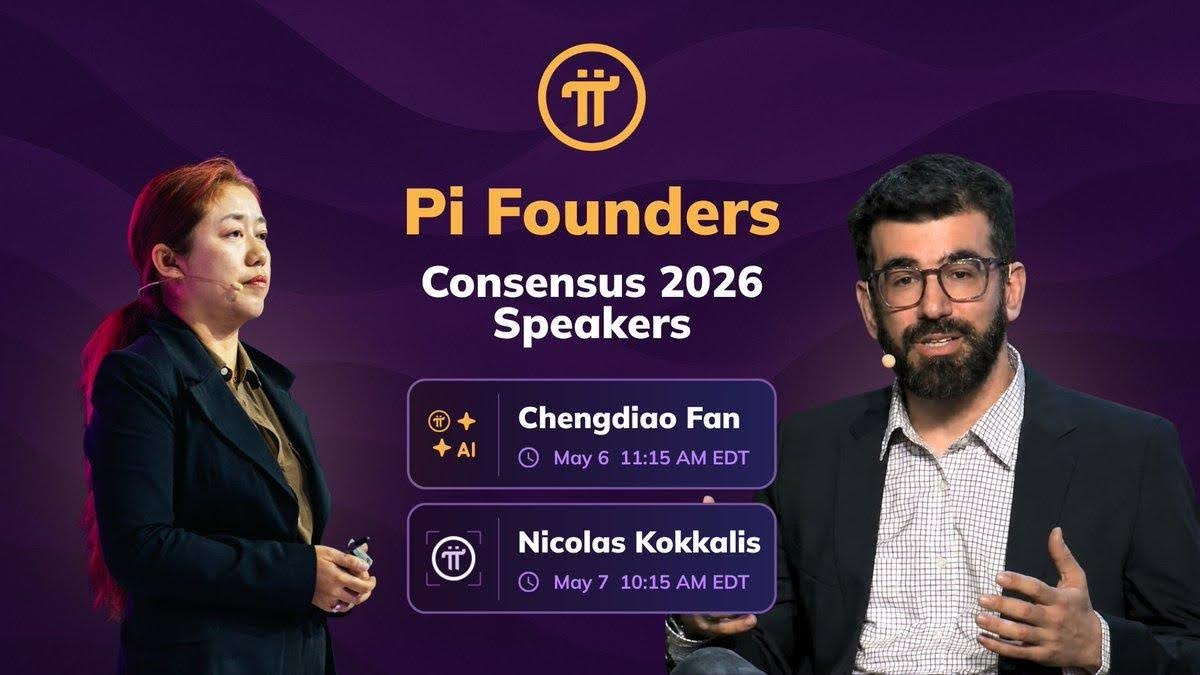
The Pi Founders are featured speakers at Consensus 2026 in Miami this week.
Chengdiao Fan will speak on Wednesday, May 6 (11:15–11:35 AM EDT, Convergence Stage) on “Aligning Web3, AI, and Blockchain for Utility,” exploring how Pi’s blockchain infrastructure, verified identity,… pic.twitter.com/xEaY99b2N5
— Pi Network (@PiCoreTeam) May 5, 2026
Pi Founders Spotlight AI, Identity, and UtilityChengdiao Fan and Nicolas Kokkalis will be unveiling Pi Network’s trajectory in the AI age during their keynote address at Consensus 2026 in Miami. During Fan’s session, the focus will be on Web3, AI, and blockchain alignment.
She is expected to outline how Pi’s infrastructure supports practical applications, not just token activity. The emphasis is on utility-driven products powered by a global user base and verified identity.
Kokkalis will join a panel addressing a growing problem: proving someone is human online. As AI systems improve, bots can now mimic real users with high accuracy.
This makes it less easy to be trusted across digital platforms. The difference with Pi is that it centers around identity, but doesn’t display personal information. Thanks to its native KYC which is designed to guarantee authenticity, while still being private.
Read More: Binance Teases “AI Pro” Tool, Hinting at Next-Gen Trading Power for Millions
The Push for Verified Digital IdentityAI’s emergence has transformed the ways in which whether or not content is trustworthy is determined online. Detecting fake accounts, automated interactions, and synthetic identities continues to be difficult.
Solving the “Human Problem” in Web3Pi Network is using its identity layer as a solution. Rather than the traditional way of verifying, it adopts blockchain identity verification based on true users. This results in a system in which:
- Users are verified once through KYC
- Identity can be reused across applications
- Platforms can filter out bots without collecting excessive data
The idea is to allow for trust on a large scale, without sacrificing user privacy. It is particularly important, especially as AI agents become more common as they interact with financial and social applications.
The shift is a shift in messaging and Pi’s message at Consensus is here to prove it. The project is evolving from being a mobile mining network to application development.
Read More: X Rolls Out 75+ Custom Timelines Powered by Grok, Premium Users Get First Access
Positioning for the AI-Driven EconomyThese conversations are not random with regard to their timing. The more the use of AI is intertwining with everyday digital behaviors, the greater the need for dependable identity systems. Pi Network is marketing itself as infrastructure for this move:
- Blockchain ensures transparency and immutability
- Identity verification ensures authenticity
- A large user base enables immediate network effects
The goal of this project is to enable applications where it’s essential to trust: finance, social applications, digital services, etc. Consensus 2026 is a platform for such communication.
The post Pi Network Takes Consensus 2026 by Storm with AI Identity Push and Web3 Utility Vision appeared first on CryptoNinjas.
Why this matters
Binance is showing up inside the Layer 2 theme, so this story is worth tracking for follow-through rather than treating it as a one-off headline.
Original source
Read on CryptoNinjasRelated market context

Ethereum Price Prediction: Layer-2 Trouble Deepens as Another Network Shuts Down
Blast’s decision to close its Layer-2 network sharpens the question of Ethereum price and prediction: does activity ultimately con...

Pudgy Penguins Team to Shutter Ethereum Layer 2 Network Abstract
Another Ethereum Layer 2 chain bites the dust: Just days after the creators of the once-hyped Blast said they’re shutting down the...

Cardano Brings Compliance Rules On-Chain With CIP-0113 Launch
TL;DR: Cardano’s CIP-0113 programmable token standard is now live on mainnet. It gives issuers the ability to build controls such...

Moomoo Adds Crossover’s Crypto Execution Network for US Retail Traders
Crossover Markets has partnered with Moomoo to provide the investment platform with access to its CROSSx digital asset execution n...

‘Every single exchange’ will have to adopt public blockchain infrastructure to compete, Hyperliquid Policy Center CEO says
Chervinsky says that beyond regulated perps, onchain markets need to enter the U.S. regulatory perimeter, a step he expects will h...
Why Abstract is killing its Ethereum L2 instead of launching a token to save it
Abstract will shut down on Dec. 15 despite onboarding more than 400,000 users, hosting 144 apps, and landing brands including Disn...