SKALE Labs Reveals New Protocol to Combat $1.8 Billion MEV Problem
SKALE Labs, the team behind Layer-1 blockchain network SKALE, has launched its BITE Protocol, the “industry’s first” consensus-level solution that works to eliminate Maximal/Miner Extractable Value (MEV).The SKALE team s...
Archive context
Older archive item. Useful for background and entity history, but not a fresh market-moving signal.
SKALE Labs, the team behind Layer-1 blockchain network SKALE, has launched its BITE Protocol, the “industry’s first” consensus-level solution that works to eliminate Maximal/Miner Extractable Value (MEV).
The SKALE team says that BITE stands for ‘Blockchain Integrated Threshold Encryption’. It prevents anybody from accessing transaction contents before a block is finalized. The protocol encrypts transactions before they enter the mempool and decrypts them after block finalization.
According to the press release shared with Cryptonews, the new protocol benefits decentralized exchanges, non-fungible token (NFT) marketplaces, lending protocols, on-chain games, prediction markets, and real-world asset (RWA) tokenization platforms.
Here, “transaction fairness and privacy are essential for bringing traditional assets onto blockchain networks,” the team says.
Meanwhile, MEV is the maximum amount of value miners, validators, and sequencers can extract from transactions waiting for confirmations. They do this by rearranging and reordering these transactions. MEV is a well-known issue in the blockchain world.
The announcement notes that MEV extraction has been responsible for over $1.8 billion since 2020. BITE Protocol works below the surface level, with its cryptographic protocol integrating threshold encryption directly into the consensus layer.
Therefore, the team says, it creates a level playing field for all blockchain participants through privacy and fairness. Also, it brings blockchain transactions “in line with that of traditional finance transactions, eliminating front-running tactics that have plagued the industry as more traditional institutions enter the space.”
That said, per the announcement, the BITE protocol transforms the blockchain space “from one where privileged actors can exploit ordinary users to one where everyone operates with the same information at the same time, bringing blockchain closer to the fairness expected in traditional financial markets while maintaining its decentralized nature.”
You might also like Opinion: Is MEV Destroying Blockchain’s Promise of Fairness? First Jump Over 100M Monthly TransactionsThe SKALE team has recently published its performance data for the month of April. It described the month as “milestone-filled.”
Notably, the network has surpassed 100 million transactions in a one-month period for the first time. This record, the team argues, “highlights SKALE’s ability to support high-throughput applications at zero gas cost.”
Furthermore, April saw the new Block Explorer 2.2.0 go live on all SKALE Chains. The upgrade boosted UI, token and contract visibility, and chain navigation.
SKALE featured in @ournetwork__ L1 report:
250M txs in Q1
9.7M active wallets
46% growth QoQ
SKALE is climbing while others stall.
The @Dune metrics don’t lie. pic.twitter.com/uUOmOxrcWj
Next, three new titles joined the SKALE GameFi ecosystem in April, with zero gas fees. These are Cropbytes, For Loot and Glory, and GoArt Worlds.
As for the first quarter, the chain’s onchain metrics increased, “despite uncertain market conditions and a drop in market participants.” SKALE generated nearly 250 million transactions and 9.7 million unique active wallets, it reported. This is a 46% and 33% quarter-over-quarter increase, respectively.
Commenting on the latest launch, SKALE Labs CEO and co-founder Jack O’Holleran said that BITE Protocol “represents a watershed moment for blockchain technology.” It could make current L1 blockchain technology obsolete, he argued.
“BITE Protocol encrypts consensus and completely removes MEV from blockchain, finally putting an end to front-running, sandwich attacks, time bandit attacks, and other methods of taking value from end users. Rather than applying band-aid solutions to the MEV problem, BITE addresses it at its root through cryptographic guarantees in the consensus layer itself,” O’Holleran said.
Meanwhile, at the time of writing, the SKL token trades at $0.0217. It’s up 5% in a day and 15% in a month. It decreased by 10% in a week and by 70% in a year.
You might also like Jack O’Holleran, CEO of SKALE Labs, on the State of Web3 Gaming and Meme Coins vs. NFTs | Ep. 346The post SKALE Labs Reveals New Protocol to Combat $1.8 Billion MEV Problem appeared first on Cryptonews.
Why this matters
This blockchain story adds another data point to the current market tape and is useful when read alongside nearby source coverage.
Original source
Read on CryptonewsRelated market context

Hyperliquid (HYPE) Price Today: HYPE Holds $80 Support Despite Mounting Bearish Pressure
CoinGecko data puts Hyperliquid’s market capitalization at approximately $18.04 billion and its daily trading volume near $918 mil...

A $5 billion Bitcoin fortune is at stake, but UK court says being defrauded isn’t enough to claim it
A London judge rejected Chinese fraud victims' bid to use English law to claim more than 61,000 seized Bitcoin. In an Oct. 12 ruli...
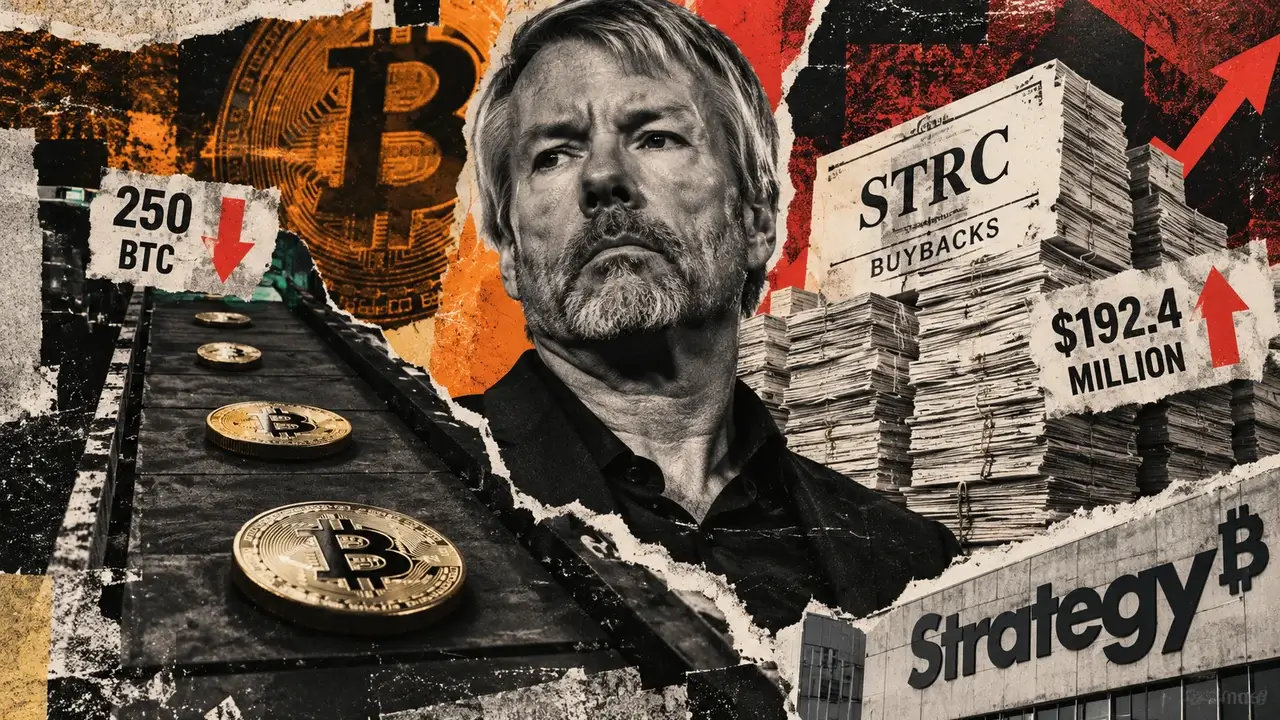
Strategy spent nearly nine times as much on STRC buybacks as Bitcoin last week
Strategy (formerly MicroStrategy) bought 250 Bitcoin for $21.5 million last week while spending $192.4 million to repurchase its S...

$900 billion asset manager Federated Hermes taps crypto infrastructure to bring tokenized funds to brokerages
This partnership could accelerate the integration of blockchain in traditional finance, potentially reshaping investment accessibi...

Bitcoin’s quantum-safe protection gets 82% cheaper as researchers race to secure 6 million exposed BTC
Researchers have cut the estimated computing cost of a specialized quantum-safe Bitcoin transaction by 82% to $59. Data from the Q...

IMF finds over half of tokenized US stock trading happens after Wall Street closes
More than half of sampled tokenized US stock trading occurs outside Wall Street's regular hours, the International Monetary Fund (...