Swiss Regulator Probes FIFA’s $15M Blockchain Tokens Over Suspected Gambling Risks
Key Takeaways: Switzerland’s gambling regulator Gespa is investigating FIFA’s blockchain “Right-to-Buy” tokens for possible violations of national gambling laws. The tokens, priced up to $999 each, grant holders a condit...
Archive context
Older archive item. Useful for background and entity history, but not a fresh market-moving signal.

Key Takeaways:
- Switzerland’s gambling regulator Gespa is investigating FIFA’s blockchain “Right-to-Buy” tokens for possible violations of national gambling laws.
- The tokens, priced up to $999 each, grant holders a conditional right to buy tickets for the 2026 World Cup but only if their chosen team qualifies.
- Critics warn the scheme resembles a lottery-like gamble, with most token holders likely ending up with assets of little or no value.
Switzerland’s gambling watchdog Gespa has opened a preliminary probe into FIFA’s new blockchain-based ticketing system, questioning whether the global football body’s “Right-to-Buy” (RTB) tokens cross into gambling territory. The move comes after the tokens raised around $15 million in sales within months of launch.
FIFA’s Blockchain Experiment Faces Legal ScrutinyLaunched in 2024, the RTB tokens were designed to modernize how fans access World Cup tickets using blockchain technology. Each token represents the right to purchase tickets for matches at the 2026 World Cup but only if a buyer’s national team qualifies for those games.
Holders of these NFTs can trade them on FIFA’s official marketplace, creating a secondary speculative market. Of the 51 participating nations, tokens for eight teams have already sold out, including high-profile sides like Brazil and England.
However, Gespa director Manuel Richard confirmed that regulators are not yet satisfied the product falls outside gambling law.
“It cannot be ruled out that the offering on collect.fifa.com may be relevant under gambling legislation,” Richard told Bloomberg.
“We will now proceed with additional fact-finding to determine whether regulatory action is required.”
The regulator clarified that no formal complaints were filed before the inquiry, but the model’s structure itself raised enough legal uncertainty to merit investigation.
Read More: Florida AG Launches Crypto Probe: Robinhood’s ‘Lowest Cost’ Claim Under Fire
When Blockchain Collectibles Start to Look Like Betting A New Form of Speculative Fan EngagementThe RTB tokens that FIFA offers are an amalgamation of digital ownership, scarcity and conditional rewards that have led to both innovation and controversy in the crypto industry. The customers also pay to have the opportunity to purchase the tickets in case their team wins. Otherwise, they are left with an electronic collectible that has extremely low resale value.
Critics believe that this type of arrangement is like lottery or performance depending on what transpired. As financial analysts claim, this can disorient digital collectibles and authorized games of chance.
Crypto analyst Marc Steiner told SwissInfo that FIFA’s model “introduces speculative behavior under the guise of digital fandom,” adding that “the loss ratio could exceed 80% if most teams fail to qualify.”
Others highlight concerns about transparency and fairness:
- Token buyers have no guaranteed return or clear disclosure on winning odds.
- Tokens tied to stronger teams sell at higher prices, implying a market-driven betting element.
- Secondary trading could amplify price volatility, creating risks similar to gambling markets.
Gespa in Switzerland is also known to be very strict with regards to the traditional and online gambling. In case the investigation establishes that FIFA blockchain ticketing system is in breach of the Swiss law, the enforcement procedures, e.g. sales suspension or bans of access by the Swiss domains, may commence.
Legal observers suggest that other countries, especially EU members and the U.S. may follow suit with their own reviews. “If Switzerland classifies RTB tokens as gambling, other jurisdictions will likely adopt similar stances,” said crypto policy researcher Anna Keller.
This would pose a major challenge to FIFA’s Web3 ambitions, as the organization has positioned the 2026 World Cup as a test case for blockchain-based fan engagement, including NFTs, digital collectibles, and metaverse integrations.
Read More: Argentina’s $250M Crypto Scandal Deepens: Milei Shuts Down Probe Into $LIBRA Meltdown
Financial Stakes and Industry Reactions A $15 Million Experiment with Big RisksInternal estimates suggest FIFA has already earned some amount of roughly $15 million through the sale of tokens, which is a tiny portion of its expected $11 billion total World Cup revenues but big by crypto standards.
There have been mixed reactions by industry:
- Supporters argue that the RTB tokens represent a modern loyalty tool, enhancing engagement among global fans.
- Critics counter that it’s an unregulated lottery disguised as innovation, exposing consumers to financial losses.
- Some blockchain supporters caution that FIFA model will cause a bad reputation to crypto by linking NFTs with the act of speculative gambling.
The executives of crypto exchanges also observe that the outcome of the investigation into Gespa may affect further NFT ticketing systems, especially services associated with sports, music, and entertainment events based on conditional or randomized rewards.
The post Swiss Regulator Probes FIFA’s $15M Blockchain Tokens Over Suspected Gambling Risks appeared first on CryptoNinjas.
Why this matters
This blockchain story adds another data point to the current market tape and is useful when read alongside nearby source coverage.
Original source
Read on CryptoNinjasRelated market context

Hyperliquid confirms Singapore base, but MAS says it is not the regulator
Hyperliquid's unregulated status in Singapore highlights the challenges and risks in the evolving decentralized finance landscape....
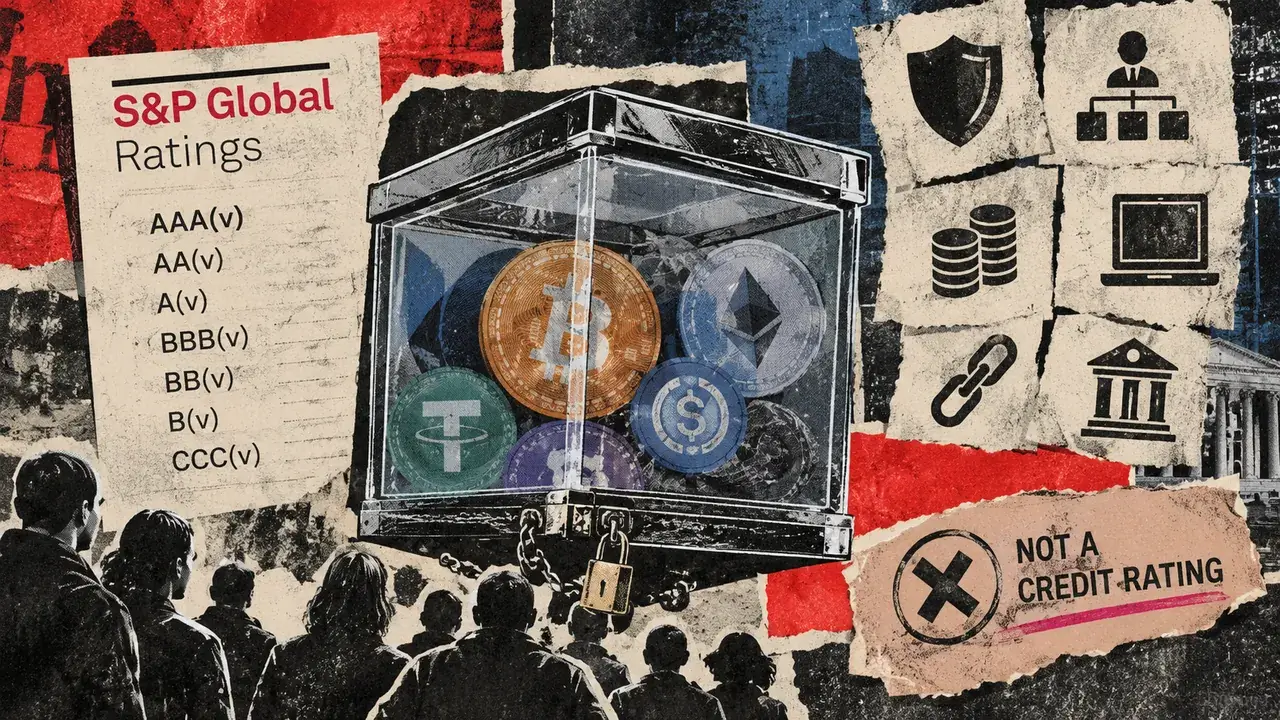
S&P brings ratings-style scrutiny to $10 billion crypto vault market as $6 million Base incident exposes risks
S&P Global is bringing ratings-style risk assessments to crypto lending vaults as the fast-growing market confronts fresh security...

Cardano News: CIP-0113 Upgrade Could Change ADA Future
Good news coming from The Cardano Foundation as it launched CIP-0113 on mainnet, giving issuers of regulated stablecoins, funds, a...

Cardano Brings Compliance Rules On-Chain With CIP-0113 Launch
TL;DR: Cardano’s CIP-0113 programmable token standard is now live on mainnet. It gives issuers the ability to build controls such...
Bitcoin Holds Below $84,000 Cost-Basis Level as Only Nine of 125 Top Tokens Rise
Bitcoin fell through $84,000 in two legs, the first in the Asia session and the second at the U.S. open, and has not reclaimed it....

OKX Eyes 63 U.S. Stocks in Major Tokenized Trading Expansion
Key Takeaways: OKXICE informed the SEC about its plan to establish an online platform called “Tokenized Securities Venue” that wou...