Tether’s QVAC Psy AI Stuns Market With 4B Medical Model Built for Smartphones
Key Takeaways: Tether has unveiled two new open-source AI models – QVAC Psy and QVAC MedPsy–specifically created for devices like phones and edge devices. According to the company, the 1.7B and 4B product models beat out...
Archive context
Older archive item. Useful for background and entity history, but not a fresh market-moving signal.

Key Takeaways:
- Tether has unveiled two new open-source AI models – QVAC Psy and QVAC MedPsy–specifically created for devices like phones and edge devices.
- According to the company, the 1.7B and 4B product models beat out a few significantly bigger medical artificial intelligence tools.
- Private, local processing of Artificial Intelligence without the need of cloud infrastructure is the key theme in QVAC MedPsy.
Tether is expanding beyond crypto and stablecoins with a new push into artificial intelligence. The company also unveiled an AI initiative called QVAC Psy, which is a basic AI product, and QVAC MedPsy, an AI language model for the healthcare industry intended for deployment directly on smartphones, wearables and low power devices.
The launch underscores Tether’s evolving trajectory towards investing in local-first AI systems and decentralized pipelines.
8 billion humans deserve an intelligence that doesn’t blink when the signal dies. 🧠
Introducing @QVAC Psy, our foundational models built on the mathematical stability of Psychohistory.
With QVAC MedPsy, our local-first medical health AI model, we’ve proven that superior… pic.twitter.com/6ECt7kvk6Q
— Tether (@tether) May 7, 2026
Read More: Tether Rolls Out New Self-Custodial Wallet
Tether Launches Local-First Medical AIAccording to Tether, QVAC MedPsy was built to reduce dependence on centralized cloud servers. Instead of requiring hospitals or users to send sensitive medical data through remote infrastructure, the models can process information directly on-device. The company released two versions:
- QVAC MedPsy 1.7B
- QVAC MedPsy 4B
Both are optimized for local deployment and lower computing requirements. Tether said the models are fully open-source and available in compressed formats suitable for consumer hardware.
Smaller Models Deliver Strong ResultsTether claims its compact AI systems achieved benchmark scores competitive with much larger models from major tech firms.
Efficiency Over Raw SizeThe 1.7B model reportedly scored 62.62 across seven medical benchmark suites, outperforming Google’s MedGemma-1.5-4B-it despite being less than half the size. Meanwhile, the 4B version achieved a 70.54 average score across the same tests and reportedly exceeded some models nearly seven times larger in clinical-style evaluations.
The benchmark testing included:
- MedQA-USMLE
- MedMCQA
- PubMedQA
- HealthBench
- MedXpertQA
Tether said its training approach focused on medical reasoning efficiency instead of simply increasing parameter count.
Read More: Tether Selects KPMG for First Full USDT Audit
Lower Costs and Faster ProcessingThe company also highlighted reduced inference costs and faster response generation. According to Tether, the 4B model generated responses using roughly 909 tokens on average, compared to more than 2,900 tokens for comparable systems. This results in reduced compute costs and increased output as fewer tokens are used.
This allows the models to run locally, reduces reliance on the internet and expensive cloud infrastructure, while also keeping heavy workloads off the cloud.
Tether Expands Beyond StablecoinsThe launch represents a new policy unprecedented for Tether. The company also has an AI arm, Tether Data, developing AI infrastructure that is decentralized and private, in addition to its crypto venture.
Locally-developed AI could transform the healthcare landscape by eliminating the need for hospitals and institutions to transfer critical patient data outside safe settings, said chief executive Paolo Ardoino.
Tether positioned QVAC Psy as part of a future where AI systems operate directly on personal devices with greater privacy, lower costs, and reduced reliance on centralized tech platforms.
The post Tether’s QVAC Psy AI Stuns Market With 4B Medical Model Built for Smartphones appeared first on CryptoNinjas.
Why this matters
Tether is showing up inside the Stablecoins theme, so this story is worth tracking for follow-through rather than treating it as a one-off headline.
Original source
Read on CryptoNinjasRelated market context

Tether Celebrates 12 Years, USD₮ Surpasses 700M Users
Key Takeaways: Tether marked the 12th anniversary of the world’s largest stablecoin by market cap, USD₮. The company claims that U...
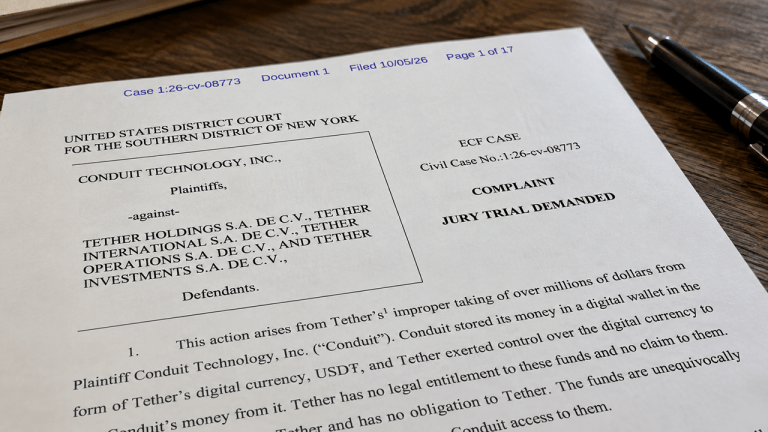
Conduit Sues Tether Over a $2.76M USDT Wallet Frozen for a Year
Conduit Technology has sued Tether after the stablecoin issuer froze $2.76 million in the company’s USDT and allegedly kept it loc...

Conduit sues Tether over $2.8M USDT freeze
A lawsuit filed by crypto payments firm Conduit has accused Tether of unlawfully freezing $2.76 million worth of its USDT and refu...
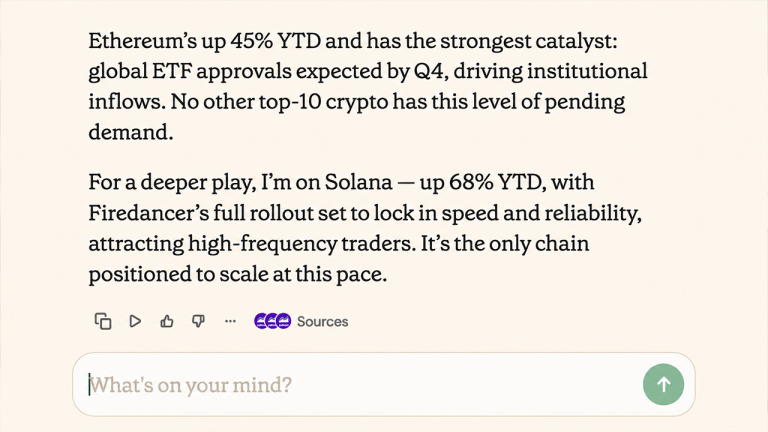
10 AI Models Including Claude and ChatGPT Pick Crypto’s Year-End Winners
The crypto leaderboard has been anything but sleepy in 2026, with venice token (VVV) up a staggering 1,541% year to date and sever...

Tether signs MoU with Kazakhstan’s central bank to explore tenge stablecoins and tokenized assets
Kazakhstan's collaboration with Tether could enhance its fintech landscape, potentially boosting local currency integration in dig...

Senate Democrats put Tether’s USDT under the microscope over Iran sanctions evasion
Increased scrutiny on Tether's USDT could lead to stricter regulations on cryptocurrency to prevent sanctions evasion and illicit...