Visa Adds 5 Blockchains to $7B Stablecoin Network, 50% Surge Fuels Adoption
Key Takeaways: Visa offers five additional blockchains, including Polygon, Base, Arc, Canton, and Tempo, to the stablecoin settlement program The network is achieving a run rate of $7B annualized, more than 50% in a quar...
Archive context
Older archive item. Useful for background and entity history, but not a fresh market-moving signal.
Key Takeaways:
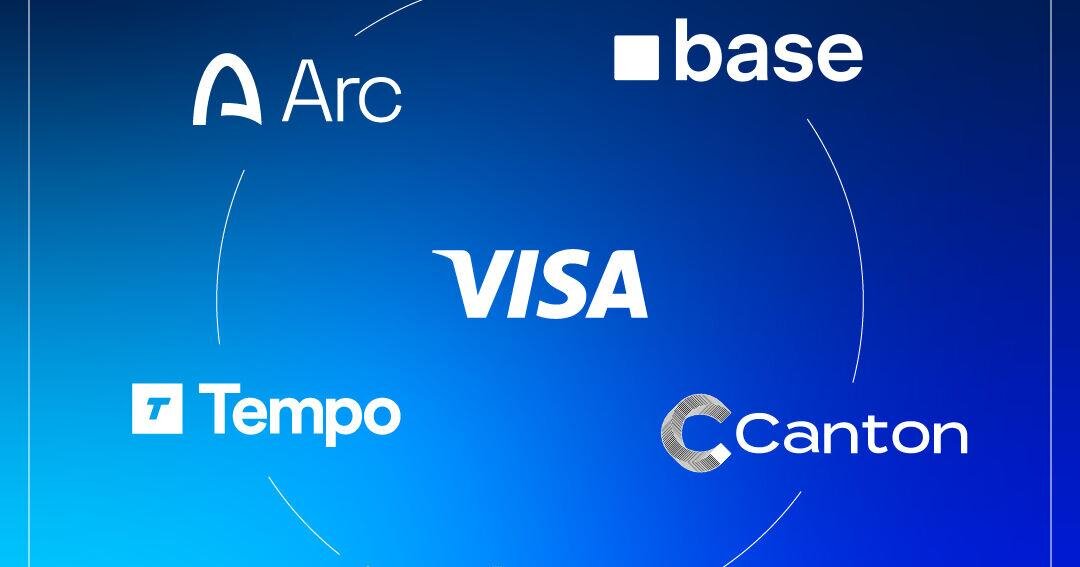
- Visa offers five additional blockchains, including Polygon, Base, Arc, Canton, and Tempo, to the stablecoin settlement program
- The network is achieving a run rate of $7B annualized, more than 50% in a quarter
- Polygon is the largest chain in terms of USD stablecoin received and spent
As the payments presented as stablecoins shift to real-world payments, Visa is gaining pace on its multi-chain strategy. The recent growth also includes five additional blockchains in its settlement network, making it much more flexible to partners.
Visa Expands to Five New BlockchainsVisa has introduced Polygon, Base, Arc, Canton, and Tempo to its global settlement program using stablecoins. This makes it a total of nine networks supported. It has been a decisive step to a multi-chain environment. Visa does not make use of one blockchain anymore; now partners are free to select the one that suits them best.
The program is scaling fast. Visa reported a $7 billion annualized settlement volume, up 50% in one quarter. This rate of growth is an indication that blockchain-based settlement is in demand within institutions.
Read More: Stablecoin Settlement Compared with SWIFT in Cross-Border Trade
Polygon Leads Among New AdditionsPolygon is also the best new network to buy based on its dominance in the stablecoin activity. It already circulates a large proportion of the world’s USD- based transfers. Key performance highlights entail the following:
- 34% of all USD stablecoin transfers
- 54% of USDC transfers
- Millions of active users weekly
These indicators demonstrate that Polygon is already production-sized and can be used to realize actual financial settlement, instead of just experiments.
The world’s largest payment network settles stablecoins on Polygon.
Now supported on its global stablecoin settlement program, Visa’s partners can choose Polygon rails to move money instantly. pic.twitter.com/WlZKAYyae0
— Polygon | POL (@0xPolygon) April 29, 2026
Real-World Usage Drives SelectionThe infrastructure of Polygon enables high throughputs of transactions at low costs and rapid finalization. The transactions are normally settled within a few seconds and at minimal costs of less than one cent.
Major institutions, such as fintech companies and asset managers, have already used the network to settle. This has been the current adoption, which presumably led Visa to make the decision.
Multi-Chain Settlement Becomes StandardThe growth of Visa points to an industry trend. Financial institutions are now not devoting themselves to one blockchain. Rather, they are establishing connections between networks to:
- Access deeper liquidity
- Optimize costs
- Improve transaction speed
Visa is adding each blockchain to fulfill a separate purpose. Others are performance and cost-effectiveness oriented, whereas others are compliance oriented or financial niche-oriented.
Stablecoins Move Closer to Mainstream PaymentsGlobal finance is turning into a stablecoin settlement layer. Visa has already launched over 130 card programs that connect to stablecoins in over 50 countries.
These applications enable users to use digital assets and allow merchants to convert them into fiat, bridging the two worlds of traditional finance and blockchain. These five blockchains enhance this infrastructure. It provides partners with additional avenues to transfer money in seconds, without using conventional banking rails.
Infrastructure Competition IntensifiesThe race between blockchains is shifting toward real performance. The factors that are currently facing institutional adoption are speed, cost and reliability.
Polygon’s strong usage metrics, combined with Visa’s broader multi-chain expansion, show that the market is moving beyond experimentation. Blockchain networks are now competing to power actual global payment flows.
Read More: Morgan Stanley Accumulated $83.6M Bitcoin
The post Visa Adds 5 Blockchains to $7B Stablecoin Network, 50% Surge Fuels Adoption appeared first on CryptoNinjas.
Why this matters
Visa is showing up inside the Stablecoins theme, so this story is worth tracking for follow-through rather than treating it as a one-off headline.
Original source
Read on CryptoNinjasRelated market context

Polygon taps TRON’s $94 billion stablecoin supply for seamless cross-border transfers
Polygon said businesses can also move the world’s largest stablecoin USDT between TRON and EVM networks without connecting to a wa...

TRON plugs into Polygon’s Open Money Stack to widen stablecoin rails
The integration enhances cross-chain liquidity and efficiency, positioning Polygon as a pivotal connector in the evolving stableco...

Tether signs MoU with Kazakhstan’s central bank to explore tenge stablecoins and tokenized assets
Kazakhstan's collaboration with Tether could enhance its fintech landscape, potentially boosting local currency integration in dig...
Solana Hits 14M Stablecoin Holders as Card Volume Tops $1B
Solana’s stablecoin footprint has expanded to more than 14 million holder addresses, alongside over $15 billion in supply and $1 b...

Moody’s Gives Sky Protocol Its First Stablecoin Credit Rating
Moody’s has given Sky Protocol a B3 rating with a stable outlook, marking the agency’s first rating of a stablecoin protocol. But...

Pudgy Penguins Team to Shutter Ethereum Layer 2 Network Abstract
Another Ethereum Layer 2 chain bites the dust: Just days after the creators of the once-hyped Blast said they’re shutting down the...