Web3 gaming investors no longer throwing money at ‘Axie killers’
The Web3 gaming industry is facing tighter investment conditions as capital flows become more selective, with investors prioritizing sustainable projects over hype-driven fundraising.In February, Gunzilla Games Web3 dire...
Archive context
Older archive item. Useful for background and entity history, but not a fresh market-moving signal.
The Web3 gaming industry is facing tighter investment conditions as capital flows become more selective, with investors prioritizing sustainable projects over hype-driven fundraising.
In February, Gunzilla Games Web3 director Theodore Agranat described blockchain gaming as a “game of musical chairs” in which the same capital cycles through different projects and “no new money” comes in. The executive also said users go from project to project to extract value. After that, they leave and search for the next project.
In the same month, the much-anticipated Web3 game Illuvium announced a 40% layoff, demonstrating the need for teams to go “super lean” in today’s market. Sky Mavis co-founder and CEO Trung Nguyen announced a similar move in October 2024, cutting 21% of its staff to optimize its budget for upcoming projects.
Despite these events, Web3 gaming professionals said that capital still exists, and explained some of the factors contributing to the industry-wide trend.
Investors no longer blindly throw their money at projectsSky Mavis co-founder Jeffrey Zirlin told Cointelegraph that Web3 gaming is not uniquely struggling but rather experiencing the same capital constraints affecting the broader crypto industry.
The executive said Web3 gaming is not facing a unique challenge as the landscape is “tight across the board.”
Still, Zirlin pointed out exceptions. He cited Fableborne, a mobile Web3 game that was oversubscribed by 16,000% despite the market downturn, as demonstrating that “fresh capital was indeed flowing into Ronin,” the Sky Mavis blockchain network. He added:
“It’s not that investment has dried up entirely. It’s just that investors are no longer blindly throwing money at projects like they did with so-called ‘Axie killers’ that failed to deliver.”“Axie killers” was a term used to describe gaming projects that claimed to be the next big Web3 game that would surpass Axie Infinity, Sky Mavis’ flagship Web3 game.
Meanwhile, The Sandbox co-founder and chief operating officer Sebastien Borget told Cointelegraph that the “game of musical chairs” description suggests a degree of randomness. Borget said he disagrees with this.
The executive said that while new capital is more limited and investors are more cautious, there is now less of the unpredictability previously fueled by hype cycles.
“The success of blockchain games increasingly depends on the ability to meet traditional gaming metrics. These include delivering compelling content and gameplay, fostering sustainable user acquisition, establishing a strong in-app economy and building a loyal user base,” he added.
Related: Axie Infinity teases new Web3 game as NFT outlook turns positive
Projects can’t just “slap NFTs” into a game and raise millionsJosh Gier, chief marketing officer of the gaming tournaments platform Coliseum, told Cointelegraph that the days of simply adding non-fungible tokens (NFTs) to a game and earning massive support from crypto investors are gone.
“Yes, the speculative phase of blockchain gaming, where projects could raise millions just by slapping NFTs onto a game, has cooled off. But that doesn’t mean capital has disappeared,” Gier said.
The executive said the capital is becoming more selective and flows toward projects with strong fundamentals and sustainable economies.
“Investors are showing interest in games that integrate Web3 elements in a way that enhances the player experience rather than focusing solely on financial incentives,” Gier added.
Vineet Budki, the CEO of venture firm Sigma Capital, said some core investors, like Animoca Brands, specifically focus on the blockchain gaming segment. He said that games take longer to build, unlike other niches, so gaming investments take longer to bear fruit.
Still, the executive said, raising Web3 gaming capital has become more complicated. “Gone are the times when you would make a video on gameplay, have attractive tokenomics and raise capital,” Budki said in a statement sent to Cointelegraph.
The executive said that teams building great games and having knowledge of the distribution process are the elements that can attract capital.
Magazine: Off The Grid’s ‘biggest update yet,’ Rumble Kong League review: Web3 Gamer
Why this matters
This blockchain story adds another data point to the current market tape and is useful when read alongside nearby source coverage.
Original source
Read on CointelegraphRelated market context
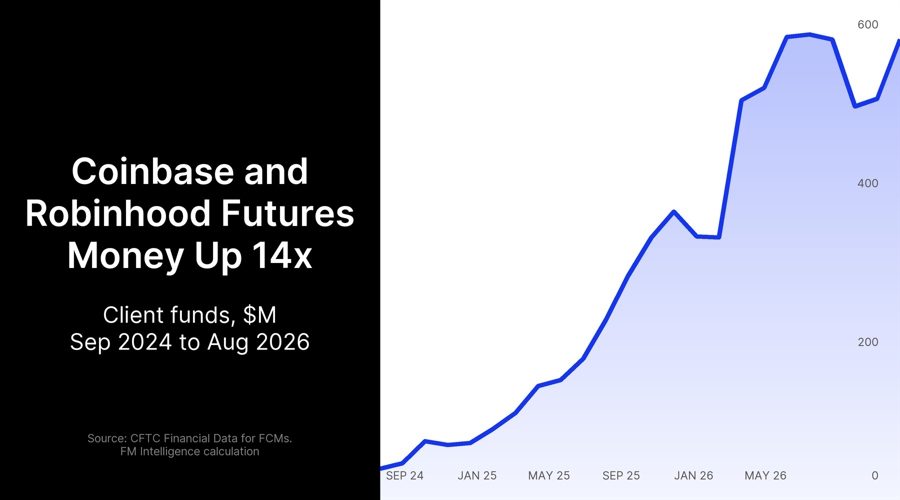
Coinbase and Robinhood Futures Arms Now Hold More Client Money Than the US Retail Forex Pool
The futures brokers of Coinbase and Robinhood held $581.4 million of segregated client money at the end of August. That is more th...

France’s tax proposal would tax Bitcoin-to-USDC swaps before investors cash out
France’s proposed crypto tax changes would make a move from Bitcoin or Ether into certain stablecoins a taxable disposal, even if...

Evernorth XRP Treasury Merger Brings 473 Million XRP to Nasdaq as XRPN Debuts October 12
The transaction gives public-market investors another route to gain exposure to XRP through a company that actively manages its di...
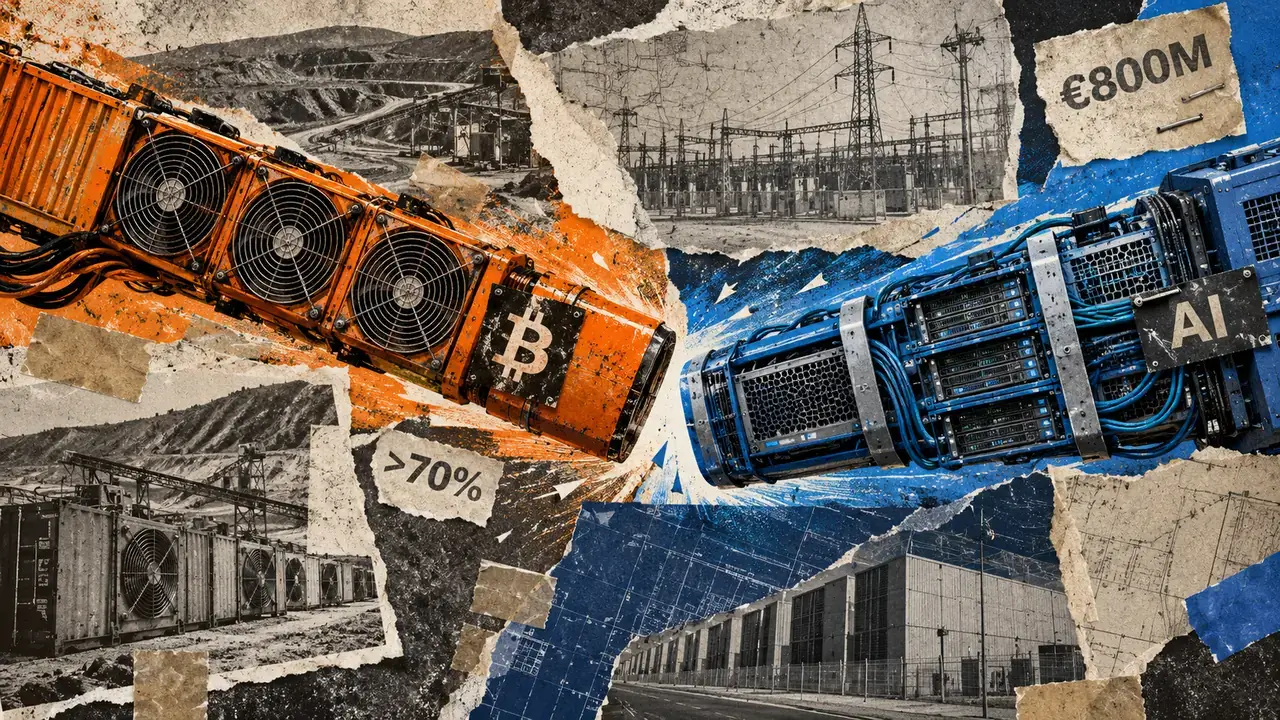
FTX’s former Bitcoin mining bet gets new life as parent raises €800 million for AI
SWI Group has raised €800 million to expand AI infrastructure, advancing its plan to repurpose FTX-backed Bitcoin miner Genesis Di...

Morgan Stanley projects tokenized assets market could hit $10T by 2030
The projected growth in tokenized assets could revolutionize financial markets, driving innovation and increasing institutional pa...
Moscow Exchange opens Bitcoin spot trading to retail investors on December 1
MOEX's Bitcoin spot trading for retail investors may increase regulatory oversight and transparency but could limit broader crypto...