7-Eleven South Korea to accept CBDC payments in national pilot program
South Korea’s 7-Eleven stores will accept payments in the country’s central bank digital currency (CBDC) until June, as the retailer participates in the test phase of its CBDC project. The convenience store chain will re...
Archive context
Older archive item. Useful for background and entity history, but not a fresh market-moving signal.
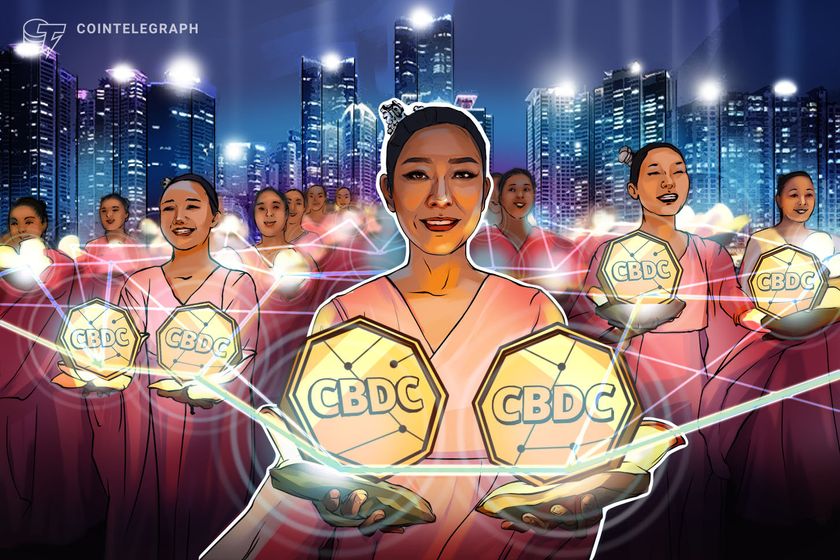
South Korea’s 7-Eleven stores will accept payments in the country’s central bank digital currency (CBDC) until June, as the retailer participates in the test phase of its CBDC project.
The convenience store chain will reportedly provide a 10% discount on all products paid for with CBDC during the test period. According to Moon Dae-woo, head of 7-Eleven’s digital innovation division, the company is making an effort to incorporate digital technology advancements in its operations.
The executive added that the company’s participation in the CBDC test will help accelerate the firm’s digital transformation.
Many stores will participate in South Korea’s CBDC testing phase, which runs from April 1 to June 30. The project also involves 100,000 participants who will be allowed to test payments using CBDC issued by the central bank.
Central bank digital currencies are digital assets issued by government agencies. Like other digital assets, CBDCs offer faster and more modernized payment features. However, unlike Bitcoin and other privacy-focused tokens that offer certain levels of anonymity, CBDCs are controlled and monitored by governments.
Related: Over 400 South Korean officials disclose $9.8M in crypto holdings
South Korea tests CBDC from April to JuneOn March 24, government agencies including the Bank of Korea, the Financial Services Commission (FSC) and the Financial Supervisory Service (FSS) announced the CBDC test.
Participants can convert their bank deposits into tokens stored in a distributed ledger during the test period. The tokens hold the same value as the Korean won.
The government agencies said citizens aged 19 or older with a deposit account in a participating bank could apply to take part. Registrations were limited to 100,000 participants. KB, Koomin, Shinhan, Hana, Woori, NongHyup, IBK and Busan are among the banks participating in the CBDC tests.
Apart from 7-Eleven, participants can use their CBDCs in coffee shops, supermarkets, K-Pop merchandise stores and delivery platforms. However, users will be limited to a total conversion limit of 5 million won ($3,416) during testing.
The Bank of Korea first announced the retail CBDC testing for 100,000 users in November 2023 and was originally scheduled to begin in the fourth quarter of 2024. The FSS said the country’s CBDC test represents a step toward creating a prototype for a “future monetary system.”
Magazine: Ridiculous ‘Chinese Mint’ crypto scam, Japan dives into stablecoins: Asia Express
Why this matters
This cryptocurrency story adds another data point to the current market tape and is useful when read alongside nearby source coverage.
Original source
Read on CointelegraphRelated market context
Crypto Payments, Corporate Treasuries and Custody Take Centre Stage in Latest Market Roundup
Visa and Mastercard deepen crypto integration, corporate treasuries keep accumulating bitcoin and ether, and AnchorWatch launches...

South Korea Faces Fresh Push To Delay Crypto Gains Tax Until 2029
South Korea is approaching another decision point on its long-delayed cryptocurrency gains tax, with exchanges and policymakers pr...

Mesh Signs Visa Deal to Turn Wallet Crypto and Stablecoin Balances Into Card-Free Payments
Crypto payments firm Mesh announced a partnership with Visa on Oct. 19 that is meant to let people pay at Visa merchants directly...

Kraken Parent Payward Moves Into European Banking With Saldo Deal
Payward, the company behind crypto exchange Kraken, has agreed to acquire Lithuania-based Saldo Bank, taking a route into European...
Stablecoin transfers quadruple to $891B as US banks adopt technology
The surge in stablecoin transfers highlights a shift towards digital finance, potentially reshaping global banking and economic dy...
Injective, BDACS plan Korean won stablecoin settlement for tokenized assets
Injective and BDACS plan to bring won-backed stablecoin KRW1 to tokenized asset markets as South Korea develops a regulatory frame...