Africa’s Favorite Orange Electric Motorcycle
As sub-Saharan Africa develops, it is becoming increasingly dependent on transportation services – worker and leisure commutes, freight and industrial material transportation, and other movement activities involved in bu...
Archive context
Older archive item. Useful for background and entity history, but not a fresh market-moving signal.

As sub-Saharan Africa develops, it is becoming increasingly dependent on transportation services – worker and leisure commutes, freight and industrial material transportation, and other movement activities involved in building emerging economies are putting strain on the continent’s logistics. Many new entrepreneurs have seized the opportunity by starting taxi and parcel delivery services of their own. However, the majority of these enterprises rely on cheap motorcycles equipped with inefficient engines.
Making up almost half of all vehicles being driven, the pollution emitted by these motorcycles is leading to ecological damage and an increased incidence of disease across sub-Saharan Africa. Wanting to make a difference, Bob Eco, an electric vehicle and renewable energy company, is on a mission to electrify as many of these motorcycles as possible. Offering free battery recharges, Bob Eco is giving drivers the opportunity to go green and save on refueling costs – each Bob Eco driver saves 5 tons of CO2 emissions per year and nearly quadruples their take-home pay.
Based on real-world land surveys, Bob Eco’s headlining Model-X is the perfect e-bike for developing countries. It has been meticulously designed and engineered to elevate public expectations of what a taxi or ride-sharing motorcycle should be. Equipped with a comfortable extra seat and board-style tandem footrests, the Model-X can comfortably accommodate tandem riders. Additionally, sporting a rear carrier and suspension capable of handling heavy loads, the Model-X is perfect for carrying small to mid-sized parcels.
In countries where only price counts and quality is left out of the equation, Bob Eco offers something unique. In developing countries, the majority of cheap petrol-fuelled bikes begin breaking down and requiring weekly repairs after only one year of usage, causing heavy costs for drivers. Bob Eco is making a difference by offering high-quality motorbikes that will last for 10 years and still cost the same to lease as a petrol-fuelled bike – the only difference being that the lease is stretched for a longer term.
At the heart of the Model-X is Bob Eco’s proven powertrain, delivering both unprecedented range and a thrilling riding experience. And as with every Bob Eco vehicle, the Model-X is equipped with a class-leading rechargeable battery. Bob Eco’s batteries are built with a sturdy heat-wicking aluminum alloy shell and incorporate a technology that armors their cells. Thus, Bob Eco’s batteries are resistant to the elements and extremely durable, perfect for the terrain of developing countries.
Also, repairs are something Bob Eco thought of since most of the roads are bad and there are many road accidents, for a new and unique model there should be a lot of spare parts and specialists that know how to repair a unique type of motorcycle. The complete motorcycle (except for the back wheel engine, batteries, and unique electrical components connecting the two) is built with the same parts that are being used for the large majority of the motorcycles. This makes finding replacements for 90% of the parts that need replacement during regular checks easy and cheap, also it doesn’t require specialist knowledge and special tools.
Powered by two state-of-the-art lithium-ion batteries that can carry passengers up to 140 kilometers with a battery pack, making long-distance rides no problem. The batteries are not heavy to carry and can easily be removed from the locked battery holders.
Model-X drivers are welcome to swap dead and dying batteries for freshly recharged ones at any one of Bob Eco’s charging stations, mapped out across Africa, completely free of charge. Combined with its overall design, this established the Model-X as the ultimate strategic motorcycle for emerging markets. It is perfect both for the planet and logistics entrepreneurs wanting to save money. The batteries used for the Model-X are the same ones used for the other African models, optimizing the efficiency of the Bob Ecosystem.
All Model-X motorcycles and batteries are individually connected to the internet with a SIM card. Both also have an individual tracker hidden inside the structure, trying to remove or disarm will lead to deadlock to the motorcycle’s BMS (battery management system), rendering them useless.
The battery management system is the brain of the smart motorcycles, not only does it give protection against theft, but it also helps to constantly analyze the motorcycle. It shows all the statistics of the battery, notices irregularities and maintains the battery’s quality.
The battery management system shows where the motorcycle is located so they can be followed by the admin. The model-X can even be shut down by the admin. This is only done in case of theft and in case of payment defaults during the leasing period. Then the motorcycle can only be unlocked by either paying the owed amounts or by making an arrangement with the lessor.
Also during the leasing period, the motorcycle is not able to leave its assigned driving zone, to avoid a lessee from stealing the motorcycle by driving off to another country or region.
The Model-X was developed by the Bob Eco, Jincheng Suzuki partnership to create the ultimate motorcycle for the African market, so all elements described and more have been based on decades of experience in the two- and three-wheeler market in developing countries.
Across their range of electric two and three-wheelers, Bob Eco offers a product for every task. Whether it be single-person or family transports, or hauling loads small or large, Bob Eco has drivers covered.
Why this matters
This cryptocurrency story adds another data point to the current market tape and is useful when read alongside nearby source coverage.
Original source
Read on NewsBTCRelated market context
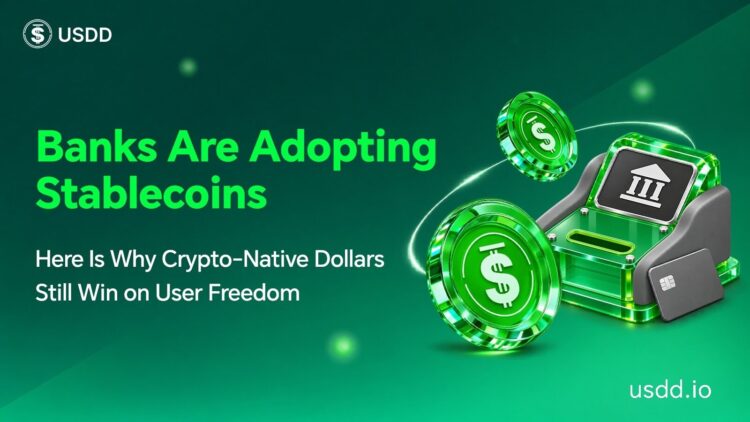
As traditional giants rush into digital dollars, USDD’s Yvonne Chia explains why 24/7 access, self-custody, and transparent yield give decentralized stablecoins an edge banks can’t replicate. 20 November – Road Town, Totorla, British Virgin Islands – Decentralized stablecoin protocol USDD is accelerating its multichain utility across TRON, Ethereum, and BNB Chain—combining automated sUSDD yield via its Smart Allocator with GasFree zero-TRX transfers—as traditional financial giants race to build competing stablecoin rails. In a recent industry interview with instant exchange partner ChangeNOW, USDD Head of Communications Yvonne Chia outlined why self-custody, 24/7 settlement, and transparent onchain reserves give decentralized digital dollars a structural advantage over bank-issued alternatives. 1. Permissionless Access vs. Gatekept Accounts For billions of people globally, opening and maintaining a traditional bank account still involves paperwork, minimum balance requirements, geographic restrictions, and approval delays. Even when banks integrate stablecoin rails behind the scenes, those services remain gated behind legacy compliance walls and intermediary control. Crypto-native stablecoins flip that model on its head. As Yvonne Chia highlighted during the interview: “Compare this to a stablecoin like USDD, where all you need is a phone, a working internet connection, you can immediately start a wallet and you have access to your funds right away.” With USDD, users can access and manage their digital dollars directly through their own wallets, without depending on traditional financial intermediaries. This represents a fundamental shift in financial access: users are no longer limited to the services, operating hours, or account structures of a single institution. Instead, they have the freedom to hold, manage, and transfer their assets on their own terms. Self-custody also gives users greater autonomy over their financial decisions. They can choose which wallets to use, where to transfer their assets, and which supported decentralized applications to interact with, without needing to route every transaction through a centralized financial institution. With USDD, users’ digital dollars can move with them across an open blockchain ecosystem, rather than remaining tied to a particular bank or service provider. 2. 24/7 Global Settlement vs. “Banking Hours” Legacy payment networks still operate on decades-old schedules: weekend cutoffs, bank holidays, and multi-day cross-border settlement delays accompanied by hefty wire fees. Blockchain networks never close. Whether it is a Sunday night or a public holiday, USDD moves globally without depending on traditional banking operating hours or settlement windows. “We are able to have transfers 24/7 and we’re not limited to any traditional banking hours. So I think that in some ways, stablecoins are not just becoming banks, but exceeding what traditional banks can offer to users.” To make everyday transfers even smoother than fintech apps, USDD introduced GasFree integration on TRON, allowing users on supported wallets to pay network fees directly in USDD without needing to hold TRX. This removes another practical barrier to stablecoin adoption: having to acquire and maintain a separate gas token just to transfer digital dollars. With GasFree, eligible users can pay approximately 0.5 USDD per transaction, compared with around 1.5 USDT for a standard USDT transfer under the referenced fee conditions. These improvements matter because the usefulness of a stablecoin is not determined by its peg alone. Low-cost transfers, straightforward wallet experiences, and around-the-clock availability are what make digital dollars practical for everyday payments and global value transfers. 3. Passing Yield Back to Users vs. Bank Spreads Perhaps the sharpest contrast between banks and decentralized stablecoins lies in how yield is distributed. In traditional banking, institutions take customer deposits, deploy them into yield-generating markets, and retain a significant portion of the returns. Everyday depositors may receive relatively low interest rates, while higher-yielding products often come with eligibility requirements, minimum deposits, or fixed maturity periods. Stablecoins introduce another way to participate in digital-dollar opportunities. Rather than keeping capital entirely within a traditional deposit account, users can access onchain yield opportunities through decentralized protocols and transparent investment mechanisms. USDD was built to return that value directly to holders. Through USDD Earn, users can deposit USDD to receive sUSDD, earning automated, competitive yield powered by our Smart Allocator system, with no fixed lock-up periods restricting access to their capital. For users, the distinction is important: USDD Earn provides access to a productive stablecoin while maintaining flexibility, rather than requiring users to commit their capital to a conventional fixed-term product. 4. Onchain Verification vs. Institutional Trust Traditional banks ask customers to trust closed-door balance sheets and periodic regulatory filings—until a crisis proves otherwise. USDD takes a different approach through its “Don’t trust, verify” ethos, emphasizing publicly accessible onchain information and independent verification. Onchain Transparency: Smart contract addresses, collateral reserves, and Smart Allocator deployments are publicly viewable, allowing users to examine relevant information directly on the blockchain. Structured Disclosures: Quarterly Treasury Reports provide additional information about reserve positions, financial performance, and operational developments. Independent Security Reviews: USDD undergoes third-party security audits to assess its smart contracts and identify potential vulnerabilities. Transparency does not eliminate financial or technical risks, but it changes how users can evaluate them. Instead of relying exclusively on an institution’s assurances, users have access to information that can be independently examined and verified. 5. Beyond a Single Network: An Open, Multichain Financial Ecosystem Financial freedom is not just about holding digital dollars. It is also about being able to use them wherever opportunities and applications exist. A stablecoin confined to a single network or limited use case cannot fully realize the potential of open blockchain finance. Following its January 2025 protocol upgrade, USDD expanded natively from TRON onto Ethereum and BNB Chain, extending its reach across multiple blockchain ecosystems. This multichain presence allows USDD to connect with different communities, liquidity environments, and decentralized applications. Its sUSDD product has also expanded into DeFi integrations, including Pendle and Morpho, giving users additional ways to access yield strategies across supported ecosystems. The bigger picture is an interconnected financial ecosystem in which users can move between holding, transferring, exchanging, and deploying their stablecoins according to their own needs. These are not isolated functions. Together, they make stablecoins more useful as everyday financial infrastructure. The Future: Interconnected, Open, and Multichain Banks will undoubtedly continue using stablecoin rails to modernize their back-end settlement. However, true financial freedom comes from open networks where assets flow freely across protocols without intermediaries. For USDD, the opportunity goes beyond offering a dollar-pegged asset. It is about making digital dollars accessible, transferable, and productive across an interconnected financial ecosystem. From self-custody and 24/7 transfers to flexible yield opportunities and multichain DeFi access, these capabilities give users more ways to put their money to work. Banks may be bringing stablecoins into traditional finance. Crypto-native protocols are showing what stablecoins can make possible beyond it.
As traditional giants rush into digital dollars, USDD’s Yvonne Chia explains why 24/7 access, self-custody, and transparent yield...

Trump’s SEC nominee Johnson backs formal rulemaking for tokenized stock trading
Former CFTC Commissioner and Democrat Kristin Johnson and ex-SEC aide Steven Levine appeared before lawmakers Thursday.

Tracy Schuchart: Bitcoin Trading “Like a Risk Asset” as Fed Hikes Loom
▶Bitcoin Magazine Tracy Schuchart: Bitcoin Trading “Like a Risk Asset” as Fed Hikes Loom Tracy Shuchart says Bitcoin’s biggest lon...

MSTR Head of Investor Relations Addresses Bitcoin Pullback, Equity Performance
▶Bitcoin Magazine MSTR Head of Investor Relations Addresses Bitcoin Pullback, Equity Performance Chaitanya “CJ” Jain, Head of Inve...

Bitcoin (BTC) Price Today: Glassnode Warns of Holder Losses as BTC Approaches Critical $61K Support
Glassnode data also points to a shrinking profit margin for the average Bitcoin holder, raising concerns that another decline coul...

Ledger CTO Charles Guillemet Exits After Nine Years, Warns AI Is Changing Crypto Security
Key Takeaways: Charles Guillemet, CTO will be exiting the company at the end of 2026. He contributed to the development of Ledger...