Avi Loeb Claims Potential Alien Tech Was Found
Harvard Professor Avi Loeb is currently working on an unusual summer project – examining spherules found on the ocean floor. Spherules are small metallic balls, and Loeb and his research team traveled to Manus Island in...
Archive context
Older archive item. Useful for background and entity history, but not a fresh market-moving signal.

Harvard Professor Avi Loeb is currently working on an unusual summer project – examining spherules found on the ocean floor.
Spherules are small metallic balls, and Loeb and his research team traveled to Manus Island in Papua New Guinea to study them from June 14 to 28.
The first interstellar object detected by humanityLoeb believes that these spherules come from the first interstellar object detected by humanity, a meteor that exploded in the Earth’s atmosphere above Papua New Guinea on January 8, 2014.
He also suggests that this meteor may represent extraterrestrial technology.
“The first thing to do is figure out whether the material identity looks different from solar system material,” Loeb told The Times of Israel over Zoom.
According to Times of Israel, “It would be the first time humans put their hands on material from a large object coming from outside the solar system, the first meteor inferred to be from interstellar space. That’s a discovery by itself.”
“The next question,” he said, “is whether it’s technological in origin, droplets melted from a semiconductor or electric circuit.”
An individual named Loeb has a history of making bold statements, such as about a meteor and a pancake-shaped object called ‘Oumuamua that passed through the solar system in 2017.
Loeb believed both to be interstellar and potentially related to alien technology. He claims that discovering a partner in interstellar space would significantly impact humanity, changing our space aspirations and the way we treat each other.
Loeb learned about the 2014 meteor, which exploded five years prior, in 2019 with the help of his research assistant Amir Siraj.
Siraj found it in an online catalog of 273 meteors from NASA’s Jet Propulsion Laboratory, with the January 8, 2014 meteor standing out for various reasons.
“This meteor moved too fast to be bound gravitationally to the sun,” Loeb said.
“We extrapolated the speed to outside the solar system. It was likely not bound, at 60 km/s [37 mps] relative to the Milky Way … 60 km/s implied it was faster than 95 percent of all stars in the vicinity of the sun.”
US Space Command supports Leob’s ClaimA statement was released by the US Space Command in 2022, supporting Loeb’s claim that the meteor was of interstellar origin with 99.999 percent certainty.
This left Loeb feeling vindicated enough to organize an expedition to explore the seabed off Papua New Guinea in search of traces of the meteor.
Charles Hoskinson has reportedly contributed $1.5 million and his private jet to the expedition by chance.
The team used innovative technology, including a sled with molybdenum magnets on both sides attached to their ship, the Silver Star, to scan the seabed for metallic particles.
Why this matters
This cryptocurrency story adds another data point to the current market tape and is useful when read alongside nearby source coverage.
Original source
Read on CryptoGazetteRelated market context
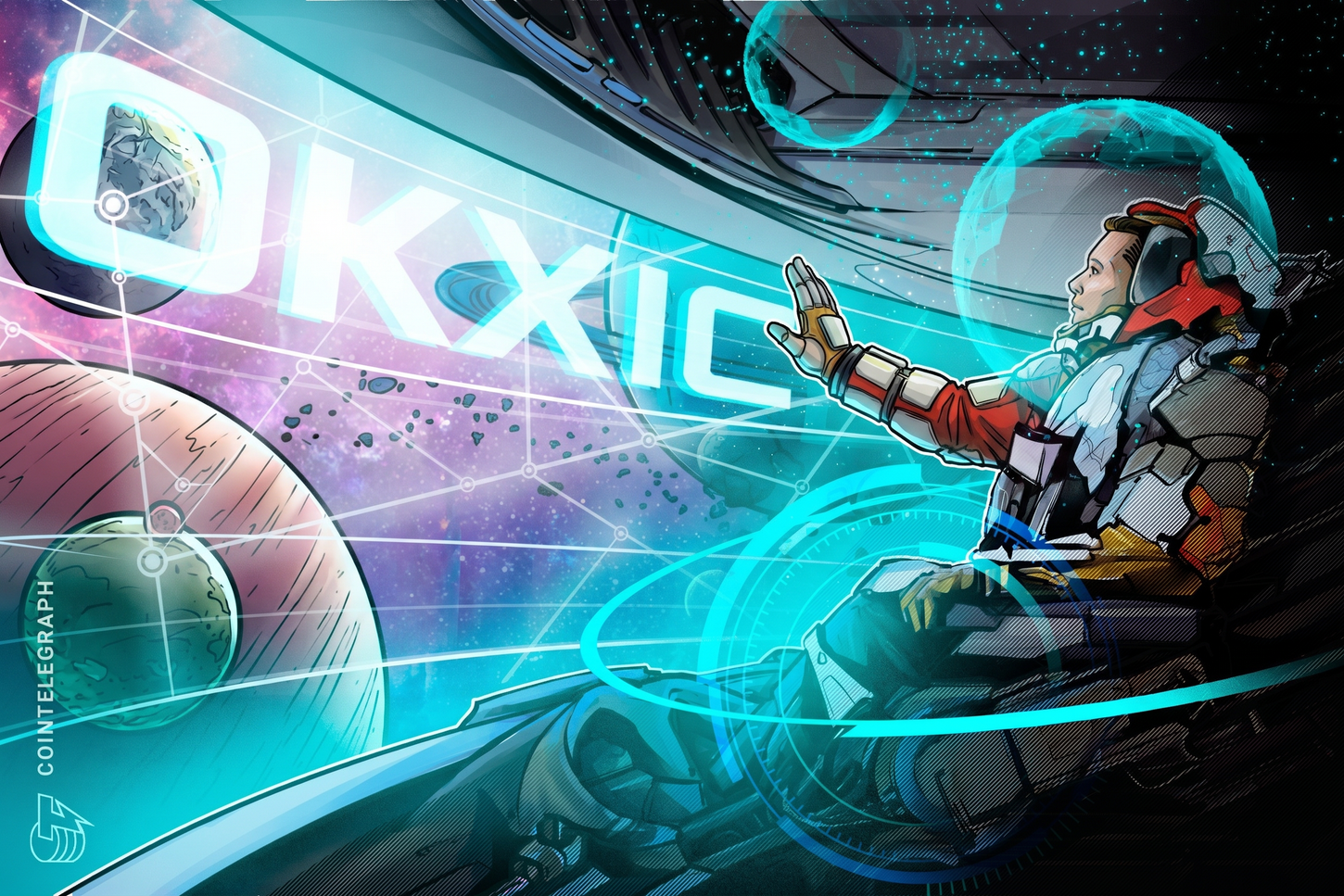
SpaceX blocks tokenized stock listing on OKXICE despite offshore trading boom
SpaceX joined several other issuers objecting to OKXICE tokenized trading, months after crypto platforms offered tokens tied to it...

Tesla, SpaceX join growing list of companies blocking tokenized stock trading on OKXICE
The growing objections to tokenized stock trading highlight potential challenges for market adoption and issuer control over digit...

Tether CEO casts the stablecoin giant as Asimov’s Foundation at Plan ₿ Forum
Tether's strategic shift towards decentralized infrastructure and financial inclusion could redefine its role in the crypto ecosys...
Solana co-founder Anatoly Yakovenko tells data centers to pivot to crypto
Yakovenko's call for data centers to embrace crypto highlights the growing intersection of traditional infrastructure and blockcha...

Ethereum Foundation highlights wallet protocols for enhanced privacy
Ethereum's push for accessible privacy tools could democratize blockchain privacy, impacting user security and market adoption sig...
Solana’s RWA ecosystem surpasses $5B in total value
Solana's RWA growth highlights the increasing adoption of tokenization, but sustainability and competition remain key challenges....