Banking Crisis Boom: US Government Spent $12,700,000,000 To Bail Out 10 Big Players
It has been just revealed that amidst the massive banking crisis, the US government has spent almost $13 billion in order to bail out 10 wealthy depositors. Check out the latest reports about this below. Banking crisis c...
Archive context
Older archive item. Useful for background and entity history, but not a fresh market-moving signal.

It has been just revealed that amidst the massive banking crisis, the US government has spent almost $13 billion in order to bail out 10 wealthy depositors. Check out the latest reports about this below.
Banking crisis continuesThe FDIC recently made public an unredacted document that disclosed the government’s assurance of deposits made by the top ten clients of Silicon Valley Bank (SVB) after its widely-publicized failure in March.
This document was inadvertently released in response to a Freedom of Information Act request by Bloomberg.
The identities of the companies that received bailouts and their deposit amounts, which far surpassed the $250,000 FDIC protection limit per account, were made known through this document.
According to reports, Circle, a company that issues stablecoins, deposited $3.3 billion with Silicon Valley Bank, making it the bank’s top depositor.
The funds were used to back the stablecoin USD Coin (USDC), and $3.3 billion of it was initially held up due to a bankrupt bank.
Venture capital firm Sequoia, with $85 billion in assets under management, also made the list with $1.1 billion in deposits. Overall, Silicon Valley Bank and its parent company Silicon Valley Group received a total of $4.6 billion in deposits.
We suggest that you check out the complete article posted by the Daily Hodl in order to learn more details about the other wealthy depositors.
US banks to lose massive amounts of cashAccording to analysts at Morgan Stanley, American banks could possibly lose almost $500 billion as a result of the US Treasury’s upcoming plan to introduce a new set of T-bills.
CNBC reports that Morgan Stanley predicts a total of $1.364 trillion of net T-bill issuance for the remainder of this year, with $1 trillion of that to be issued within the next four months alone.
The bank warns that this new wave of US bonds may put considerable strain on banks that cannot match the yields offered by the government.
Analyst Betsy Graseck stated the following as per the online publication the Daily Hodl:
“Our fixed income team sees most of this initial [Treasury General Account] restocking to come from bank reserves, suggesting ~$450b of gross outflows over the next four months.”
Why this matters
This cryptocurrency story adds another data point to the current market tape and is useful when read alongside nearby source coverage.
Original source
Read on CryptoGazetteRelated market context
Binance reports $11 billion withdrawn in 46 hours as Zhao says few funds went to rivals
Binance reported about $11 billion in withdrawals between 06:00 UTC on Nov. 1 and 04:00 UTC on Nov. 3, after reopening services fo...
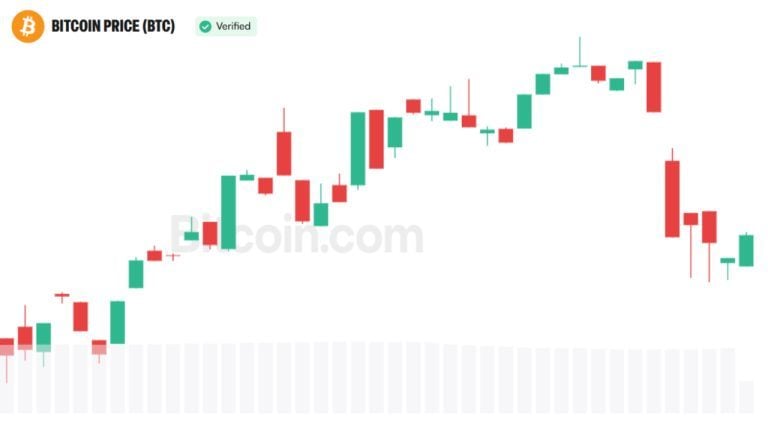
Arthur Hayes Says Bitcoin Rally May Depend on Banks, Not Just Fed
Arthur Hayes linked bitcoin’s next rally to renewed dollar liquidity from commercial banks or the Federal Reserve. His near-term w...

Binance’s $6.3 Billion Hack Has South Korea Asking Exchanges to Hold More Crypto Offline
At an emergency meeting on Nov. 2, South Korea’s Financial Services Commission asked major crypto exchanges to move more customer...
TD Cowen: Democratic Sweep Makes a Crypto-Backed CLARITY Act ‘Impossible’
Bitcoin Magazine TD Cowen: Democratic Sweep Makes a Crypto-Backed CLARITY Act ‘Impossible’ The Democratic sweep of Congress closes...

From Wall Street to Bitcoin: Nasdaq 100, S&P 500, and Crypto Market React to US Midterm Elections 2026
The latest market movements highlight growing uncertainty across traditional and digital assets. While election expectations influ...

After Binance’s $6.3 Billion Hack, Austin Campbell Calls for a 24-Hour Clock on Billion-Dollar Crypto Moves
Crypto hacks reach into the billions partly because the industry designed its systems around technology risk and never adopted the...