Banks See $1,555,000,000,000 in Deposit Flight
Banks see great losses recently, and we’ll be addressing the issue below. Check out more reports about the matter. Banks see huge losses Recent data reveals the extent to which depositors have withdrawn their funds from...
Archive context
Older archive item. Useful for background and entity history, but not a fresh market-moving signal.

Banks see great losses recently, and we’ll be addressing the issue below. Check out more reports about the matter.
Banks see huge lossesRecent data reveals the extent to which depositors have withdrawn their funds from banks around the world over the past year. The Federal Reserve of St Louis reports that US banks have experienced a $605 billion reduction in deposits.
Additionally, S&P Global Market Intelligence has compiled data that shows total deposits in France, Germany, Spain, Italy, Benelux, and Nordic regions decreased by approximately $950 billion over the course of 12 months.
As a result, the combined total of deposit flight across these countries amounts to $1.55 trillion.
According to a recent report from Yahoo Finance, wealthy customers are causing the biggest damage to the profits of America’s major banks as they seek higher returns and withdraw their money.
JPMorgan Chase, Wells Fargo, Bank of America and Citi all reported a decrease in deposits in their wealth management divisions during the second quarter of this year.
The data from Curinos also shows that there was a 13% decline in deposits from wealth management and corporate accounts from the beginning of the year until July. In response, these banks launched new offers for certificate of deposit (CD) savings accounts this summer to compete with money-market accounts, which have seen billions of dollars of inflows over the past year.
These efforts seem to be paying off as the institutional deposit flight from big US banks paused in July, and the data from August has yet to be released.
Market turbulence incomingA couple of days ago, we revealed the fact that according to Bloomberg Intelligence senior macro strategist Mike McGlone, recent Bitcoin price movements suggest that economic turbulence may be on the horizon.
In a post on social media platform X, McGlone pointed out that Bitcoin is displaying bearish divergence when compared to the Nasdaq 100 Stock Index, which could be a sign of an upcoming recession.
He also noted that Bitcoin has dropped by around 15% in the third quarter of 2021, while the Nasdaq 100 Stock Index has gained 2%.
Why this matters
This cryptocurrency story adds another data point to the current market tape and is useful when read alongside nearby source coverage.
Original source
Read on CryptoGazetteRelated market context

Chainlink launches CCIP Vault Adapters for cross-chain deposits
Chainlink's CCIP Vault Adapters could significantly enhance DeFi scalability and user accessibility, potentially increasing total...

Aave v4 on Base draws $4.7 million in Coinbase tokenized stock deposits
Aave's integration of tokenized stocks into DeFi could reshape global finance, highlighting regulatory challenges and market volat...
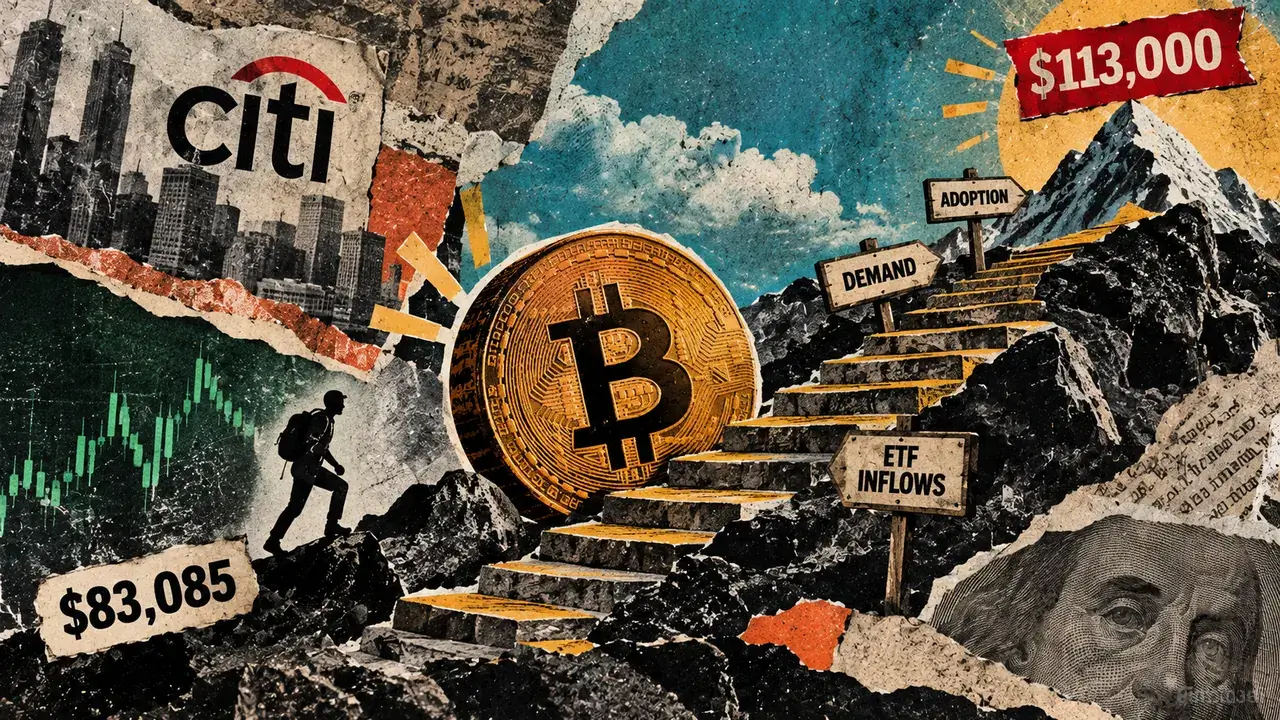
Citi predicts Bitcoin going back to $113,000. Here’s what the buying data shows
Citi's $113,000 Bitcoin target would require a roughly 36% rise from the Oct. 7 reference price, keeping it below its previous rec...

Tether Celebrates 12 Years, USD₮ Surpasses 700M Users
Key Takeaways: Tether marked the 12th anniversary of the world’s largest stablecoin by market cap, USD₮. The company claims that U...

Wells Fargo Reportedly Talking With Kraken Parent Payward to Source Crypto Trading Liquidity
Wells Fargo is in discussions with Payward, the company that operates the Kraken exchange, about a deal that would have Payward su...

10 AI Models Including Claude and ChatGPT Pick Crypto’s Year-End Winners
The crypto leaderboard has been anything but sleepy in 2026, with venice token (VVV) up a staggering 1,541% year to date and sever...