Better Graphics And More Intense Gameplay Promise To Revolutionize Play-To-Earn Gaming
Play-to-earn games like Axie Infinity exploded in popularity during the COVID-19 pandemic, giving thousands of video games enthusiasts in low-income countries like the Philippines a chance to earn a living. The rise of P...
Archive context
Older archive item. Useful for background and entity history, but not a fresh market-moving signal.

Play-to-earn games like Axie Infinity exploded in popularity during the COVID-19 pandemic, giving thousands of video games enthusiasts in low-income countries like the Philippines a chance to earn a living.
The rise of P2E was a godsend for many, because in the Philippines its gross domestic product declined 9.6% in 2020, its biggest drop in more than 70 years, according to a study by IHS Markit. With so many Filipinos finding themselves out of work, thousands flocked to P2E games. Axie Infinity’s team reported in March 2020 that more than 29,000 new players from the Philippines signed up to the game, out of 70,000 new sign-ups worldwide in the same month.
Those players were signing up because Axie Infinity, and other P2E games offer them a chance to earn a viable income simply from playing and completing achievements. What’s more, Axie’s community provided a solution to the requirement that players purchase an NFT before they can start playing, offering scholarships to new players in return for a slice of their income.
P2E’s rapid growth in low-income countries has been well documented, but the real breakthrough for the industry will only come when it manages to tap the traditional community of video game players who’re not motivated primarily by earnings. That means catering to the 66% of gamers that Statista says primarily play games to unwind and decompress.
Unlike NFT-based games, traditional video games offer a much wider genre of titles, with ultra-realistic graphics and rich storylines. Immersive sandbox games such as Grand Theft Auto give gamers a way to completely escape from reality and become totally immersed in a new world, where they can put their own mundane lives on hold to become the hero in an engaging story. The biggest P2E games don’t do this – to put it bluntly, the gameplay in Axie Infinity is about as dull as it gets, and until the industry does something about this, conventional gamers who play for fun are unlikely to want to get in on it.
Top-Tier P2E Games Are On The WayThe winning combination is to have both P2E elements, a low barrier to entry, and an exhilarating and enjoyable gameplay experience. Thankful, developers of some of the most promising up-and-coming P2E titles seem to be aware of this.
Take Battle Drones, a soon-to-be-released game on the Solana blockchain, which is a 3D isometric shooter game that bears similarities with classic titles such as Call of Duty and Fortnite. Video game purists will be eager to hear that Battle Drones’ developers have built the game using Unreal Engine, a popular and widely-used game engine developed by Epic Games. Using Unreal Engine, developers can create massive virtual worlds with incredibly rich graphics and smooth motion, meaning an altogether different level of realism than is possible with today’s P2E games.
With Battle Drones, the developers plan to launch with a player-vs-environment mode called Onslaught where players will be able to win rewards such as BATTLE tokens and drone parts. There’ll be a community leaderboard too, so players can chart their progress and fight for recognition among their peers. In future, Battle Drones will add additional game modes such as Co-op, multiplayer, tower defense and even a drone racing mode to enhance the experience for players.
Players will be able to customize their drone NFTs with various parts they can purchase from the Drones Bones Store or win by beating their opponents and completing challenges. The team also has ambitions to launch regular player-vs-player Battle Royale contests, where numerous players will get together and battle it out.
A second promising title that’s aiming to turn the P2E dynamic on its head is Plutonians, a forthcoming MMORPG Metaverse space strategy game that will have elements of strategy RPG, shooter action, multiplayer PvE, and social alternate reality games.
Plutonians is built using a combination of Unreal Engine 5 and WebXR and will take place in an enormous metaverse that’s accessible through multiple screens including augmented reality, virtual reality, web and mobile.
It will be a space trading adventure game in the mold of the classic game Elite, where players have the freedom to become a space pirate and spend their time looting other vessels they come across. Alternatively, they can take a more diplomatic approach, trading with others at the nearest spaceport cantina. Players will need to seek items including increasingly elaborate and more powerful spaceships, weapons and technology, while traversing through the immense Plutonians universe to explore new worlds and opportunities.
What Does This Mean For Guilds?New titles such as Battle Drones and Plutonians promise to open up the world of P2E games to a much broader audience of gamers that care first and foremost about gameplay alone. The ability to earn a living will merely become a bonus for gamers seeking an escape from the grind of their daily lives, but one that’s potent enough that it could well become the norm, with P2E aspects eventually incorporated into most new video game releases.
With that, it becomes harder to predict which P2E games will have staying power, something that could have big implications for gaming guilds such as Yield Guild Games, Crypto Gaming Guild, and Avocado Guild to name a few.
Guilds play a vital role in the P2E economy, giving players without the financial means access to the NFTs they need to start playing. Yield Guild Games and its rivals have amassed vast collections of NFTs that they rent to scholars in exchange for a slice of their income, but it’s a model with inherent risks – if a game loses popularity, those NFTs will quickly lose their value, to the detriment of the guild that’s invested in them.
As P2E shifts its focus onto gameplay and newer, more exciting games constantly enter the fray, we’ll likely see a shift in guild’s strategies. One guild, Balthazar, is already doing this. Balthazar is a decentralized autonomous organization, similar to other guilds, but its business model is very different. Rather than buy NFTs, it rents tokens from individuals before loaning them to its most promising “wizards”.
Balthazar sees itself as the “Airbnb” of P2E gaming guilds, its chief executive John Stefanidis told Stockhead in a recent interview. “We want to stay as asset-light as possible,” he said, explaining that it’s impossible to predict which P2E games will endure.
Balthazar has a second model in the works with Balthazar Buy, a soon-to-be-launched marketplace aimed at investors. Balthazar will recommend promising NFTs for investors to buy, and then when they purchase those tokens, it will rent them from investors and loan them to its wizards. It makes sense because Balthazar is well-placed to identify the highest-yield NFTs, Stefanidis told Stockhead.
The way the P2E game industry is headed, it will only be a matter of time until the space is saturated with dozens of top-tier games that are not just fun to play, but also boast massive communities, on the level of Dota, Counterstrike and GTA. Maybe even Battle Drones and Plutonians will one day enjoy the same level of recognition. Meanwhile, progressive guilds such as Balthazar will be well placed to profit from it, giving anyone who wants to join in the action an opportunity to do just that.
Image: Pixabay
Why this matters
This cryptocurrency story adds another data point to the current market tape and is useful when read alongside nearby source coverage.
Original source
Read on NewsBTCRelated market context
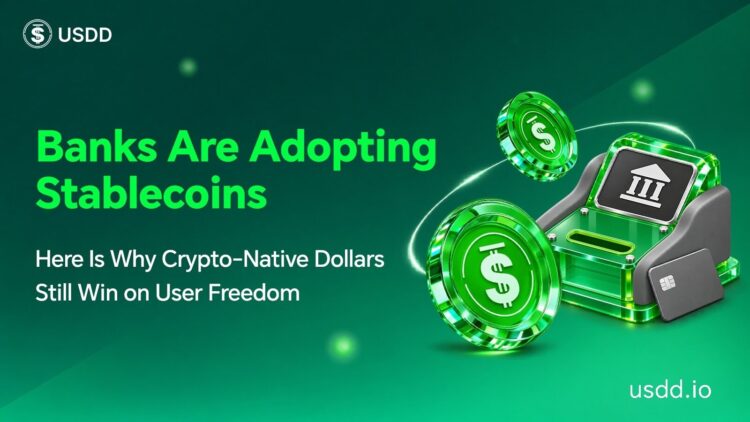
As traditional giants rush into digital dollars, USDD’s Yvonne Chia explains why 24/7 access, self-custody, and transparent yield give decentralized stablecoins an edge banks can’t replicate. 20 November – Road Town, Totorla, British Virgin Islands – Decentralized stablecoin protocol USDD is accelerating its multichain utility across TRON, Ethereum, and BNB Chain—combining automated sUSDD yield via its Smart Allocator with GasFree zero-TRX transfers—as traditional financial giants race to build competing stablecoin rails. In a recent industry interview with instant exchange partner ChangeNOW, USDD Head of Communications Yvonne Chia outlined why self-custody, 24/7 settlement, and transparent onchain reserves give decentralized digital dollars a structural advantage over bank-issued alternatives. 1. Permissionless Access vs. Gatekept Accounts For billions of people globally, opening and maintaining a traditional bank account still involves paperwork, minimum balance requirements, geographic restrictions, and approval delays. Even when banks integrate stablecoin rails behind the scenes, those services remain gated behind legacy compliance walls and intermediary control. Crypto-native stablecoins flip that model on its head. As Yvonne Chia highlighted during the interview: “Compare this to a stablecoin like USDD, where all you need is a phone, a working internet connection, you can immediately start a wallet and you have access to your funds right away.” With USDD, users can access and manage their digital dollars directly through their own wallets, without depending on traditional financial intermediaries. This represents a fundamental shift in financial access: users are no longer limited to the services, operating hours, or account structures of a single institution. Instead, they have the freedom to hold, manage, and transfer their assets on their own terms. Self-custody also gives users greater autonomy over their financial decisions. They can choose which wallets to use, where to transfer their assets, and which supported decentralized applications to interact with, without needing to route every transaction through a centralized financial institution. With USDD, users’ digital dollars can move with them across an open blockchain ecosystem, rather than remaining tied to a particular bank or service provider. 2. 24/7 Global Settlement vs. “Banking Hours” Legacy payment networks still operate on decades-old schedules: weekend cutoffs, bank holidays, and multi-day cross-border settlement delays accompanied by hefty wire fees. Blockchain networks never close. Whether it is a Sunday night or a public holiday, USDD moves globally without depending on traditional banking operating hours or settlement windows. “We are able to have transfers 24/7 and we’re not limited to any traditional banking hours. So I think that in some ways, stablecoins are not just becoming banks, but exceeding what traditional banks can offer to users.” To make everyday transfers even smoother than fintech apps, USDD introduced GasFree integration on TRON, allowing users on supported wallets to pay network fees directly in USDD without needing to hold TRX. This removes another practical barrier to stablecoin adoption: having to acquire and maintain a separate gas token just to transfer digital dollars. With GasFree, eligible users can pay approximately 0.5 USDD per transaction, compared with around 1.5 USDT for a standard USDT transfer under the referenced fee conditions. These improvements matter because the usefulness of a stablecoin is not determined by its peg alone. Low-cost transfers, straightforward wallet experiences, and around-the-clock availability are what make digital dollars practical for everyday payments and global value transfers. 3. Passing Yield Back to Users vs. Bank Spreads Perhaps the sharpest contrast between banks and decentralized stablecoins lies in how yield is distributed. In traditional banking, institutions take customer deposits, deploy them into yield-generating markets, and retain a significant portion of the returns. Everyday depositors may receive relatively low interest rates, while higher-yielding products often come with eligibility requirements, minimum deposits, or fixed maturity periods. Stablecoins introduce another way to participate in digital-dollar opportunities. Rather than keeping capital entirely within a traditional deposit account, users can access onchain yield opportunities through decentralized protocols and transparent investment mechanisms. USDD was built to return that value directly to holders. Through USDD Earn, users can deposit USDD to receive sUSDD, earning automated, competitive yield powered by our Smart Allocator system, with no fixed lock-up periods restricting access to their capital. For users, the distinction is important: USDD Earn provides access to a productive stablecoin while maintaining flexibility, rather than requiring users to commit their capital to a conventional fixed-term product. 4. Onchain Verification vs. Institutional Trust Traditional banks ask customers to trust closed-door balance sheets and periodic regulatory filings—until a crisis proves otherwise. USDD takes a different approach through its “Don’t trust, verify” ethos, emphasizing publicly accessible onchain information and independent verification. Onchain Transparency: Smart contract addresses, collateral reserves, and Smart Allocator deployments are publicly viewable, allowing users to examine relevant information directly on the blockchain. Structured Disclosures: Quarterly Treasury Reports provide additional information about reserve positions, financial performance, and operational developments. Independent Security Reviews: USDD undergoes third-party security audits to assess its smart contracts and identify potential vulnerabilities. Transparency does not eliminate financial or technical risks, but it changes how users can evaluate them. Instead of relying exclusively on an institution’s assurances, users have access to information that can be independently examined and verified. 5. Beyond a Single Network: An Open, Multichain Financial Ecosystem Financial freedom is not just about holding digital dollars. It is also about being able to use them wherever opportunities and applications exist. A stablecoin confined to a single network or limited use case cannot fully realize the potential of open blockchain finance. Following its January 2025 protocol upgrade, USDD expanded natively from TRON onto Ethereum and BNB Chain, extending its reach across multiple blockchain ecosystems. This multichain presence allows USDD to connect with different communities, liquidity environments, and decentralized applications. Its sUSDD product has also expanded into DeFi integrations, including Pendle and Morpho, giving users additional ways to access yield strategies across supported ecosystems. The bigger picture is an interconnected financial ecosystem in which users can move between holding, transferring, exchanging, and deploying their stablecoins according to their own needs. These are not isolated functions. Together, they make stablecoins more useful as everyday financial infrastructure. The Future: Interconnected, Open, and Multichain Banks will undoubtedly continue using stablecoin rails to modernize their back-end settlement. However, true financial freedom comes from open networks where assets flow freely across protocols without intermediaries. For USDD, the opportunity goes beyond offering a dollar-pegged asset. It is about making digital dollars accessible, transferable, and productive across an interconnected financial ecosystem. From self-custody and 24/7 transfers to flexible yield opportunities and multichain DeFi access, these capabilities give users more ways to put their money to work. Banks may be bringing stablecoins into traditional finance. Crypto-native protocols are showing what stablecoins can make possible beyond it.
As traditional giants rush into digital dollars, USDD’s Yvonne Chia explains why 24/7 access, self-custody, and transparent yield...

Solana Tokenized Stock Hits $1.2B as Wall Street Moves Equities Onchain
Solana (SOL)24h7d30d1yAll timeSolana’s tokenized stock market has reached $1.22 billion in circulating value, nearly doubling in l...

CFTC Chair on Hyperliquid and onchain venues, Ripple CLO doubts Elizabeth Warren will set crypto policy, and more
In today's newsletter, CFTC Chair Selig outlines how Hyperliquid and other onchain venues could enter the US; Ripple's Alderoty do...
Ripple’s Stuart Alderoty argues formal crypto rules will outlast any SEC chair
Formal crypto rules ensure regulatory stability and foster innovation, reducing reliance on shifting enforcement priorities and of...

XRP Has an Institutional Edge, But Garlinghouse Believes Wall Street Is Pulling Liquidity Away
The XRP price is struggling to take advantage of institutional credibility for the ledger. Ripple CEO Brad Garlinghouse has anothe...
Ripple CLO predicts Elizabeth Warren will focus on crypto oversight, not policy
Increased oversight without new policies could lead to heightened scrutiny and uncertainty for the crypto industry, impacting stra...