Bill ‘On Digital Currency’ Caps Crypto Investments for Russians, Opens Door for Payments
Russia’s recently revised bill “On Digital Currency” limits crypto purchases for non-qualified investors while providing legal ground for some cryptocurrency payments, according to local media. The draft law, proposed by...
Archive context
Older archive item. Useful for background and entity history, but not a fresh market-moving signal.
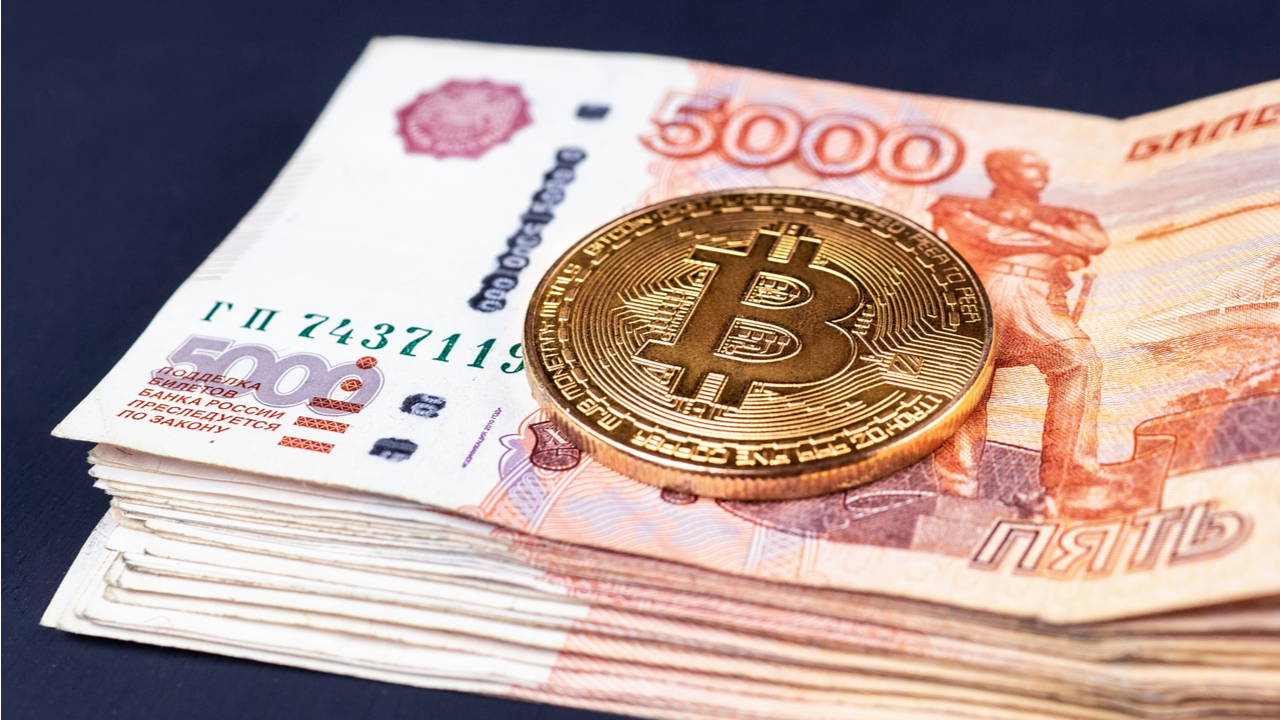
Russia’s recently revised bill “On Digital Currency” limits crypto purchases for non-qualified investors while providing legal ground for some cryptocurrency payments, according to local media. The draft law, proposed by the Russian finance ministry, also introduces strict requirements for platforms operating with digital assets.
Russian Citizens Who Don’t Pass Test to Buy Only $600 Worth of Crypto AnnuallyThe Ministry of Finance of Russia recently submitted to the government an updated version of its bill “On Digital Currency” designed to comprehensively regulate the country’s crypto market. Details about the law’s provisions have surfaced in Russian media reports this week.
According to the draft, qualified investors, or “professional purchasers of digital currency” as they are now described, will have unrestricted access to crypto assets. Ordinary Russians, however, will be able to buy a maximum of 600,000 rubles (approx. $7,000) worth of cryptocurrency each year. And that’s after they take a special exam.
Those Russian residents who fail to pass the test will be allowed to only acquire coins with a total value not exceeding 50,000 rubles annually (around $600 at the current exchange rates), the Interfax news agency revealed, quoting a source familiar with the document.
The new law defines the term ‘digital currency’ as “a set of electronic data contained in an information system that can be accepted as a means of payment that is not the monetary unit of the Russian Federation, or as an investment.” Digital currency is considered property in Russia, the report notes.
The wording seems to provide the legal basis for the employment of cryptocurrencies in payments. But at the same time, the bill reads that Russian legal entities, including subsidiaries of foreign companies and international organizations established in Russia as well as individuals staying in the country for at least 183 days within 12 months, cannot accept digital currency as payment for goods and services.
The finance ministry has been lobbying to legalize the circulation of cryptocurrencies in Russia while the central bank has opposed the idea and suggested a ban on crypto-related activities such as the issuing and trading digital coins. Most other institutions in Moscow are backing the Minfin’s approach but there’s also a general consensus against allowing payments with any other currency than the ruble.
Russia to Introduce Stringent Standards for Cryptocurrency CompaniesThe draft law “On Digital Currency” is going to impose strict requirements for crypto platforms working in the Russian Federation. An “exchange operator,” which offers purchases and sales of digital currency on its own behalf and at its own expense, will have to keep at least 30 million rubles of capital. The mandatory threshold for “operators of digital trading platforms,” or those “conducting organized auctions,” is 100 million rubles.
If the bill is adopted as is, these businesses will have numerous other responsibilities, including preparing annual reports, maintaining records of digital currency owners, storing and backup trading data on a daily basis, and carrying out internal audits. The service providers will be added to a special register and their activities will be licensed and overseen by an authorized body appointed by the government.
The requirements are “extremely overstated” and only the largest financial institutions will be able to meet them, blockchain lawyer Mikhail Uspensky commented for the Kommersant. Besides, only Russian entities will be permitted to apply for the role of crypto operators. Foreign exchanges, for example, will have to establish a local subsidiary to obtain a license but many of them may be prevented from doing so by mounting western sanctions over Russia’s war in Ukraine.
Quoting the draft, the Russian business daily also unveiled that only identified users will be able to buy and sell digital currencies. Fiat deposits and withdrawals will be possible exclusively through bank accounts and crypto platforms will be obliged to report suspicious transactions to the Rosfinmonitoring financial watchdog. “Electronic wallets for digital currencies” will be subject to mandatory certification, although this applies only to wallets within the Russian crypto infrastructure.
The bill “On Digital Currency” allows both companies and individual entrepreneurs to engage in crypto mining, once they register with the government. Registration is not required for private Individuals minting digital coins if the electrical energy consumed for this purpose does not exceed certain limits that will be determined by the relevant authorities.
If Russian lawmakers approve the law, it is expected to enter into force on Jan. 1, 2023. The State Duma, the lower house of Russian parliament, is now also reviewing amendments tailored to regulate the taxation of crypto-related operations in the country.
Do you think Russia will implement the strict regulations for crypto platforms envisaged in the draft law “On Digital Currency?” Share your expectations in the comments section below.
Why this matters
This cryptocurrency story adds another data point to the current market tape and is useful when read alongside nearby source coverage.
Original source
Read on Bitcoin NewsRelated market context
Russia’s Central Bank to Let Retail Investors Trade Bitcoin on Margin
Bitcoin Magazine Russia’s Central Bank to Let Retail Investors Trade Bitcoin on Margin Russia’s central bank plans to let ordinary...

Abu Dhabi Ruling Gives Binance a Legal Path to Reclaim Billions Frozen in Its Hack
Binance has obtained a court order from the Abu Dhabi Global Market (ADGM) Courts that it says will help it get back crypto frozen...

Pulsar Enables USDT Deposits on TRON, Expanding Access to Everyday Stablecoin Payments
Geneva, Switzerland, November 19, 2026 — Pulsar Money today announced support for USDT deposits on the TRON network, allowing user...

Institutions Holding ETH, SOL or HYPE Can Now Borrow Up to Five Years at a $4 Billion Lender
Institutional lender Two Prime will now take seven assets besides bitcoin as loan collateral, the firm announced on Wednesday, Nov...

Stablecoin Market Loses Billions: Where Is Crypto’s Liquidity Going?
Crypto’s stablecoin market has shed $16 billion in a month, marking its sharpest contraction since the 2022 bear market. The retre...
Kraken’s Owner Payward Strikes Deal for Tribe Capital, a $2.7 Billion Venture Investor
Kraken‘s owner, Payward, said on Wednesday it agreed to buy Tribe Capital, a Menlo Park, California, venture firm that manages $2....