Brazil Police Arrested Suspect for Using Crypto to Launder $2.6 Billion
The Federal Police of Brazil arrested one person last week in connection with a massive money laundering racket suspected of having moved $2.6 billion in illegal proceeds through crypto assets, the Brazilian edition of C...
Archive context
Older archive item. Useful for background and entity history, but not a fresh market-moving signal.

The Federal Police of Brazil arrested one person last week in connection with a massive money laundering racket suspected of having moved $2.6 billion in illegal proceeds through crypto assets, the Brazilian edition of CNN reported.
Mastermind behind a Massive Money Laundering Operation
The person was arrested on January 7 at Guarulhos Airport in São Paulo when trying to board a flight bound towards Dubai in the United Arab Emirates. The person was living in Dubai to evade police actions, as UAE does not have an extradition treaty with most Western countries.
As outlined by the report, the arrested individual received the dirty money in Brazil generated from drug trafficking and other crimes and exchanged it for cryptocurrencies. The illegal proceeds were then funneled and moved through the accounts of several shell companies to hide their origin.
One of the involved shell companies handled $285 million of the dirty proceeds in merely ten months. None of these proceeds were declared to the tax authorities.
“There is also evidence that even living abroad, he continued to commit crimes, having identified a bank account belonging to a company owned by an intermediary and used by him to receive and transfer funds,” the Federal Police of Brazil stated (translated from Portuguese).
Operation Colossus
The arrest was part of a wider investigation initiated in 2022. This investigation aimed to uncover cases of tax evasion, money laundering, and other criminal associations linked to cryptocurrency trading between 2017 and 2021. Dubbed Operation Colossus, this operation spanned across several Brazilian cities and states, including Sao Paulo, Rio de Janeiro, and Minas Gerais.
Although the mainstream financial industry is adopting crypto, with the latest approval of Bitcoin ETFs in the US, digital currencies remain the favorite of criminals due to their decentralized nature. Over the years, law enforcement around the world have arrested and cracked down on several large-scale illegal operations using crypto.
Last year, the two founders of crypto mixing platform Tornado Cash faced criminal charges in the United States for assisting criminals, including hackers linked to the North Korea-linked Lazarus Group, to launder over $1 billion in illicit funds.
This article was written by Arnab Shome at www.financemagnates.com.Why this matters
This cryptocurrency story adds another data point to the current market tape and is useful when read alongside nearby source coverage.
Original source
Read on Finance MagnatesRelated market context
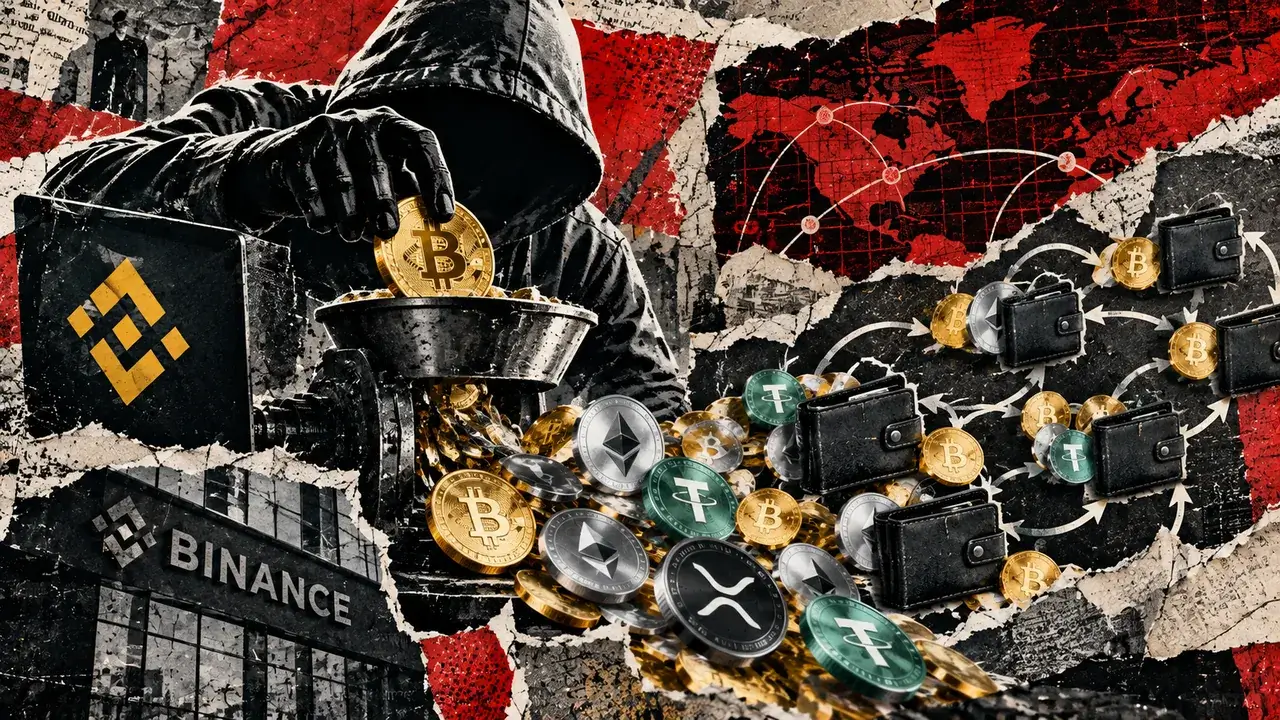
Binance hackers deploy never-seen-before laundering tactics to conceal $6.3 billion theft
Hackers behind Binance's $6.3 billion breach are using previously unseen laundering tactics while rapidly converting stolen assets...
Blockchain Firms Link North Korea to $6.3 Billion Binance Hack
Bitcoin Magazine Blockchain Firms Link North Korea to $6.3 Billion Binance Hack Blockchain analysis firms Chainalysis and TRM Labs...

Strategy Sold 5,552 Bitcoin and Bought 7,218 in Q3 as a $20.9 Billion Markup Drove Profit
Strategy reported $20.91 billion of operating income for the third quarter on Thursday, all of it from a $20.91 billion gain on di...

Binance Hack: Are Funds Safu? What We Know So Far About the Biggest Heist in Crypto History
Cryptocurrency giant Binance faces what could be the largest exchange hack in history after a security breach affected an estimate...

Binance hackers raced to move billions before it could be frozen
Attackers raced to convert stolen stablecoins into crypto that issuers could not freeze as industry players like Tether and Circle...
Clarity Act could classify Binance as “covered person,” says Lummis
The Clarity Act's potential classification of Binance as a "covered person" could reshape regulatory landscapes for digital asset...