Can Crypto Clean Up Its Act?
Does crypto need to improve its image, put the wild west days in the past, and get real? With institutional investors looking on, and an increasing number of entities being set up to enable crossovers between traditional...
Archive context
Older archive item. Useful for background and entity history, but not a fresh market-moving signal.
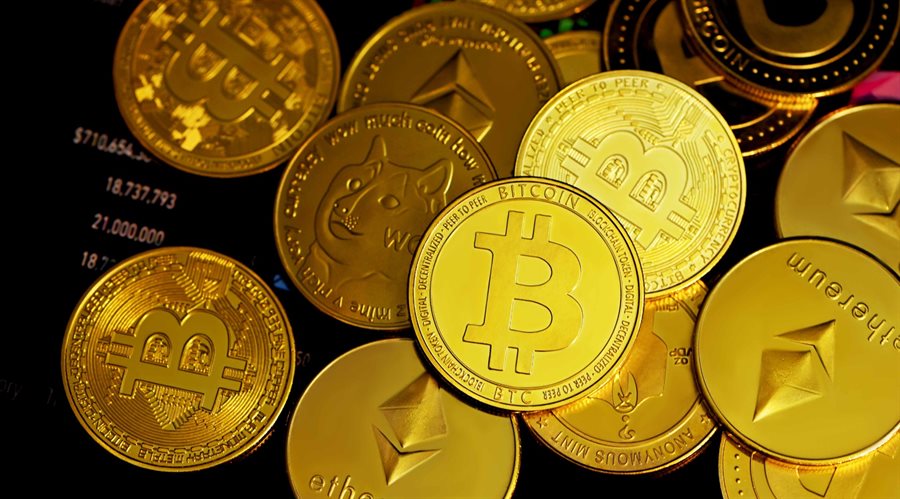
Does crypto need to improve its image, put the wild west days in the past, and get real? With institutional investors looking on, and an increasing number of entities being set up to enable crossovers between traditional finance and digital assets, it would appear that crypto is entering the financial mainstream. Or at least, it’s hovering on the edge of the mainstream, but still in a state of uncertainty.
Alarmingly, there remains a sense that the crypto industry and its major players are always only one or two steps away from yet another catastrophe, are not operating according to safe principles, and are steered by eccentric personalities. But, if crypto were to become a more stable, respectable, and inviting institution, what would that shift entail? And, would everyone currently involved in the crypto space welcome such changes?
In crypto’s favor, we can certainly conclude that it is a survivor. In almost a decade and a half since Bitcoin was unleashed, we have seen phenomenal growth and durability, but also, an accompaniment of crashes, criminality and, on the whole, the image of an industry sometimes verging on chaos.
By any orthodox reckoning, crypto probably should be as dead as its naysayers have repeatedly claimed. Last year, perhaps Terra/Luna should have been the final straw, putting crypto out for the count. Celsius and Three Arrows Capital might have put a boot in for good measure. And finally, there was the FTX collapse, which could have buried the entire crypto edifice under its rubble.
Yet, here it all still is, with more blockchains than ever, developers busy at work, DeFi and NFTs spinning along, and with Bitcoin even enjoying a dramatic start-of-year price rally. What’s more, this is all happening while in the US, the SEC appears to have the crypto industry firmly in its sights.
That the crypto markets are conspicuously enjoying the end of spring, might suggest that the crypto industry itself is nearing the end of its own 14-year spring and, having survived this long, is ready to enter a new and more mature season in its existence.
What Crypto Needs to Do Now
Essentially, and especially in the wake of the FTX scandal, custodial service providers need to perform all-round good housekeeping. Most straightforwardly, this would take the form of demonstrating proof of reserves, and proof of liabilities, which should, as a result, provide proof of solvency. There may be complications to navigate when it comes to proof of liabilities, but this is an area for auditors to assess, and, at the very least, exchanges and other service providers can demonstrate a willingness to move in this direction.
It’s also worth asking why FTX could get away with such large-scale recklessness, seemingly in plain sight. It may be the case that in a world where finance has evolved safeguards and regulatory oversight, it was assumed that an entity as visible as FTX must be operating within certain ethical and practical boundaries. However, what we’ve seen is that, in the case of FTX and others, it wasn’t only oversight that was lacking, but also even a basic, personal orientation towards forward-thinking, long-term stability.
It’s particularly critical for exchanges to transparently segregate user funds, with separate accounting in place. In fact, this point was clarified in a set of guidelines issued to crypto service providers by the New York Department of Financial Services (NYDFS) last month. It was also made clear that customer funds should be safe-kept only, treated as belonging to the customer, and not utilized by the custody service provider for its own purposes.
Looking over these guidelines can feel a little surreal, as what’s being stated by the NYDFS seems so obvious that one wouldn’t expect that it needs to be laid out. However, this reflects the degree to which FTX, in particular, simply wasn’t operating according to any established procedural norms.
To move forward, then, crypto as a whole is at a point where behind-the-scenes hygiene and direct public-facing openness have become critical, with a view always on long-term dependability. A core ethos in crypto is the prioritization of verification over trust, but that doesn’t negate the value of having leading players who act in a trustworthy manner.
A Clash of Cultures
Crypto emerged from Bitcoin, although it seems (although this an area of speculation, due to the anonymity of Bitcoin’s creator) it came from a desire to build a working alternative to central banking and fiat currencies.
The point here is that crypto has always operated without permission, and certainly, without paying the undue attention to existing institutions and having an orthodox means of operating. However, although this is thrillingly liberating, it also creates a scenario in which crypto is vulnerable to repeating errors that traditional finance has long-since negotiated its way through and learned to avoid.
What’s more, if crypto wants to avert the possibility of industry-damaging heavy-handedness from at-times hostile regulators, then it would be expedient to demonstrate a meaningful capacity for self-regulation, while making it clear that platforms and protocols are being open and honest with their users.
This article was written by Sam White at www.financemagnates.com.Why this matters
This cryptocurrency story adds another data point to the current market tape and is useful when read alongside nearby source coverage.
Original source
Read on Finance MagnatesRelated market context

Curve Finance: Ethereum’s Glamsterdam upgrade may boost DeFi execution
The Glamsterdam upgrade could enhance DeFi efficiency, potentially boosting Ethereum's market appeal and influencing future price...

Why XRP’s 63 billion circulating tokens don’t tell buyers what’s for sale
For XRP buyers, available supply depends on the price they are willing to pay. The token's roughly 63.09 billion circulating suppl...

Vitalik Warns AI Math Could Threaten Crypto Keys Before Quantum Computing Arrives
Key Takeaways: Vitalik Buterin states that the rise of today’s cryptography is outpaced by AI-accelerated mathematics. In addition...

MEXC and Payward Highlight Collaboration as Crypto and TradFi Converge at TOKEN2049
October 9, 2026 – MEXC,a pioneer in 0-fee digital asset trading, and Payward, the parent company of Kraken, shared their perspecti...

EU Securities Regulator Wants Crypto Platforms to Wind Down Non-MiCA Stablecoin Services
The European Securities and Markets Authority (ESMA) issued an opinion dated Oct. 8 saying licensed crypto platforms should stop s...
XRP News: Ripple Challenges Wall Street for a Slice of $256B ETF Market
The U.S. leveraged ETF market has 593 funds and more than $256 billion in assets, including XRP, and Ripple Prime is making itself...