Circle Reserve Attestation Shows USDC Backing Above Circulating Supply
Circle has issued its latest monthly reserve attestation for USDC, with Deloitte’s review showing reserve assets above total circulating token supply. The attestation states that USDC reserves stood at $34.5 billion and...
Archive context
Older archive item. Useful for background and entity history, but not a fresh market-moving signal.

Circle has issued its latest monthly reserve attestation for USDC, with Deloitte’s review showing reserve assets above total circulating token supply.
The attestation states that USDC reserves stood at $34.5 billion and were backed primarily by short-term U.S. Treasury bills and overnight repurchase agreements. That kind of reserve disclosure matters because stablecoins depend on confidence. Users need to believe that tokens can be redeemed and that reserves are managed conservatively.
USDC has long tried to compete on transparency and regulatory alignment.
Monthly attestations are part of that strategy.
For more details, visit the official Circle platform.
TL;DR- Circle released its latest monthly USDC reserve attestation.
- The attestation showed reserve assets above circulating USDC supply.
- Reserves were mostly held in short-term U.S. Treasuries and overnight repo agreements.
Stablecoins are only useful if users trust the backing.
A dollar-pegged token needs enough high-quality assets behind it to meet redemptions. If users begin to doubt the reserves, confidence can disappear quickly. That is why reserve transparency has become one of the most important parts of the stablecoin market.
Attestations are not the same as real-time audits.
They are point-in-time assessments. But they still give the market a structured look at reserve composition and whether assets exceed token liabilities at the reporting date.
For USDC, that transparency is part of the product.
Treasuries And Repo Keep The Reserve ConservativeCircle’s reserve mix remains important.
Short-term U.S. Treasury bills and overnight repurchase agreements are generally viewed as conservative, liquid instruments. They are not risk-free in every possible sense, but they are far easier for investors to understand than opaque commercial paper, volatile assets, or unsecured loans.
That matters in stablecoins.
Reserve quality can be as important as reserve size. A stablecoin backed by liquid government securities sends a different signal than one backed by harder-to-value assets.
USDC’s latest attestation supports the company’s transparency-led positioning.
A Point-In-Time SnapshotThe limitation is important.
A reserve attestation reflects a specific reporting date. It does not show every movement before or after that date. It does not guarantee that reserve composition never changes. It does not eliminate operational, banking, regulatory, or redemption risk.
But it does create accountability.
By publishing regular reserve information, Circle gives users, exchanges, institutions, and regulators something concrete to review.
That helps separate serious stablecoin issuers from weaker operators that ask users to trust them without showing much.
USDC’s Role In Crypto MarketsUSDC remains one of crypto’s most important settlement assets.
It is used across exchanges, DeFi protocols, payment applications, remittances, tokenized markets, and institutional workflows. That makes reserve strength systemically relevant inside crypto.
If USDC confidence is high, it helps liquidity.
If stablecoin confidence weakens, the effects can spread quickly through DeFi and trading venues.
That is why even routine attestations matter.
The Broader Stablecoin RaceStablecoin competition is intensifying.
Tether remains the dominant issuer by supply, but USDC has positioned itself around transparency, compliance, and institutional access. New rules and bank-linked stablecoin projects could make the market even more competitive.
Circle’s reserve attestations are part of how it defends its place in that market.
The latest release does not change the entire stablecoin landscape overnight. But it gives users another monthly data point showing that USDC reserves exceeded circulating supply at the reporting date.
In stablecoins, that kind of boring transparency is exactly the point.
This article draws on Circle’s latest USDC reserve attestation materials.
This article was written by the News Desk and edited by Samuel Rae.
Why this matters
USD Coin is showing up inside the Stablecoins theme, so this story is worth tracking for follow-through rather than treating it as a one-off headline.
Original source
Read on NewsBTCRelated market context

Tether signs MoU with Kazakhstan’s central bank to explore tenge stablecoins and tokenized assets
Kazakhstan's collaboration with Tether could enhance its fintech landscape, potentially boosting local currency integration in dig...

Securitize Teams With Korea’s LG CNS to Explore Tokenized Funds and Stablecoins
Securitize and Korean technology company LG CNS announced a strategic partnership, set out in a memorandum of understanding, aimed...
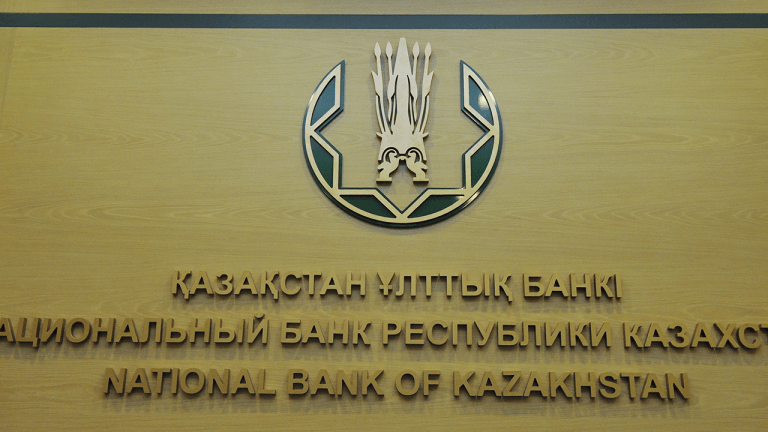
Kazakhstan Taps Tether to Explore a New Tenge Stablecoin Model
Kazakhstan already has a tenge stablecoin in a central-bank sandbox. Now it has brought Tether into the room to study another one....

Tether tapped by Kazakhstan’s central bank to explore stablecoin and tokenization
The National Bank of Kazakhstan said it will study a local currency-linked stablecoin and tokenized real-world assets with Tether.

Circle partners with Tereina to bring USDC and EURC into SAP Pay
Integrating stablecoins into SAP Pay could streamline enterprise payments, reduce costs, and accelerate blockchain adoption in bus...

Tether, Kazakhstan cenbank mull tenge stablecoin and asset tokenization
The agreement will explore a tenge-backed stablecoin pilot and a framework for tokenizing real-world assets as Kazakhstan expands...