Coinbase Users in 4 States Won’t Be Able to Stake Additional Assets
Coinbase announced that retail clients in four states will no longer be able to add new assets to its staking product due to ongoing legal proceedings. SEC files lawsuit against the firm Ten states, which include Alabama...
Archive context
Older archive item. Useful for background and entity history, but not a fresh market-moving signal.

Coinbase announced that retail clients in four states will no longer be able to add new assets to its staking product due to ongoing legal proceedings.
SEC files lawsuit against the firmTen states, which include Alabama, California, and New Jersey, have filed actions against the exchange to stop its staking program within their jurisdictions. This comes after the Securities and Exchange Commission filed a lawsuit against the firm in June.
The SEC and several states argue that the product constitutes an unregistered security offering.
Coinbase claims staking is not a security, maintaining that it is a “core part of ensuring the cryptoeconomy functions for hundreds of millions of users around the globe.”
The company has been communicating with policymakers in multiple states to ensure that its staking program remains available to all users.
However, in California, New Jersey, South Carolina, and Wisconsin, the company will no longer be able to accept additional staking assets from customers.
“Customers’ crypto that was staked before these orders were issued remains unaffected,” the company said in the Friday blog post. “Impacted customers have received an email with more information specific to their state, and all customers can visit our Help Center to learn more about these actions and the changes we will be implementing in the coming weeks in these four states.”
Coinbase staking services will operate normally in other states
Coinbase’s staking services will operate normally in the other states in which there are ongoing proceedings.
“Staking is not some exotic or complex financial product,” the company said.
“In fact, it is not a financial product at all,” it continued.
The notes went on and stated the following:
“Whether a user stakes on their own or through a service like ours, they remain the owner of their crypto at all times. Unlike lending, for example, there is no risk that a borrower will fail to repay, because the underlying crypto remains in custody from start to finish.”
Why this matters
This cryptocurrency story adds another data point to the current market tape and is useful when read alongside nearby source coverage.
Original source
Read on CryptoGazetteRelated market context

Coinbase And Samsung Bring USDC Directly Into Samsung Wallet
TL;DR: Coinbase is powering USDC inside Samsung Wallet, with the stablecoin feature due to reach 82 million compatible Galaxy devi...

Money20/20 USA 2026: How Bitcoin, Stablecoins and AI Are Reshaping the Future of Finance
Bitcoin Magazine Money20/20 USA 2026: How Bitcoin, Stablecoins and AI Are Reshaping the Future of Finance Fintech has moved beyond...
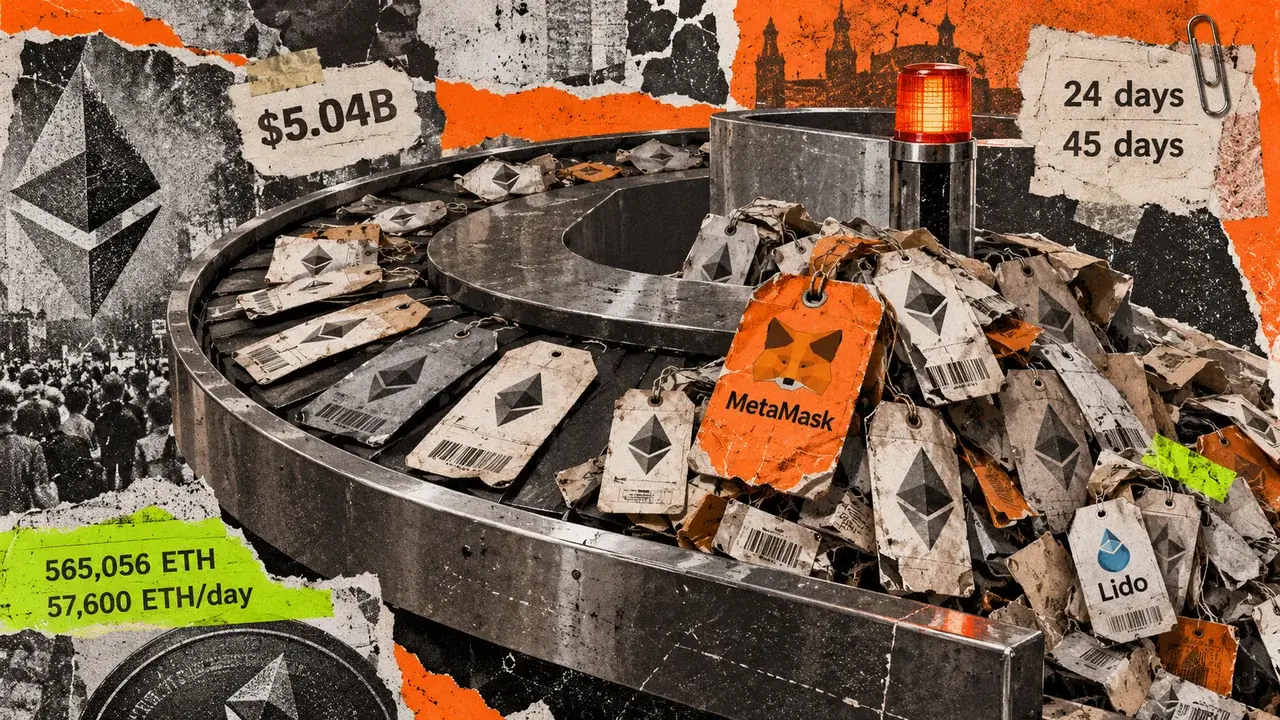
A $1,000 MetaMask incident could turn Ethereum’s staking queue into a $5 billion traffic jam
MetaMask's precautionary validator exits are turning a roughly $1,000 reward diversion into a test of Ethereum's staking capacity....

Bitcoin keeps losing ground when Wall Street opens as Coinbase discount deepens
Bitcoin’s US-session weakness is deepening as BTC prices on Coinbase trade at a $64 discount to Binance, the largest global crypto...

Polygon Open Money Stack Expands to TRON, Extending Network Access to Regulated U.S. Payment Rails
Dubai, UAE – October 8, 2026 – Polygon Labs today announced that Polygon Open Money Stack now supports the TRON network, giving fi...
EDX Markets and VerifiedX Partner to Bring Verified Bitcoin (vBTC) to Institutional Markets
Bitcoin Magazine EDX Markets and VerifiedX Partner to Bring Verified Bitcoin (vBTC) to Institutional Markets VerifiedX (verifiedx....