Crypto Kingpin behind Bars: 12 Years for $100M Ponzi Scheme
As a part of a broader crackdown on fraudulent crypto operations in the USA, one of the masterminds behind the AirBit Club has been sentenced to 12 years in prison. Pablo Renato Rodriguez, who has run a global crypto Pon...
Archive context
Older archive item. Useful for background and entity history, but not a fresh market-moving signal.

As a part of a broader crackdown on fraudulent crypto operations in the USA, one of the masterminds behind the AirBit Club has been sentenced to 12 years in prison. Pablo Renato Rodriguez, who has run a global crypto Ponzi scheme with his co-conspirators, lured individuals into investing in a fake cryptocurrency trading and mining company, laundering the proceeds through complex channels.
The Crypto Deception Unveiled
Rodriguez and Gutemberg Dos Santos and other co-defendants founded AirBit Club in 2015. They promised investors guaranteed profits through club memberships, marketing it as a multilevel venture in the cryptocurrency industry. However, the founders engaged in a sophisticated money laundering operation instead of genuine investments, using the obtained money for personal luxuries like cars and jewelry.
The scheme was not limited to the United States; the co-conspirators traveled globally, hosting events to attract more victims. Investors were given access to an online portal that falsely showed accumulating profits. When investors tried to withdraw their money, they were met with delays, hidden fees, or complete denial of withdrawal.
"Rodriguez co-founded and led an international multimillion-dollar pyramid scheme that preyed on mostly unsophisticated investors with false promises that their money was being invested in cryptocurrency trading and mining," Damian Williams, the US Attorney, commented.
Williams emphasized that instead of investing on behalf of investors, Rodriguez hid victims' money in a complex laundering scheme using Bitcoin, an attorney trust account, and international front and shell companies. He used victims' money to line his pockets.
Before founding AirBit Club, Rodriguez and Dos Santos had been sued by the Securities and Exchange Commission (SEC) for another pyramid scheme and had paid $1.7 million in fines. The case also involved Scott Hughes, an attorney who helped conceal the fraudulent activities.
The Aftermath
The activities of AirBit Club first gained attention over three years ago, in August 2020, when US authorities initially filed charges related to running an alleged financial pyramid. Although the case dragged on for many long months, it was successfully concluded by imprisoning the fraudsters and halting their illegal activities. The first sentences in this case were announced back in March 2023:
Operators and attorney of global multi-million-dollar cryptocurrency Ponzi scheme “AirBit Club” plead guiltyhttps://t.co/MT3mM9aqPV
— US Attorney SDNY (@SDNYnews) March 8, 2023Rodriguez has been ordered to pay a forfeiture of $65 million and give up various assets, including Bitcoin wallets and real estate. His co-defendants have pleaded guilty to charges with maximum potential sentences ranging from 20 to 30 years in prison. Their sentencing is scheduled for early October 2023.
According to the Department of Justice, the case serves as a cautionary tale for potential investors in the cryptocurrency space, highlighting the risks of fraudulent schemes.
Ponzi Schemes "Loves" FX and Crypto
Financial pyramids are a scourge on the cryptocurrency and forex markets. Regulators from the United States and other jurisdictions frequently announce new penalties and cases against fraudsters. This week, the Commodity Futures Trading Commission (CFTC) initiated legal proceedings against Wonsey from Riverview, Florida. He is charged with fraud and misappropriation in a trading scheme that involves leveraged retail foreign currency (forex) and binary options.
In June, the Securities and Exchange Commission (SEC) filed charges against another Florida resident Sanjay Singh and his logistics company, Royal Bengal Logistics Inc. Singh is accused of fraudulently raising approximately $112 million from nearly 1,500 investors through an unregistered securities offering and operating a foreign exchange (FX) scam.
Earlier in March 2023, the Commission secured emergency relief from a Florida court to freeze assets and appoint a receiver for BKCoin and its Co-Founder, Kevin Kang. Announced on Monday, the Miami-based crypto hedge fund is accused of defrauding at least 55 investors after accumulating $100 million.
This article was written by Damian Chmiel at www.financemagnates.com.Why this matters
This cryptocurrency story adds another data point to the current market tape and is useful when read alongside nearby source coverage.
Original source
Read on Finance MagnatesRelated market context
Base records $500 million in weekly trading volume as tokenized stocks gain ground
The surge in tokenized stock trading on Base highlights growing interest in blockchain-based financial products, potentially resha...

Bitcoin ETFs Bleed $484.9 Million As BlackRock Leads A Broad Day Of Outflows
TL;DR: US spot Bitcoin ETFs recorded $484.9 million in net outflows on October 7, according to Farside Investors. BlackRock’s IBIT...
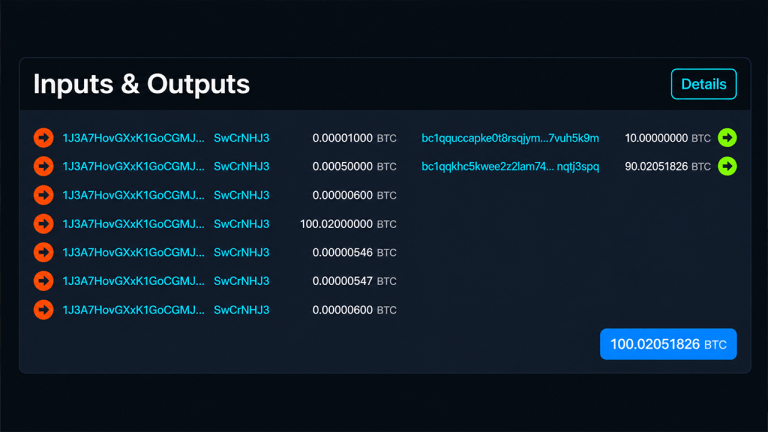
From Zero to $8 Million: Satoshi-Era Bitcoin Awakens After 16 Years
On Oct. 7, Galaxy Research disclosed that it had identified a batch of 100 bitcoin mined in July 2010 that had finally stirred aft...

OSL Brings A USDGO Market-Neutral Fund On-Chain For Hong Kong Investors
TL;DR: OSL Group has tokenized the USDGO Plus SP fund on-chain and is providing custody and distribution through its licensed Hong...

Europol says crypto’s quantum upgrade could take years and urges work to start now
Europol, the EU’s law enforcement agency, is urging the cryptocurrency industry to begin preparing wallet and protocol upgrades fo...
82 Million Galaxy Devices Will Support USDC Transfers This October
USDC is set to become Samsung Wallet’s default dollar stablecoin as Coinbase expands its partnership with the smartphone maker. Th...