Crypto Taxes 2022: Here’s What You Need to Know According to CoinTracking
PRESS RELEASE. Crypto changes quickly, with new tax laws and regulations coming to several countries in 2022, impacting how people need to report their crypto gains on taxes. New regulations in the US are a hot discussio...
Archive context
Older archive item. Useful for background and entity history, but not a fresh market-moving signal.
PRESS RELEASE. Crypto changes quickly, with new tax laws and regulations coming to several countries in 2022, impacting how people need to report their crypto gains on taxes.
New regulations in the US are a hot discussion topic among crypto investors, with a bill coming to fruition severely increasing the reporting needs for crypto brokers and traders.
Beyond the increased regulation, new investment vehicles in crypto also spark doubts on traders on how to incorporate them into their local tax regimes.
CoinTracking is here to cover the top 5 crypto tax changes to be aware of in 2022 and onward:
- More reporting for crypto brokers with the new 1099-B requirements
The Infrastructure Investment and Jobs Act of 2021 (IIJA) of Nov. 15, 2021, requires cryptocurrency exchanges to report crypto transactions on form 1099 starting in 2023. This change requires crypto brokers to issue a tax report with all the individual trades that users conducted, including information such as sales proceeds and costs basis for each trade.
The level of complexity for crypto brokers to comply with the measure is immense and could cause a lack of reporting ability for both brokers and traders, resulting in unfair penalties.
If you have a 1099-B with wrong information from a crypto exchange, you’ll have to correct it and report the actual trades you conducted and their full information. You’ll have to search for a professional tax accountant with crypto experience to help you solve these issues.
- More crypto reporting for traders under Section 60501 of the US tax code
More reporting for crypto traders is coming with Section 60501, requiring people who receive more than $10,000 in cash and equivalents in the form of digital assets to file a report with the IRS.
There are two main challenges for traders with this expansion in Section 60501:
- The difficulty in determining the Fair Market Value (in USD) of transacted crypto and how to determine the $10,000.
- Higher burden and privacy invasion by having to provide additional details (e.g., the transfer recipient, name of the parties, social security numbers, etc.)
- DAOs and DeFi 2.0 revenue increase need for crypto tax reporting
The rise of DeFi 2.0 with rebasing protocols like OlympusDAO, Wonderland, and their forks across blockchains is giving investors more opportunities. However, earning staking rewards from these protocols increases the difficulty of reporting, since you’re receiving rewards for each rebase with different underlying Fair Market Values (in USD)
In the US, each time you receive those staking rewards, you have to recognize their Fair Market Value (in USD) as ordinary income. Fortunately, CoinTracking easily tracks your staking rewards from rebasing protocols to ensure you‘re tax compliant.
- The search for crypto-tax-friendly locations to cash out profits
As crypto regulation increases worldwide, countries with friendly regulatory frameworks for crypto investors and businesses are becoming a sought-after alternative.
If you have large unrealized gains and are looking to continue your crypto trading journey, moving to a low-tax or crypto-friendly regime may be an option.
Countries like Puerto Rico, El Salvador, Dubai, Portugal, Germany, and Singapore are some of the top crypto-friendly locations worldwide.
- Metaverse and tokenization take center stage
Experts predict that GameFi, the Metaverse, and tokenization (NFTs) will go mainstream in 2022. In the event of a bitcoin bear market, rotation from the primary digital assets to emerging categories could even boost that trend.
From a tax perspective, converting digital assets (e.g., bitcoin or ether) for tokens in virtual ecosystems (e.g., in-game digital assets, NFTs, Metaverse tokens) is a taxable event in the US.
For example, trading bitcoin for $SAND (the Sandbox game token) or trading ether for an NFT in any marketplace is a crypto-to-crypto trade, a taxable event in the US, subject to capital gains taxes.
Determining the gain on crypto-to-crypto trades is more difficult, and it increases the need for the use of crypto tax software to easily import trades, get your gains calculated according to your preferred accounting method, and submit tax reports.
Remember to consult with a tax professional with experience in crypto to overcome these challenges and keep updated records of all of your transactions with CoinTracking.
Disclaimer: All the information provided above is for informational purposes only and should not be considered as professional investment, legal, or tax advice. You should conduct your own research or consult with a professional financial advisor when investing.
This is a press release. Readers should do their own due diligence before taking any actions related to the promoted company or any of its affiliates or services. Bitcoin.com is not responsible, directly or indirectly, for any damage or loss caused or alleged to be caused by or in connection with the use of or reliance on any content, goods or services mentioned in the press release.
Why this matters
This cryptocurrency story adds another data point to the current market tape and is useful when read alongside nearby source coverage.
Original source
Read on Bitcoin NewsRelated market context
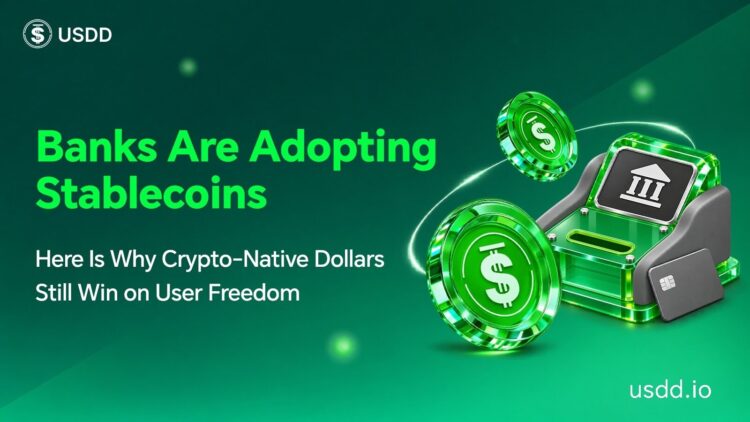
As traditional giants rush into digital dollars, USDD’s Yvonne Chia explains why 24/7 access, self-custody, and transparent yield give decentralized stablecoins an edge banks can’t replicate. 20 November – Road Town, Totorla, British Virgin Islands – Decentralized stablecoin protocol USDD is accelerating its multichain utility across TRON, Ethereum, and BNB Chain—combining automated sUSDD yield via its Smart Allocator with GasFree zero-TRX transfers—as traditional financial giants race to build competing stablecoin rails. In a recent industry interview with instant exchange partner ChangeNOW, USDD Head of Communications Yvonne Chia outlined why self-custody, 24/7 settlement, and transparent onchain reserves give decentralized digital dollars a structural advantage over bank-issued alternatives. 1. Permissionless Access vs. Gatekept Accounts For billions of people globally, opening and maintaining a traditional bank account still involves paperwork, minimum balance requirements, geographic restrictions, and approval delays. Even when banks integrate stablecoin rails behind the scenes, those services remain gated behind legacy compliance walls and intermediary control. Crypto-native stablecoins flip that model on its head. As Yvonne Chia highlighted during the interview: “Compare this to a stablecoin like USDD, where all you need is a phone, a working internet connection, you can immediately start a wallet and you have access to your funds right away.” With USDD, users can access and manage their digital dollars directly through their own wallets, without depending on traditional financial intermediaries. This represents a fundamental shift in financial access: users are no longer limited to the services, operating hours, or account structures of a single institution. Instead, they have the freedom to hold, manage, and transfer their assets on their own terms. Self-custody also gives users greater autonomy over their financial decisions. They can choose which wallets to use, where to transfer their assets, and which supported decentralized applications to interact with, without needing to route every transaction through a centralized financial institution. With USDD, users’ digital dollars can move with them across an open blockchain ecosystem, rather than remaining tied to a particular bank or service provider. 2. 24/7 Global Settlement vs. “Banking Hours” Legacy payment networks still operate on decades-old schedules: weekend cutoffs, bank holidays, and multi-day cross-border settlement delays accompanied by hefty wire fees. Blockchain networks never close. Whether it is a Sunday night or a public holiday, USDD moves globally without depending on traditional banking operating hours or settlement windows. “We are able to have transfers 24/7 and we’re not limited to any traditional banking hours. So I think that in some ways, stablecoins are not just becoming banks, but exceeding what traditional banks can offer to users.” To make everyday transfers even smoother than fintech apps, USDD introduced GasFree integration on TRON, allowing users on supported wallets to pay network fees directly in USDD without needing to hold TRX. This removes another practical barrier to stablecoin adoption: having to acquire and maintain a separate gas token just to transfer digital dollars. With GasFree, eligible users can pay approximately 0.5 USDD per transaction, compared with around 1.5 USDT for a standard USDT transfer under the referenced fee conditions. These improvements matter because the usefulness of a stablecoin is not determined by its peg alone. Low-cost transfers, straightforward wallet experiences, and around-the-clock availability are what make digital dollars practical for everyday payments and global value transfers. 3. Passing Yield Back to Users vs. Bank Spreads Perhaps the sharpest contrast between banks and decentralized stablecoins lies in how yield is distributed. In traditional banking, institutions take customer deposits, deploy them into yield-generating markets, and retain a significant portion of the returns. Everyday depositors may receive relatively low interest rates, while higher-yielding products often come with eligibility requirements, minimum deposits, or fixed maturity periods. Stablecoins introduce another way to participate in digital-dollar opportunities. Rather than keeping capital entirely within a traditional deposit account, users can access onchain yield opportunities through decentralized protocols and transparent investment mechanisms. USDD was built to return that value directly to holders. Through USDD Earn, users can deposit USDD to receive sUSDD, earning automated, competitive yield powered by our Smart Allocator system, with no fixed lock-up periods restricting access to their capital. For users, the distinction is important: USDD Earn provides access to a productive stablecoin while maintaining flexibility, rather than requiring users to commit their capital to a conventional fixed-term product. 4. Onchain Verification vs. Institutional Trust Traditional banks ask customers to trust closed-door balance sheets and periodic regulatory filings—until a crisis proves otherwise. USDD takes a different approach through its “Don’t trust, verify” ethos, emphasizing publicly accessible onchain information and independent verification. Onchain Transparency: Smart contract addresses, collateral reserves, and Smart Allocator deployments are publicly viewable, allowing users to examine relevant information directly on the blockchain. Structured Disclosures: Quarterly Treasury Reports provide additional information about reserve positions, financial performance, and operational developments. Independent Security Reviews: USDD undergoes third-party security audits to assess its smart contracts and identify potential vulnerabilities. Transparency does not eliminate financial or technical risks, but it changes how users can evaluate them. Instead of relying exclusively on an institution’s assurances, users have access to information that can be independently examined and verified. 5. Beyond a Single Network: An Open, Multichain Financial Ecosystem Financial freedom is not just about holding digital dollars. It is also about being able to use them wherever opportunities and applications exist. A stablecoin confined to a single network or limited use case cannot fully realize the potential of open blockchain finance. Following its January 2025 protocol upgrade, USDD expanded natively from TRON onto Ethereum and BNB Chain, extending its reach across multiple blockchain ecosystems. This multichain presence allows USDD to connect with different communities, liquidity environments, and decentralized applications. Its sUSDD product has also expanded into DeFi integrations, including Pendle and Morpho, giving users additional ways to access yield strategies across supported ecosystems. The bigger picture is an interconnected financial ecosystem in which users can move between holding, transferring, exchanging, and deploying their stablecoins according to their own needs. These are not isolated functions. Together, they make stablecoins more useful as everyday financial infrastructure. The Future: Interconnected, Open, and Multichain Banks will undoubtedly continue using stablecoin rails to modernize their back-end settlement. However, true financial freedom comes from open networks where assets flow freely across protocols without intermediaries. For USDD, the opportunity goes beyond offering a dollar-pegged asset. It is about making digital dollars accessible, transferable, and productive across an interconnected financial ecosystem. From self-custody and 24/7 transfers to flexible yield opportunities and multichain DeFi access, these capabilities give users more ways to put their money to work. Banks may be bringing stablecoins into traditional finance. Crypto-native protocols are showing what stablecoins can make possible beyond it.
As traditional giants rush into digital dollars, USDD’s Yvonne Chia explains why 24/7 access, self-custody, and transparent yield...

Coinbase Sets Mid-2027 Goal to Write Its Own Event Contracts, Bloomberg Reports
Coinbase is aiming to start offering its own event contracts, the yes-or-no trades on real-world outcomes that make up prediction...

Coinbase Launches Crypto Options Globally, Bringing Deribit Liquidity to Retail Traders
Key Takeaways: Coinbase has rolled out cryptocurrency trading to qualified users outside of the United States. Contracts include B...

Trade ANTx on Kraken Pro, with $5,000 in prizes
TL;DR ANTx is live on Kraken Pro. It gives you price exposure to Anthropic shares, and you trade it from the Kraken Pro account an...
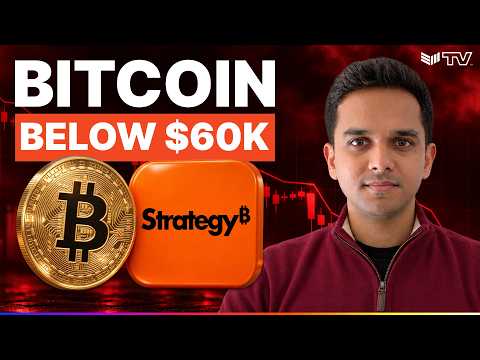
MSTR Head of Investor Relations Addresses Bitcoin Pullback, Equity Performance
▶Bitcoin Magazine MSTR Head of Investor Relations Addresses Bitcoin Pullback, Equity Performance Chaitanya “CJ” Jain, Head of Inve...

Hyperliquid’s execution model raises concerns for institutional traders, Quote.Trade CTO warns
Concerns over Hyperliquid's execution model may deter institutional traders, highlighting the need for privacy and predictable exe...