EU Stablecoin Interchangeability Under MiCA—What’s Next?
The European Commission is preparing to issue new guidance clarifying how stablecoins are treated under the EU’s crypto regulation framework, known as MiCA. The update is expected in the coming days, as pressure builds f...
Archive context
Older archive item. Useful for background and entity history, but not a fresh market-moving signal.
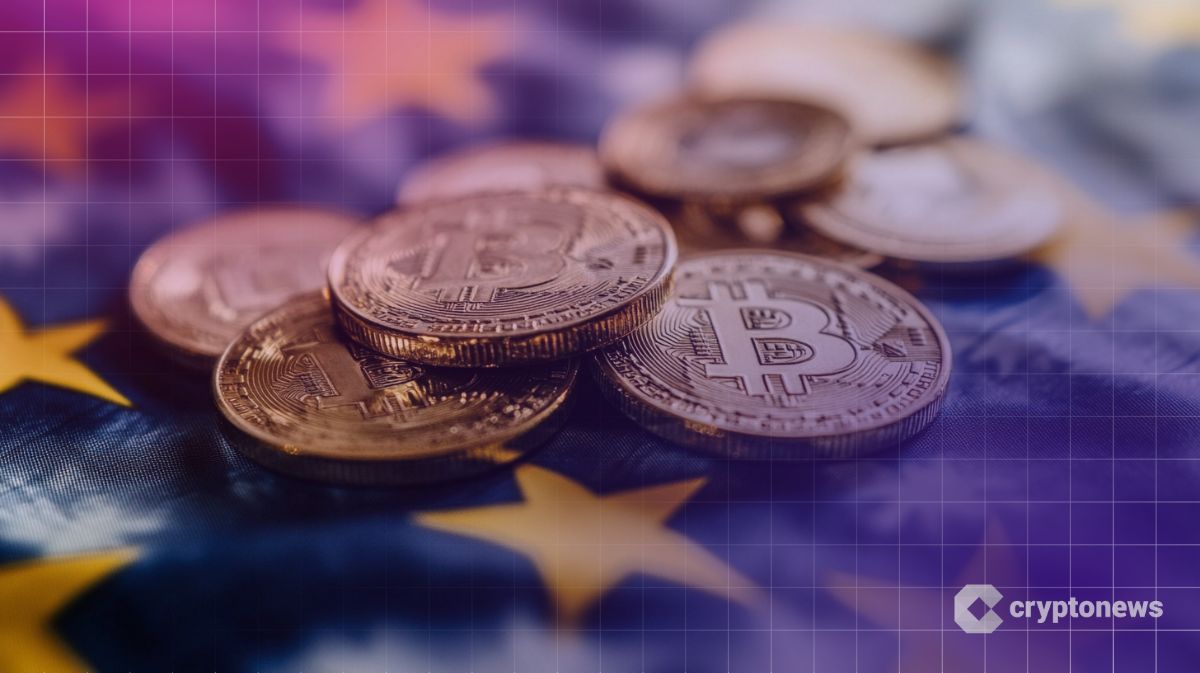
The European Commission is preparing to issue new guidance clarifying how stablecoins are treated under the EU’s crypto regulation framework, known as MiCA.
The update is expected in the coming days, as pressure builds for clearer rules on cross-border stablecoin use.
At the core of the guidance is a rule that would allow stablecoins issued by the same company to be treated as interchangeable, regardless of whether the tokens were minted inside or outside the EU.
This would apply only if the issuing company holds a license to operate under MiCA within the EU.
Commission Prepares Stablecoin Clarification After Ethena Exit Highlights GapsAccording to a report from Reuters, the commission intends to formally clarify this in response to mounting industry uncertainty.
One specific issue has been the lack of clarity around whether tokens issued in different jurisdictions by the same company can be used interchangeably, also referred to as “fungibility.”
According to Reuters, the European Commission will issue guidance clarifying that stablecoins issued by EU-licensed entities can be treated as interchangeable with those issued by their non-EU affiliates, under the MiCA framework. The move responds to a query from French…
— Wu Blockchain (@WuBlockchain) June 25, 2025The guidance comes as the European crypto sector adjusts to MiCA, which came into effect in December 2024. Under the law, stablecoins classified as e-money tokens (EMTs) must be backed by reserves held mostly in EU-based banks and issued only by licensed firms.
The Commission’s position follows a March incident involving Ethena, a stablecoin issuer that was denied a MiCA license in Germany and subsequently exited the EU market.
The Commission is now expected to confirm that such companies could treat their tokens as fungible across jurisdictions, as long as the EU-licensed entity is involved.
Not everyone agrees with the approach. The European Central Bank has voiced concern, warning that allowing this type of interchangeability could create stress in the EU’s financial system.
The ECB argued that EU-held reserves could be used to meet redemption requests from non-EU holders, a scenario that could “risk undermining EU strategic autonomy.”
Despite that, a European Commission spokesperson said the risks of such a scenario were low. “A run on a well-governed and fully collateralized stablecoin is very unlikely,” the spokesperson said.
The Commission also said that non-EU holders of such jointly issued stablecoins would have to direct their redemption requests to the non-EU entity that issued the token.
To prevent mismatches between reserves and redemptions, the Commission plans to require stablecoin issuers to introduce re-balancing mechanisms. These would ensure that the reserves held in the EU match the amount of tokens circulating within the region.
This clarification follows a request from France’s banking regulator in April, which asked the Commission whether identical tokens issued by separate arms of the same company, one licensed in the EU and the other abroad, could be treated as fungible.
The ECB remains cautious. In internal communications, the central bank warned that shared reserves could be drained under financial stress. It also emphasized that redemption flows should be kept separate to avoid regulatory loopholes.
Still, the Commission maintains that clear separation between EU and non-EU redemption channels, combined with robust reserve tracking, will reduce risk.
A formal statement from the Commission is expected soon, as regulators seek to strike a balance between market innovation and financial safeguards under MiCA.
MiCA Faces Early Resistance as Europe Weighs Stablecoin Future and Pushes Digital EuroAs the EU rolls out its comprehensive MiCA framework, early responses to its stablecoin rules suggest a rocky start.
While MiCA has provided clarity for crypto firms operating in Europe, its strict conditions, like requiring issuers to hold reserves in European banks and banning interest on tokens, have slowed stablecoin adoption.
Tether, the world’s most-used stablecoin, has already opted out, while Circle, Crypto.com, and a handful of others have gained approval under the framework.
However, adoption remains sluggish. Fabio Panetta, former ECB board member and now Governor of the Bank of Italy, noted that MiCA has not triggered any notable wave of stablecoin activity in Italy, one of the EU’s largest markets.
On Friday, the Bank of Italy warned that growing crypto ties to traditional finance risk financial stability.#Italy #Cypto https://t.co/BZyYWt8f14
— Cryptonews.com (@cryptonews) May 30, 2025Instead, user interest is gravitating toward custodial and trading services rather than issuance.
Panetta stressed that while MiCA improves transparency and oversight, regulation alone won’t neutralize systemic risks.
He argued for accelerating the digital euro project, which could provide a more secure and central-bank-backed alternative to private stablecoins.
At the same time, other major jurisdictions like the U.S. are racing to finalize their own stablecoin laws, adding urgency to Europe’s efforts to lead on global crypto standards.
The stablecoin race is far from settled, and MiCA’s impact is still being tested.
The post EU Stablecoin Interchangeability Under MiCA—What’s Next? appeared first on Cryptonews.
Why this matters
This cryptocurrency story adds another data point to the current market tape and is useful when read alongside nearby source coverage.
Original source
Read on CryptonewsRelated market context

USDC’s EU Reserves and Capital Shift to EBA Supervision in MiCA’s First ‘Significant’ Call
Circle’s European USDC issuer will answer to the European Banking Authority (EBA) on reserves, liquidity and capital from Nov. 12,...
Episode Six Launches Real-Time Stablecoin Backing Checks Across 50+ Global Markets
Key Takeaways: As part of Episode Six, it has introduced Verified Backing for bank-issued stablecoins and tokenized deposits. The...
CONNECT recap: Liquidity is tokenization’s next challenge, everyday stablecoins
Panelists at Cointelegraph’s Singapore CONNECT event explored opportunities in tokenized markets, the future of everyday stablecoi...

BingX EU Secures MiCAR License, Advancing Regulated Crypto Services Across Europe
VIENNA, October 15, 2026 – BingX EU (MEGE zweite GmbH) has secured its Markets in Crypto-Assets Regulation (MiCA or MiCAR) license...

Mastercard Taps 17B Endpoints With BVNK Stablecoin Platform Across 200+ Markets
Key Takeaways: Global Money Platform For Fiat and Stablecoin Payment by Mastercard and BVNK. Mastercard Move links to 17B+ devices...
Circle’s USDC Is First to Cross Europe’s Stablecoin Threshold
Circle’s USDC has become the first stablecoin classified as a significant e-money token by the European Banking Authority (EBA), s...