EU to Review MiCA, as 80% of Crypto Firms Vanish in Compliance Cull
The European Commission has a long-standing habit of checking its own homework and MiCA is next up on the docket. On Tuesday, Brussels launched a formal consultation to gather feedback on the functioning of the Regulatio...
Archive context
Older archive item. Useful for background and entity history, but not a fresh market-moving signal.
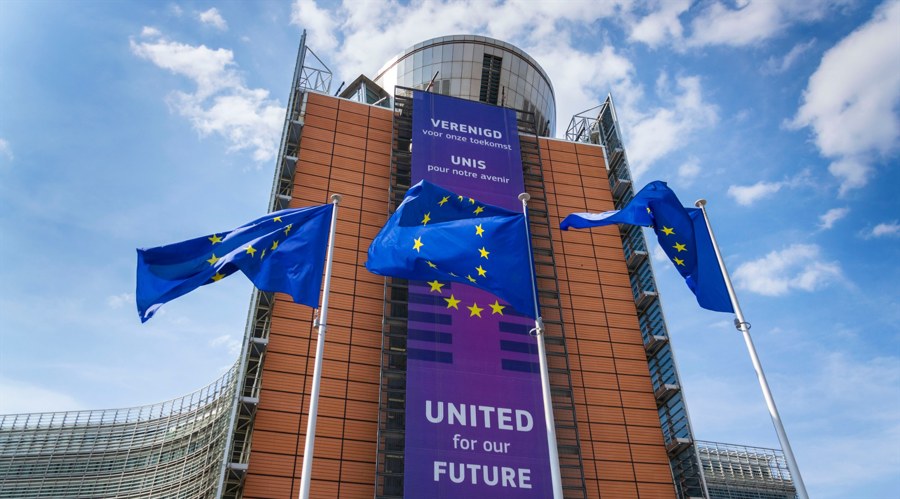
The European Commission has a long-standing habit of checking its own homework and MiCA is next up on the docket. On Tuesday, Brussels launched a formal consultation to gather feedback on the functioning of the Regulation.
For the stakeholders involved, the exchanges, the issuers, and the industry associations, this is an invitation to revisit the battlefield.
As the grandfathering period for MiCA approaches its end on July 1, the preliminary results suggest that the compliance cull has been deep.
In the years preceding MiCA’s implementation, the European crypto sector was a fragmented but vast ecosystem. Industry estimates suggest that between 1,100 and 1,300 cryptoasset service providers (CASPs) were active across the union, operating under a patchwork of national regimes.
Today, that number has effectively collapsed. As of May, only 200 CASPs have been authorised under the new harmonised rules.
In Cyprus, only 12 entities have secured authorisation. Tellingly, seven of these are not crypto-native companies but established retail brokers, such as Capital.com, eToro, and XTB, that have expanded into spot crypto as part of a wider multi-asset strategy.
The Cost of Entry
This high attrition rate was not entirely unexpected. Przemysław Kral, the CEO of zondacrypto, had previously offered a blunt assessment of the situation: “Smaller crypto businesses, particularly those with limited resources, might be forced to quit the EU market as a result of high costs of compliance.”
Kral’s observation highlights a fundamental tension within MiCA. By setting a high bar for entry, Brussels has successfully legitimised the sector, but it has done so by creating a cost curve that acts as a vertical wall for smaller firms.
The garage startup era of European crypto is being replaced by a corporate landscape dominated by well-capitalised incumbents.
The current consultation will likely reveal whether this consolidation has improved market safety or simply stifled innovation by pricing out the next generation of fintech entrepreneurs.
The Stablecoin Friction
While the CASP count is a point of concern, the stablecoin regime remains the most charged aspect of the framework.
Indeed, MiCA has provided much-needed legal clarity, but criticism has been directed at the capital buffers and caps imposed on issuers.
These measures appear to be tightly calibrated to meet EU policy goals, specifically the preservation of monetary sovereignty, rather than pure market neutrality.
The licensing regime is also notably cumbersome. To issue a compliant stablecoin under MiCA, an entity must also acquire an Electronic Money Institution (EMI) license. Again, this dual-layered requirement is a bottleneck that disfavours small players.
The most visible tension involves Tether (USDT), the world’s largest stablecoin with a market capitalisation of between US$185 and 190 billion dollars. USDT currently lacks MiCA authorisation, leading regulated exchanges such as Kraken, Coinbase and Crypto.com to delist it for EU users.
This has created an opening for MiCA-compliant alternatives like Circle’s USDC and its euro-denominated counterparts.
Indeed, Circle’s euro-stablecoin has grown sixfold between January 2025 and March 2026.
EURC wallet share grew more than 6x from January 2025 to March 2026.As adoption expands, euro-denominated stablecoin usage is reaching a broader set of users and applications onchain. pic.twitter.com/VsKTZlNKuU
— Circle (@circle) May 15, 2026A Danger for a Two-Tier System?
However, the EU’s attempt to squeeze non-compliant stablecoins out of the market carries a familiar risk. There is a clear precedent for this: the product intervention measures introduced by ESMA in 2018.
Those restrictions did not abate retail demand for CFDs; they pushed it toward offshore jurisdictions where European regulators have no oversight.
A similar migration may occur in crypto. The danger exists that clients will migrate to offshore-facing platforms that do not impose such restrictions.
By attempting to protect the local market, the EU may inadvertently be making its investors less safe by forcing them into unregulated spaces.
As the Commission begins its review, the central question is whether MiCA will serve as a growth driver for a mature market or whether it will create a two-tier system.
For the 80% of firms that have already vanished, the answer will arrive too late.
This article was written by Adonis Adoni at www.financemagnates.com.Why this matters
Circle is showing up inside the Stablecoins theme, so this story is worth tracking for follow-through rather than treating it as a one-off headline.
Original source
Read on Finance MagnatesRelated market context
Circle’s USDC overtakes Tether’s USDT in euro trading as MiCA rules reshape market
MiCA's regulatory framework reshapes the stablecoin market, favoring compliant tokens like USDC, impacting trading dynamics and li...

USDC overtakes USDT in euro stablecoin trading as EU rules reshape market: Kaiko
USDC’s share of euro stablecoin trading has climbed to 56% since January 2024, with deeper liquidity as exchanges restrict USDT un...

Bitget Wallet Gives Users USD and EUR Account Numbers That Convert Deposits to Stablecoins
Bitget Wallet, the self-custodial crypto wallet, is giving its users personal USD and EUR account numbers that can take in bank tr...
Monad Wins a Stablecoin Card Infrastructure Deal With Reap and Meru
TL;DR: Reap announced on October 26 that it would add the Monad blockchain to its stablecoin-linked card infrastructure, with Lati...

Circle and ACI Worldwide pilot USDC settlement on Colombia’s Bre-B instant-payments network
The pilot could accelerate stablecoin integration into traditional banking, potentially reshaping financial systems across Latin A...
AI agents can now buy domains on Atom using x402 payments via Coinbase
AI-driven domain purchases via stablecoins could revolutionize digital commerce, enabling seamless, automated transactions globall...