GAIMIN Extends Its Active User Base Through the Success of Gaimin’s Esports Team – GAIMIN Gladiators
PRESS RELEASE. Zug, Switzerland, 25th February 2022: GAIMIN Gladiators is pleased to announce its recently acquired DOTA 2 esports team has won the DOTA2 WEU Regional Finals, beating teams including Team Liquid, Nigma, T...
Archive context
Older archive item. Useful for background and entity history, but not a fresh market-moving signal.
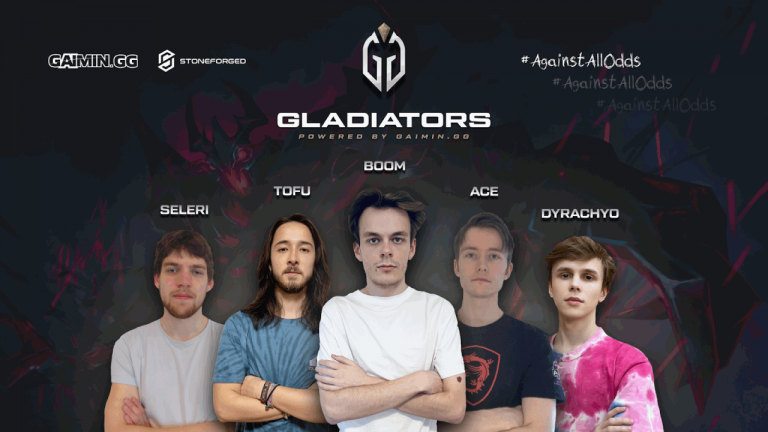
PRESS RELEASE. Zug, Switzerland, 25th February 2022: GAIMIN Gladiators is pleased to announce its recently acquired DOTA 2 esports team has won the DOTA2 WEU Regional Finals, beating teams including Team Liquid, Nigma, Tundra and OG. The success of GAIMIN’s esports team generates significant awareness of the GAIMIN brand and directs more potential users towards GAIMIN and the application.
These high profile events are promoted worldwide to their followers and achieve significant viewing figures. The Regional Finals achieved peak viewing of 160,000 and a total of 650,000 video views. In winning the event, GAIMIN’s brand has been promoted across all output media and increased the following and global reach of the Gladiator’s DOTA 2 team. The Gladiator’s currently have over 83,000 followers across all platforms, 2 million follower impressions and monthly profile visits of 150,000+.
GAIMIN’s business model is designed around gamers downloading the GAIMIN application and enabling GAIMIN to access the high performance GPUs found in gaming PCs. Gamers generate passive rewards, paid in GAIMIN’s soon to be listed GMRX crypto currency when running the application and enabling its monetisation features.
Joseph Turner, Chief Gaming Officer for GAIMIN stated, “In January 2022, GAIMIN acquired esports team GAIMIN Gladiators with the objective of creating the leading global esports team, focussing on specific genres and games within the esports community. The quick success of our DOTA2 team has been amazing and motivates us to identify more teams to join GAIMIN Gladiators.”
Nick Cuccovillo, President GAIMIN Gladiators explained, “Our DOTA2 team has exceeded expectations with their early success, and spearheaded our plans to extend into Pokemon Unite, Counter-Strike and Rainbow Six: Siege. We intend on creating the largest esports community across a number of different games and genres. DOTA2 is only the beginning”.
Martin Speight, CEO of GAIMIN confirmed, “Our decision to invest in esports is already paying off. The number of followers the DOTA2 team has, combined with the followers of the other teams we are looking at incorporating into the GAIMIN Gladiators, will give us access to a worldwide audience of potential GAIMIN application users, exceeding our active user forecasts, building a much larger community of users generating their own GMRX rewards and building the GAIMIN brand into a worldwide community of gamers.”
About GAIMIN Gladiators
GAIMIN Gladiators were formed from the OCG Esports Club; a Canadian Esports organisation established in 2019 by brothers Nick and Alex Cuccovillo and Shawn Porter. Their aim was to conquer their chosen esports and since 2019 they have achieved significant success winning major events such as Dreamhack Canada for Counter-Strike: Global Offensive and successfully competing in the highest pro-amateur league in North America.
The Club expanded into Warcraft 3 in Europe and North America, competing in the most prestigious leagues and tournaments with the strongest lineup and players in the game. In support of their aspirations for growth, the Club moved into new and emerging verticals, participating in Rainbow Six Siege and playing in the Challengers League for two years. OCG’s focused on the semi-professional esports pro scene and its surrounding ecology – building a platform and ecosystem for gamers.
OCG has some of the best talent in Canada in its gaming roster, representing Canada at national level across tournaments in North America. Through constant innovation, community-driven goals and working with top talent, OCG has striven to create an inclusive, respected and distinguished brand for gamers.
The OCG philosophy fully aligns with the GAIMIN principle of “No Gamer Left Behind” and makes OCG the perfect fit for GAIMIN. Based on their gaming successes and principles, OCG is now part of GAIMIN and have re-branded as GAIMIN Gladiators.
GAIMIN Gladiators will represent GAIMIN in the global esports arena and build on their past successes and growth by participating in current and new esports verticals.
About GAIMIN
GAIMIN.IO Ltd (GAIMIN) is a UK and Swiss based gaming company focused on helping the gaming community monetise the computational power of their gaming PC. GAIMIN has created a decentralised data processing network harnessing under utilised processing power typically found in gaming PC’s to create a world-wide decentralised data processing network, delivering “supercomputer” performance.
With a free to download PC-based application GAIMIN monetises the under utilised performance through innovative approaches to delivering “supercomputer” level data processing performance from a world-wide network of independent processing devices. Focusing initially on the powering of blockchain computations, the GAIMIN data processing network also supports a number of different large scale data processing applications, including video rendering.
GAIMIN pays users in its own crypto currency, GMRX which can then be used for purchases on the GAIMIN Marketplace for NFTs, in-game assets, accessories and merchandise, or it can be converted to fiat or a different crypto currency.
For further information, please contact:
The Americas, Middle East and Australian Pacific – Andrew Faridani, Chief Marketing Officer for GAIMIN (based in Toronto, Canada): [email protected]
UK and Europe – Marc Bray, Director of Communications for GAIMIN (based in Manchester, UK): marc @gaimin.io
This is a press release. Readers should do their own due diligence before taking any actions related to the promoted company or any of its affiliates or services. Bitcoin.com is not responsible, directly or indirectly, for any damage or loss caused or alleged to be caused by or in connection with the use of or reliance on any content, goods or services mentioned in the press release.
Why this matters
This cryptocurrency story adds another data point to the current market tape and is useful when read alongside nearby source coverage.
Original source
Read on Bitcoin NewsRelated market context
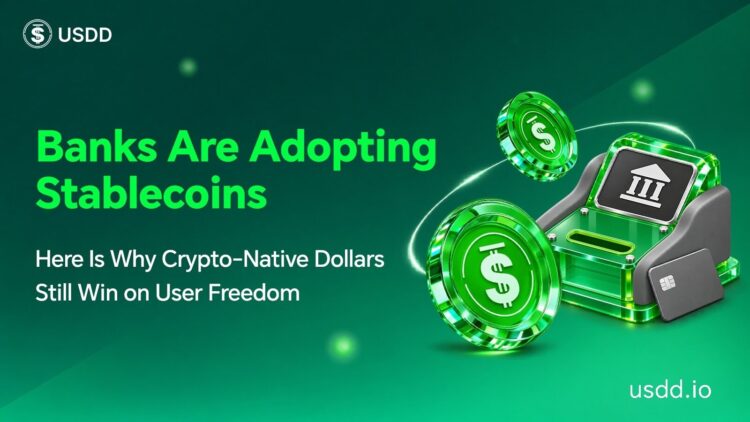
As traditional giants rush into digital dollars, USDD’s Yvonne Chia explains why 24/7 access, self-custody, and transparent yield give decentralized stablecoins an edge banks can’t replicate. 20 November – Road Town, Totorla, British Virgin Islands – Decentralized stablecoin protocol USDD is accelerating its multichain utility across TRON, Ethereum, and BNB Chain—combining automated sUSDD yield via its Smart Allocator with GasFree zero-TRX transfers—as traditional financial giants race to build competing stablecoin rails. In a recent industry interview with instant exchange partner ChangeNOW, USDD Head of Communications Yvonne Chia outlined why self-custody, 24/7 settlement, and transparent onchain reserves give decentralized digital dollars a structural advantage over bank-issued alternatives. 1. Permissionless Access vs. Gatekept Accounts For billions of people globally, opening and maintaining a traditional bank account still involves paperwork, minimum balance requirements, geographic restrictions, and approval delays. Even when banks integrate stablecoin rails behind the scenes, those services remain gated behind legacy compliance walls and intermediary control. Crypto-native stablecoins flip that model on its head. As Yvonne Chia highlighted during the interview: “Compare this to a stablecoin like USDD, where all you need is a phone, a working internet connection, you can immediately start a wallet and you have access to your funds right away.” With USDD, users can access and manage their digital dollars directly through their own wallets, without depending on traditional financial intermediaries. This represents a fundamental shift in financial access: users are no longer limited to the services, operating hours, or account structures of a single institution. Instead, they have the freedom to hold, manage, and transfer their assets on their own terms. Self-custody also gives users greater autonomy over their financial decisions. They can choose which wallets to use, where to transfer their assets, and which supported decentralized applications to interact with, without needing to route every transaction through a centralized financial institution. With USDD, users’ digital dollars can move with them across an open blockchain ecosystem, rather than remaining tied to a particular bank or service provider. 2. 24/7 Global Settlement vs. “Banking Hours” Legacy payment networks still operate on decades-old schedules: weekend cutoffs, bank holidays, and multi-day cross-border settlement delays accompanied by hefty wire fees. Blockchain networks never close. Whether it is a Sunday night or a public holiday, USDD moves globally without depending on traditional banking operating hours or settlement windows. “We are able to have transfers 24/7 and we’re not limited to any traditional banking hours. So I think that in some ways, stablecoins are not just becoming banks, but exceeding what traditional banks can offer to users.” To make everyday transfers even smoother than fintech apps, USDD introduced GasFree integration on TRON, allowing users on supported wallets to pay network fees directly in USDD without needing to hold TRX. This removes another practical barrier to stablecoin adoption: having to acquire and maintain a separate gas token just to transfer digital dollars. With GasFree, eligible users can pay approximately 0.5 USDD per transaction, compared with around 1.5 USDT for a standard USDT transfer under the referenced fee conditions. These improvements matter because the usefulness of a stablecoin is not determined by its peg alone. Low-cost transfers, straightforward wallet experiences, and around-the-clock availability are what make digital dollars practical for everyday payments and global value transfers. 3. Passing Yield Back to Users vs. Bank Spreads Perhaps the sharpest contrast between banks and decentralized stablecoins lies in how yield is distributed. In traditional banking, institutions take customer deposits, deploy them into yield-generating markets, and retain a significant portion of the returns. Everyday depositors may receive relatively low interest rates, while higher-yielding products often come with eligibility requirements, minimum deposits, or fixed maturity periods. Stablecoins introduce another way to participate in digital-dollar opportunities. Rather than keeping capital entirely within a traditional deposit account, users can access onchain yield opportunities through decentralized protocols and transparent investment mechanisms. USDD was built to return that value directly to holders. Through USDD Earn, users can deposit USDD to receive sUSDD, earning automated, competitive yield powered by our Smart Allocator system, with no fixed lock-up periods restricting access to their capital. For users, the distinction is important: USDD Earn provides access to a productive stablecoin while maintaining flexibility, rather than requiring users to commit their capital to a conventional fixed-term product. 4. Onchain Verification vs. Institutional Trust Traditional banks ask customers to trust closed-door balance sheets and periodic regulatory filings—until a crisis proves otherwise. USDD takes a different approach through its “Don’t trust, verify” ethos, emphasizing publicly accessible onchain information and independent verification. Onchain Transparency: Smart contract addresses, collateral reserves, and Smart Allocator deployments are publicly viewable, allowing users to examine relevant information directly on the blockchain. Structured Disclosures: Quarterly Treasury Reports provide additional information about reserve positions, financial performance, and operational developments. Independent Security Reviews: USDD undergoes third-party security audits to assess its smart contracts and identify potential vulnerabilities. Transparency does not eliminate financial or technical risks, but it changes how users can evaluate them. Instead of relying exclusively on an institution’s assurances, users have access to information that can be independently examined and verified. 5. Beyond a Single Network: An Open, Multichain Financial Ecosystem Financial freedom is not just about holding digital dollars. It is also about being able to use them wherever opportunities and applications exist. A stablecoin confined to a single network or limited use case cannot fully realize the potential of open blockchain finance. Following its January 2025 protocol upgrade, USDD expanded natively from TRON onto Ethereum and BNB Chain, extending its reach across multiple blockchain ecosystems. This multichain presence allows USDD to connect with different communities, liquidity environments, and decentralized applications. Its sUSDD product has also expanded into DeFi integrations, including Pendle and Morpho, giving users additional ways to access yield strategies across supported ecosystems. The bigger picture is an interconnected financial ecosystem in which users can move between holding, transferring, exchanging, and deploying their stablecoins according to their own needs. These are not isolated functions. Together, they make stablecoins more useful as everyday financial infrastructure. The Future: Interconnected, Open, and Multichain Banks will undoubtedly continue using stablecoin rails to modernize their back-end settlement. However, true financial freedom comes from open networks where assets flow freely across protocols without intermediaries. For USDD, the opportunity goes beyond offering a dollar-pegged asset. It is about making digital dollars accessible, transferable, and productive across an interconnected financial ecosystem. From self-custody and 24/7 transfers to flexible yield opportunities and multichain DeFi access, these capabilities give users more ways to put their money to work. Banks may be bringing stablecoins into traditional finance. Crypto-native protocols are showing what stablecoins can make possible beyond it.
As traditional giants rush into digital dollars, USDD’s Yvonne Chia explains why 24/7 access, self-custody, and transparent yield...
Binance.US says its CFTC derivatives applications are materially complete
Binance.US's progress with CFTC could reshape US crypto markets by potentially expanding regulated derivatives offerings, impactin...

Strive’s Jeff Walton says institutional credit could pivot from AI data centers to Bitcoin
Institutional credit's shift to Bitcoin-backed securities could diversify portfolios, offering high yields but also introducing vo...
Ionic Digital (IOND) Sells 737 Bitcoin to Fund Data Center Buildout
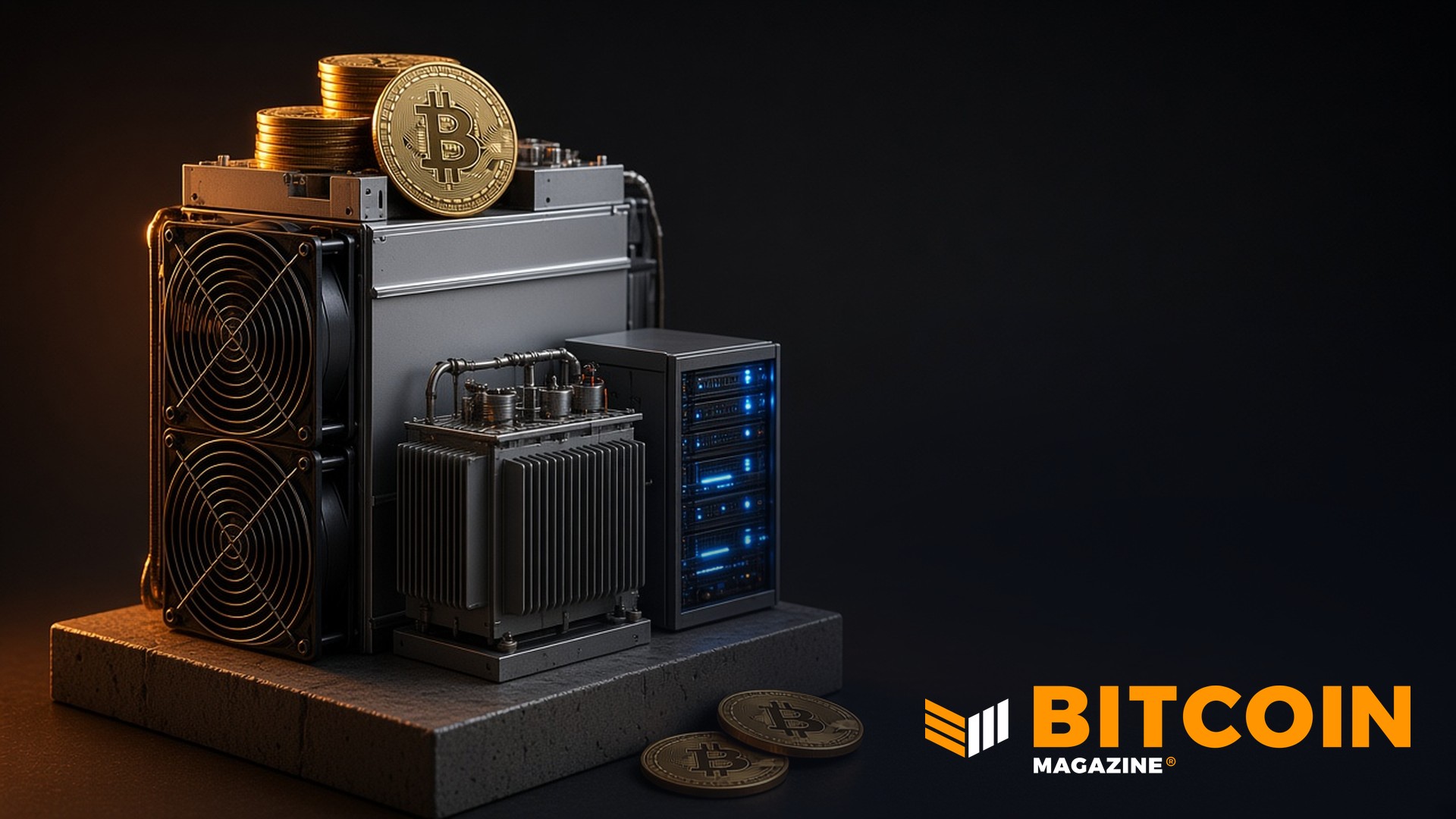
Bitcoin Magazine Ionic Digital (IOND) Sells 737 Bitcoin to Fund Data Center Buildout Ionic Digital (IOND) sold about 737 bitcoin a...

XRP Price Prediction: $1 Wall Breaks, What’s Next?
XRP price has lost the $1 mark, and buyers are running out of powder to defend the breakdown. The token floats at $0.95, extending...
Hashi Mainnet is Live With 20-Plus Partners, Bringing Bitcoin Finance to Sui at Scale
Grand Cayman, Cayman Islands, November 19th, 2026, Chainwire Anchorage Digital, Fluid, HoneyB, and Upshift support institutional a...