GENIUS Act, Anti-CBDC Act, and CLARITY Act Pass Procedural Vote in Congress
The U.S. House of Representatives voted 215-211 on July 16 to pass a procedural motion, allowing the GENIUS stablecoin bill, the Digital Asset Market Clarity Act, and the Anti-CBDC Surveillance State Act to proceed to fi...
Archive context
Older archive item. Useful for background and entity history, but not a fresh market-moving signal.
The U.S. House of Representatives voted 215-211 on July 16 to pass a procedural motion, allowing the GENIUS stablecoin bill, the Digital Asset Market Clarity Act, and the Anti-CBDC Surveillance State Act to proceed to final votes, marking a dramatic turnaround after President Trump’s Tuesday night Oval Office intervention.
The procedural victory came just 24 hours after an unexpected 196-223 defeat during “Crypto Week” that threatened to derail the administration’s comprehensive digital asset legislation agenda.
BREAKING: US HOUSE JUST PASSED #BITCOIN AND CRYPTO BILLS REVOTE ON MOTION
HERE WE GO!!! pic.twitter.com/bfC9pIXhEV
Zero Democrats supported the procedural motion, with the outcome determined entirely by Republican unity following Trump’s direct intervention.
The GENIUS Act has already passed the Senate 68-30 in June with bipartisan support, including 18 Democrats joining most Republicans.
The stablecoin-focused legislation could reach President Trump’s desk later this week, representing the first major cryptocurrency legislation to clear both chambers of Congress.
Trump’s late-evening meeting with 11 GOP holdouts Tuesday night proved decisive in securing the commitments needed to advance all three bills.
The president announced on Truth Social that the Republicans “have all agreed to vote tomorrow morning in favor of the Rule” after their Oval Office discussion.
Trump secures 11 GOP votes for GENIUS Act following crucial Oval Office meeting after unexpected 196-223 defeat as crypto legislation vote expected tomorrow.#GENIUSAct #Trumphttps://t.co/ZS9K5k7A9t
— Cryptonews.com (@cryptonews) July 16, 2025The breakthrough occurred despite persistent Republican concerns about potential central bank digital currency authorization, even though the GENIUS Act explicitly states it “shall not be construed as expanding the Fed’s authority to offer services directly to the public.“
Trump’s Personal Diplomacy Rescues Stalled Crypto AgendaThirteen Republicans initially voted against Tuesday’s procedural rule, citing fears about CBDC issuance despite clear prohibitive language in the legislation.
The revolt included prominent conservatives such as Reps. Marjorie Taylor Greene (Ga.), Chip Roy (Texas), and Andy Biggs (Ariz.).
The Republican resistance occurred despite the House leadership’s strategy to advance the Senate version without amendments, seeking to expedite delivery to Trump’s desk.
This approach was designed to avoid potential complications from extended congressional negotiations or bundling with more contentious crypto legislation.
The GENIUS Act establishes federal licensing requirements for stablecoin issuers and mandates full backing with U.S. dollars or equivalent liquid assets.
Consumer protections are included for bankruptcy scenarios, with stablecoin holders receiving priority payments over other creditors.
The timing coincided with the final push for crypto legislation during the administration’s designated “Crypto Week.”
The guidance removes “reputational risk” as a factor in bank supervision, creating major opportunities for traditional financial institutions to engage with digital assets.
The Anti-CBDC Surveillance State Act explicitly prohibits the Federal Reserve from issuing a central bank digital currency, while the CLARITY Act establishes comprehensive market structure regulations for digital assets.
The GENIUS Act is clear: the @federalreserve does not have authority to issue a CBDC.
Chairman @SenatorTimScott will continue pushing back on any overreach from the Federal Reserve. pic.twitter.com/1xEUWyd50V
Even more, Senate Banking Committee Chairman Tim Scott emphasized that the GENIUS Act makes it clear that the Federal Reserve lacks the authority to issue a CBDC.
This latest development comes as federal banking regulators issued guidance Monday clarifying that banks can provide cryptocurrency custody services in both fiduciary and non-fiduciary arrangements.
The post GENIUS Act, Anti-CBDC Act, and CLARITY Act Pass Procedural Vote in Congress appeared first on Cryptonews.
Why this matters
This cryptocurrency story adds another data point to the current market tape and is useful when read alongside nearby source coverage.
Original source
Read on CryptonewsRelated market context

Kalshi investigates suspicious trades tied to Trump’s press secretary pick
The investigation highlights the vulnerability of prediction markets to insider trading, potentially undermining their credibility...
HSBC and Ant Digital test AI-agent payments with tokenized deposits
AI-agent payments with tokenized deposits could revolutionize financial transactions, enhancing efficiency and security in digital...

LiquidAcre Selects Uphold to Power Digital Asset Infrastructure and Future Tokenized Real Estate Offerings
LiquidAcre, a financial technology company building a platform designed to expand access to real-world assets and digital financia...
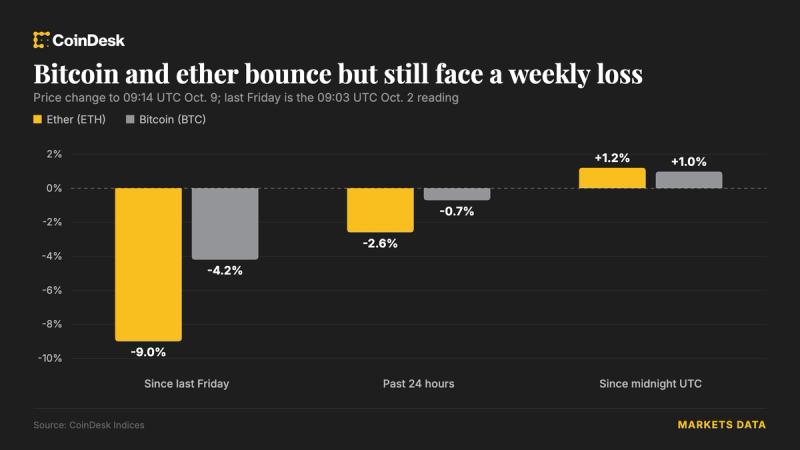
Bitcoin steadies near $82,500 after Trump rules out Iran strike before midterms
Bitcoin recovered to around $82,500 after Trump ruled out an Iran strike, but remains about 4% lower on the week, while ether has...

Citrini Research Says Tokenized Assets and AI Agents Make Crypto a Fundamentals Trade
Citrini Research published a report on Thursday arguing that AI agents and tokenized assets have opened a new paradigm of “fundame...
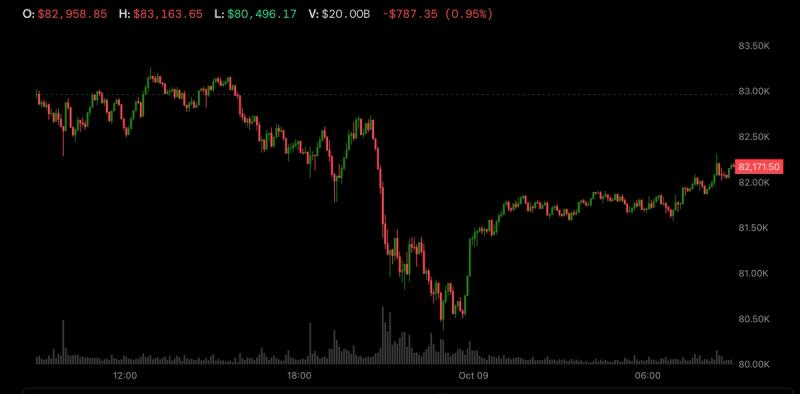
Bitcoin rebounds to $82,000 as Trump rules out Iran strikes, oil drops
Bitcoin rebounded to $82,000 as Trump ruled out an Iran strike before the midterms, while crypto security experts pushed back on “...