Japan Looks to a Digital Future
For a long time, Japan has been perceived as a tech-oriented country, exporting a futuristic pop culture to the world, and those who visit can actually find the neon-lit megacities they’re looking for, operating cleanly...
Archive context
Older archive item. Useful for background and entity history, but not a fresh market-moving signal.
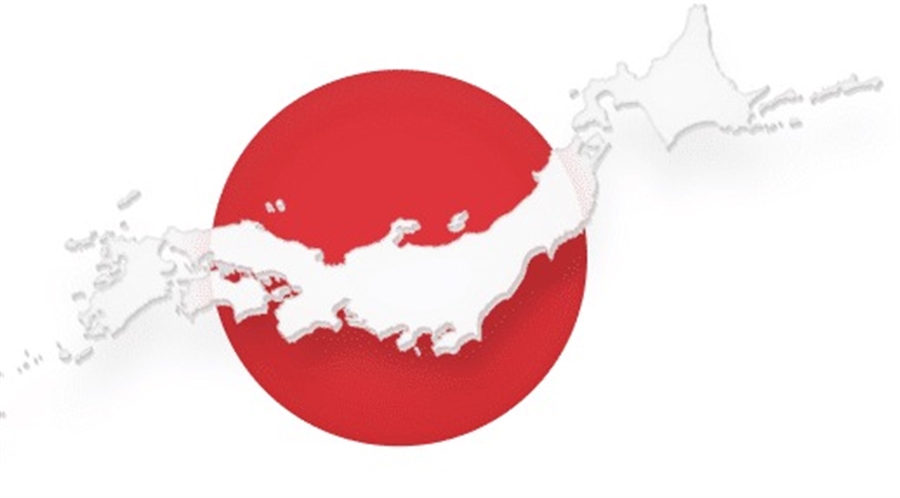
For a long time, Japan has been perceived as a tech-oriented country, exporting a futuristic pop culture to the world, and those who visit can actually find the neon-lit megacities they’re looking for, operating cleanly twenty-four hours a day. At the same time, though, there are aspects of Japanese daily life that remain firmly analogue, and have, up to now, shown little intention of shifting.
That applies in particular when it comes to money, as cash payments, and the carrying of cash, still prevail. This is not to say that cashless options are not also common, but it’s noticeable that cash still reigns. You can certainly encounter official documents being verified using hanko (an ink-saturated name stamp), and while it would be an exaggeration to say that fax machines are common, they are, occasionally, still utilized for certain kinds of business interactions.
A curious mixture, then, in which long-standing methods of doing business are still firmly central in everyday life, but where there is now a concerted push, coming from private corporations and from the government, to embrace web3, NFTs, and the metaverse, along with the broader concept of a digital recalibration.
The NFT White Paper
In the first half of last year, we saw the LDP (Japan’s ruling party) publish a document called NFT White Paper: Japan’s Strategy for the Web 3.0 Era. It’s a formal and serious crypto dive that focuses on issues such as IP and taxes, but as part of its concluding remarks, it states that “we should not allow our fear of policy failure or concern over potential side effects, to ruin our chances for future economic growth, the kind of which that arrives only once every few decades”.
Taxes are, in fact, a core issue in need of change, since current rules require crypto entities to pay taxes on any tokens listed on exchanges, even if they are unsold, and if some of the same tokens are held in a treasury, then those will be taxed too. This amounts to a tax on unrealized gains and makes Japan an inhospitable environment for crypto startups, an obstacle which is addressed in the white paper.
One crypto company that left Japan as a result of this difficult environment is Astar Network, which relocated to Singapore, and whose founder, Sota Watanabe, established a program to assist other Japanese crypto companies in a similar position. With both Singapore and Hong Kong maneuvering to become Asian crypto capitals, Japan will need to act decisively if it is to compete.
A Japanese Metaverse
In October of the same year, the NFT White Paper was published and web3 momentum was gained when Prime Minister Fumio Kishida gave a policy speech in which he emphasized a desire to “promote efforts to expand the use of Web 3.0 services that utilize the Metaverse and NFTs.” This was mentioned alongside a reference to integrating Japan’s optional personal ID cards (called My Number cards) with health insurance cards, with a “focus on supporting the social implementation of digital technology,” all of which, taken together, form part of Japan’s move towards digital transformation.
This brings us to the latest developments in Japan, this time in the private sector, with plans announced last month for the launch of a corporate partnership called the Japan Metaverse Economic Zone. There will be ten companies involved in the project, including Mitsubishi, Fujitsu, Mizuho Bank, and JCB, and it will be built on a metaverse infrastructure provisionally named Ryugukoku.
The purpose is to integrate enterprise into a virtual environment, and the world of gaming exerts a heavy influence on the plans. Infrastructure is being constructed using a framework by JP Games, and Fujitsu refers in its press release, when describing Ryugukoku, to “an online alternate-world role-playing game.” Gamification, it seems, may become a central aspect of corporate Japan’s web3 strategy.
CBDCs and a Digital Yen
It’s been reported that the Bank of Japan is planning a pilot scheme of a digital yen CBDC, to be conducted from April 2023. This will involve private financial institutions and simulated transactions, but it ties in with the previously mentioned integration of personal ID cards and health insurance cards, all of which streamline together into digitized means of conducting daily transactions and bureaucratic tasks.
It should be noted, though, that although both CBDCs and crypto (including NFTs and web3 protocols) provide digital ways of transacting, they are actually at odds with one another. The key difference is that crypto utilizes public, decentralized blockchains. This means that no-one can control them, there are no gatekeepers, and users have absolute custody over their own assets and interactions.
In contrast, a CBDC is the polar opposite of this, as it utilizes a strongly centralized ledger (which may or not be a blockchain) with a single point of control. While crypto moves us away from centrally controlled money, CBDCs bring money further under the control of central banks, bureaucrats and politicians.
As such, there are contradictions in Japan’s plans. Talk of web3, NFTs and gamified metaverse sounds, potentially, like an embrace of decentralization, and there appears to be a clear recognition that crypto tax rules need to be changed in order for crypto companies to thrive in Japan.
At the same time, though, it can be argued that CBDCs veer in the opposite direction, and don’t align with the values, most obviously decentralization and personal custody of one’s own assets, from which the crypto industry emerged. What’s more, when it comes to Japan there is no common consensus, in what is often a socially conservative society, on whether a digital transformation is desirable at all, regardless of the degree to which it might be decentralized.
This article was written by Sam White at www.financemagnates.com.Why this matters
This cryptocurrency story adds another data point to the current market tape and is useful when read alongside nearby source coverage.
Original source
Read on Finance MagnatesRelated market context

Ethereum Price Prediction: Is Tom Lee’s $25K ETH Target Too Ambitious?
Tom Lee’s $10,000 Ethereum price prediction implies a 1000% move from ETH’s current price at around $2,500. BitMine’s accumulation...

Will AI Break Crypto Encryption? Ethereum’s Vitalik Buterin Weighs In on 'Bunker Mode' Shift
Ethereum co-founder Vitalik Buterin thinks the crypto industry needs to make sure encryption is both quantum and AI-resistant.
Ethereum open interest rose 2.3% in ETH on Binance as its dollar value fell 6.6%
Ethereum open interest in Binance’s ETHUSDT futures contract was 2.27% higher in ETH on Thursday, Oct. 8, over the last 48 hours,...

Vitalik Warns AI Math Could Threaten Crypto Keys Before Quantum Computing Arrives
Key Takeaways: Vitalik Buterin states that the rise of today’s cryptography is outpaced by AI-accelerated mathematics. In addition...

Ripple Custody Adds Canton Network Support, Bringing CC and CIP-56 Into One Vault
Key Takeaways: Ripple Custody 1.43 adds support for Canton Network, CC and CIP-56 tokens. Institutions can be given the same custo...

Citrini Research Says Tokenized Assets and AI Agents Make Crypto a Fundamentals Trade
Citrini Research published a report on Thursday arguing that AI agents and tokenized assets have opened a new paradigm of “fundame...