JPMorgan Expects Major Changes Coming to Crypto Industry and Regulation Post FTX Collapse
JPMorgan has outlined key changes it expects in the crypto industry and its regulation following the collapse of crypto exchange FTX. The global investment bank envisages several new regulatory initiatives, including tho...
Archive context
Older archive item. Useful for background and entity history, but not a fresh market-moving signal.
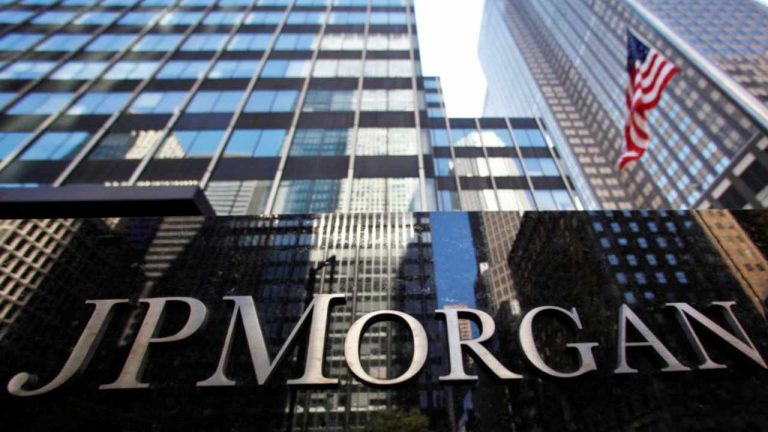
JPMorgan has outlined key changes it expects in the crypto industry and its regulation following the collapse of crypto exchange FTX. The global investment bank envisages several new regulatory initiatives, including those focusing on custody, customer asset protection, and transparency.
JPMorgan Expects Major Changes in Crypto Industry Post FTX MeltdownGlobal investment bank JPMorgan published a report Thursday outlining major changes it expects to happen in the crypto industry following the collapse of cryptocurrency exchange FTX.
Global strategist Nikolaos Panigirtzoglou explained that “Not only has the collapse of FTX and its sister company Alameda Research created a cascade of crypto entity collapse and suspension of withdrawals,” but it is also “likely to increase investor and regulatory pressure on crypto entities to disclose more information about their balance sheets.”
Panigirtzoglou proceeded to list the main changes JPMorgan expects after the FTX meltdown. Firstly, he wrote:
Existing regulatory initiatives already underway are likely to be brought forward.
The JPMorgan strategist expects the European Union’s Markets in Crypto Assets (MiCA) bill to receive final approval before year-end and the regulation to take effect at some point in 2024.
As for the U.S., he explained that “regulatory initiatives attracted more interest following Terra’s collapse,” adding:
Our guess is that there would be even more urgency following the FTX collapse.
“A key debate among U.S. regulators centers around the classification of cryptocurrencies as either securities or commodities,” Panigirtzoglou continued.
The chairman of the U.S. Securities and Exchange Commission (SEC), Gary Gensler, has said that bitcoin is a commodity whereas most other crypto tokens are securities. However, several bills have been introduced in Congress to make the Commodity Futures Trading Commission (CFTC) the primary regulator of crypto assets.
JPMorgan also envisages:
New regulatory initiatives are likely to emerge focusing on custody and protection of customers’ digital assets as in the traditional financial system.
Noting that many retail crypto investors have already moved to self-custody their cryptocurrencies using hardware wallets, the strategist described: “The main beneficiaries post FTX collapse are institutional crypto custodians … Over time these trusted custodians will likely dominate over relatively smaller crypto-native custodians or crypto exchanges.”
Next, “New regulatory initiatives are likely to emerge focusing on unbundling of broker, trading, lending, clearing, and custody activities as in the traditional financial system,” the JPMorgan report adds, noting:
This unbundling will have most implications for exchanges which like FTX combined all these activities raising issues about customers’ asset protection, market manipulation, and conflicts of interest.
Furthermore, “New regulatory initiatives are likely to emerge focusing on transparency mandating regular reporting and auditing of reserves, assets, and liabilities across major crypto entities,” the JPMorgan strategist detailed.
Another major change identified by the investment bank is that “Crypto derivative markets will likely see a shift into regulated venues with CME emerging as a winner.”
Panigirtzoglou also discussed decentralized exchanges (DEX), noting that they face several hurdles until decentralized finance (defi) becomes mainstream. “For larger institutions, DEXs typically would not suffice for their larger orders due to slower transaction speed or their trading strategies and order size to be traceable on the blockchain,” the JPMorgan strategist opined.
Do you agree with JPMorgan’s analysis? Let us know in the comments section below.
Why this matters
This cryptocurrency story adds another data point to the current market tape and is useful when read alongside nearby source coverage.
Original source
Read on Bitcoin NewsRelated market context
Did the Crypto Industry Blow Its Best Chance at Regulatory Clarity? Patrick McHenry Thinks So
Law and Ledger is a news segment focusing on crypto legal news, brought to you by Kelman Law – A law firm focused on digital asset...

CFTC Says US-Regulated Exchanges Can Begin Trading Individual-Stock Perpetual Futures
TL;DR: CFTC chairman Michael Selig said on November 3 that individual-equity perpetual futures can begin trading on appropriately...

LIVE – Why Is Crypto Down? Jensen Huang Chinese Spy Scandal Sends AI Stocks Into Chaos
We’re back to the same question again: Why is crypto down? Bitcoin and altcoins are taking another beating as Wall Street’s AI tra...

Coinbase Explains Cold-Storage Defences After Binance Breach Shakes Crypto Industry
TL;DR: Coinbase says it was not affected by the reported Binance hot-wallet incident and that more than 99% of customer assets are...
TD Cowen Gives Stablecoin Yield Ban 10% Odds as Banks Plan Push in Democrat-Led Congress
Bitcoin Magazine TD Cowen Gives Stablecoin Yield Ban 10% Odds as Banks Plan Push in Democrat-Led Congress Banks will try again to...

US crypto regulatory delays could push tokenization firms toward Europe and UAE, Brickken CEO says
Regulatory uncertainty in the US may drive tokenization firms to more stable jurisdictions, potentially shifting innovation and in...