Mental health and crypto: How does volatility effect well-being?
Crypto addiction has become a new disease for investors: Who is affected, how to understand that you have problems and who can help.
Archive context
Older archive item. Useful for background and entity history, but not a fresh market-moving signal.

Crypto addiction has become a new disease for investors: Who is affected, how to understand that you have problems and who can help.
Why this matters
This cryptocurrency story adds another data point to the current market tape and is useful when read alongside nearby source coverage.
Original source
Read on CointelegraphRelated market context

AI Tops Fed Survey of Financial Risks—Why Crypto Investors Should Pay Attention
AI has become the most frequently cited financial-stability risk in a survey published with the Federal Reserve’s latest report, b...

Bitcoin selloff tests resolve of committed investors
The Bitcoin selloff highlights the volatility and risks in cryptocurrency markets, testing investor resilience and impacting broad...

AI Agents Can Now Buy Computing With Bitcoin—Does Lightning Have Its Use Case?
AI agents have a new way to spend Bitcoin: buying the computing needed to keep working. Lightning Labs has launched pi402, a tool...

Jupiter Crypto Trading on Its Own Fundamentals: JUP USD Breaks Away From Market Sell-Off
Jupiter (JUP) is refusing to follow the crypto market lower. While Bitcoin and major altcoins are experiencing a bloodbath, the So...

Bitcoin’s $67,000 crash puts $57 billion holder cluster at risk as ETF investors flee
Coinbase’s November 10 distribution placed roughly 855,000 BTC near current prices, leaving sustained buying central to the suppor...
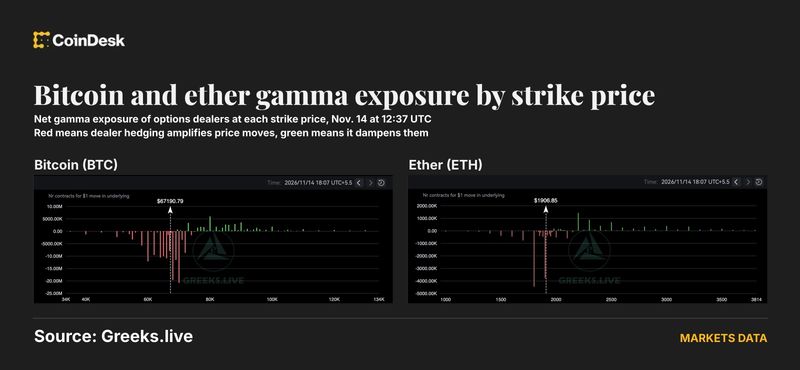
A behind the scenes force may amplify bitcoin and ether price volatility
Both bitcoin and ether are trading in price ranges where market makers and dealers may add to market volatility.