OSCE Trains Uzbekistan Law Enforcement to Track and Seize Crypto, Search Dark Web
The Organization for Security and Co-operation in Europe (OSCE) has set out to teach law enforcement officers in Uzbekistan how to conduct crypto and dark web investigations. The regional body recently organized a traini...
Archive context
Older archive item. Useful for background and entity history, but not a fresh market-moving signal.
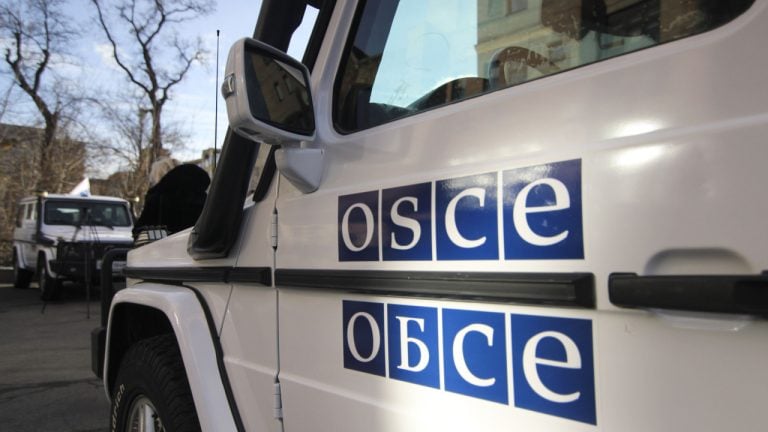
The Organization for Security and Co-operation in Europe (OSCE) has set out to teach law enforcement officers in Uzbekistan how to conduct crypto and dark web investigations. The regional body recently organized a training course for employees of the country’s security agencies in Tashkent.
Uzbekistan Police and Security Agents Attend OSCE Course on CryptocurrenciesRepresentatives of Uzbekistan’s Prosecutor General’s Office, the Ministry of Internal Affairs, and the State Security Service have taken a training course on cryptocurrency and dark web investigations held by the OSCE between Oct. 17 and 21 in the capital Tashkent.
The course was organized by the OSCE Transnational Threats Department in co-operation with the OSCE Project Co-ordinator in Uzbekistan and the Academy of the Prosecutor General’s Office, the intergovernmental security body said on its website.
“Participants learned about the main concepts and key trends in the areas of internetworking, anonymity and encryption, cryptocurrencies, obfuscation techniques, dark web, and Tor networks,” the announcement detailed.
They also practiced various approaches and methods for seizure of crypto assets, blockchain analysis, and darknet searching. The course was based on materials provided by the European Cybercrime Training and Education Group (ECTEG).
A new computer classroom donated by the OSCE to the Prosecutor General’s Academy was inaugurated before the course by Deputy Prosecutor General of Uzbekistan Erkin Yuldashev and Acting OSCE Project Co-ordinator in Uzbekistan Hans-Ulrich Ihm.
Crypto Training in Region to Continue Throughout Next YearDigital technologies have been transforming the criminal landscape, noted Evgeniy Kolenko who heads the Prosecutor General’s Academy. He insisted that educating law enforcement in this field needs a long-term and systematic approach.
“Cybercrime education requires adequate equipment – both hardware and software,” added Gayrat Musaev, Head of the Academy’s Department for Implementation of Information and Communication Technologies and Information Security. Musaev also praised the new dark web lab.
The OSCE course is the first of this kind in Uzbekistan within the second phase of the “Capacity Building on Combating Cybercrime in Central Asia” project funded by the U.S., Germany, and South Korea. Similar training activities will continue across the region throughout 2022 and 2023.
This year, the government in Tashkent has been taking steps to more comprehensively regulate Uzbekistan’s crypto sector. In the spring, President Shavkat Mirziyoyev issued a decree providing definitions for terms like crypto assets and exchange. New registration rules for crypto miners were presented in June and earlier in October, Uzbekistan introduced monthly fees for crypto companies.
Do you think law enforcement authorities in Central Asia will continue to increase focus on the crypto space? Share your thoughts on the subject in the comments section below.
Why this matters
This cryptocurrency story adds another data point to the current market tape and is useful when read alongside nearby source coverage.
Original source
Read on Bitcoin NewsRelated market context

Your iPhone Duo Under Attack? Binance Flags Dangerous iOS Security Flaw
Binance has warned Apple users about a dangerous iOS vulnerability that could expose crypto wallets, private keys, and login crede...

BlackRock: Security Fears Are Driving Bitcoin Whales Into IBIT
Bitcoin Magazine BlackRock: Security Fears Are Driving Bitcoin Whales Into IBIT Large bitcoin holders are swapping coins they guar...

Ava Labs exec says NYSE deal marks end of blockchain’s ‘general purpose era’
The NYSE's move to adopt a specialized blockchain signals a shift towards tailored blockchain solutions, potentially reshaping fin...
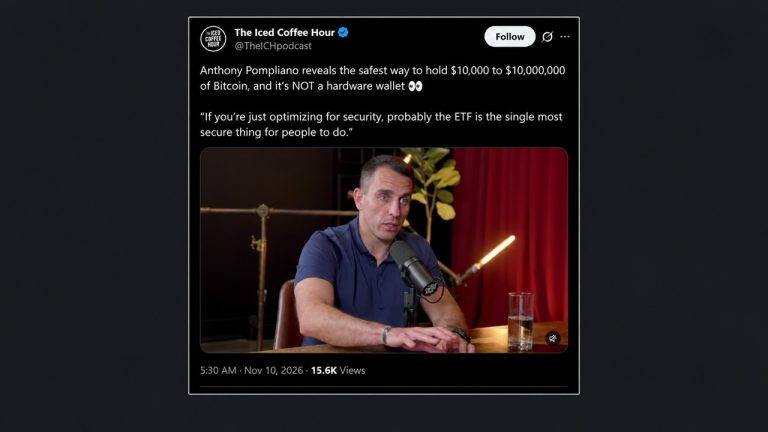
Pompliano Says a Bitcoin ETF Beats Hardware Wallets on Security
Anthony Pompliano says a spot bitcoin exchange-traded fund (ETF) is “the single most secure thing” for people holding $10,000 to $...

Core Scientific projects $1.8 billion annual run-rate as it exits Bitcoin mining for AI colocation
Core Scientific's pivot to AI colocation could stabilize revenue streams, reducing reliance on volatile Bitcoin markets and enhanc...

South Korea Tightens Crypto Exchange Defenses After Binance’s $6.3B Security Breach
Key Takeaways: South Korea announced that it will examine local crypto exchanges following a $6.3 billion hack at Binance. The exc...