Polkadot To Increase Parachains By 10X, Will This Support Free-Falling DOT?
Polkadot, a platform aiming to drive blockchain interoperability, wants to increase the number of parachains from 100 to 1,000 in a planned upgrade. The network, which remains one of the most valuable by market cap, has,...
Archive context
Older archive item. Useful for background and entity history, but not a fresh market-moving signal.

Polkadot, a platform aiming to drive blockchain interoperability, wants to increase the number of parachains from 100 to 1,000 in a planned upgrade. The network, which remains one of the most valuable by market cap, has, like most layer 1 networks, suffered from dropping user activity over the past months.
DOT Is Down Over 90%The dip follows the crypto winter in 2022. However, the upcoming upgrade might catalyze demand, even supporting DOT, the native currency.
DOT is changing hands at $4 at spot rates, down by over 90% when prices soared to as high as $55 in the last bull market. Even though the contraction has significantly impacted prices, other altcoins, including Solana and Algorand, suffered the same fate.
Even so, with the Asynchronous backing update, whether DOT will find support is yet to be seen. The reveal on September 21 didn’t move DOT, and the coin is edging lower, towards 2023 lows.
Polkadot developers are now setting their eyes on Asynchronous backing. Sophia Gold, the Engineering Lead at Parity Technologies, said the update is “the most significant evolution of parachain consensus since we launched parachains almost two years ago.”
Their goal is to increase the number of parachains to 1,000 by the end of 2024, effectively boosting the network’s transaction processing speeds to over 1 million.
Asynchronous backing enables flexible scheduling for our future scaling work through elastic scaling and instantaneous core time. We have a credible roadmap to get Polkadot to support 1,000 parachains and 1m+ transactions per second. The design is there – we know how to scale Polkadot for the indefinite future.
The Asynchronous Backing: What It Means For PolkadotWith this update, Polkadot is introducing a feature called “pipelining.” This means multiple parachain blocks can be processed simultaneously instead of waiting for one block to be fully validated and included on the relay chain before moving on to the next one.
Accordingly, Polkadot would process more transactions every second at any instance, effectively scaling the network without relying on layer-2 solutions common in Ethereum or Bitcoin, for example. Since “pipelining” will enhance throughput, Polkadot will have a higher capacity. For this reason, the developer plans to half blockchain validation time from 12 to 6 seconds.
A key feature about Asynchronous backing is that any parachain block that fails to be added to the “relay chain” on the first attempt can be reused. Developers note that this will significantly improve network efficiency due to reduced wastage.
It is the combination of pipelining and reusing of parachain blocks that Polkadot developers say opens the door for the number of Parachains to be increased from the current 100 to 1,000. With enhanced on-chain scalability, running more parachains can be more feasible.
Why this matters
This cryptocurrency story adds another data point to the current market tape and is useful when read alongside nearby source coverage.
Original source
Read on NewsBTCRelated market context

Binance Restores 15 Networks After $6.3B Hack While Outflows Surge to $5.8B
Key Takeaways: Binance was able to resume withdrawals for 15 blockchain networks. More than $5.8 billion in net withdrawals were s...
Mercado Bitcoin Plans Sui Asset Access in Brazil With Lending and Tokenization Links
TL;DR: Mercado Bitcoin and Sui have outlined access to SUI and stablecoins, with USDsui collateral and tokenized assets in scope....
XRP Ledger Reviews Two Token-Authorization Fixes Ahead of Any Validator Vote
TL;DR: Two open XRP Ledger proposals address authorization checks for liquidity-pool tokens and existing trust-line balances. The...
Ondo Brings Seven Tokenized Investment Portfolios to Solana
TL;DR: Ondo launched seven investment-portfolio tokens on Solana for eligible non-US investors. Its reported $45 million in earlie...

Hanwha Chooses Chainlink Data and CCIP for Global Tokenization Platform
TL;DR: The proposal covers more than representing an asset with an on-chain token. A strategic partnership does not establish that...
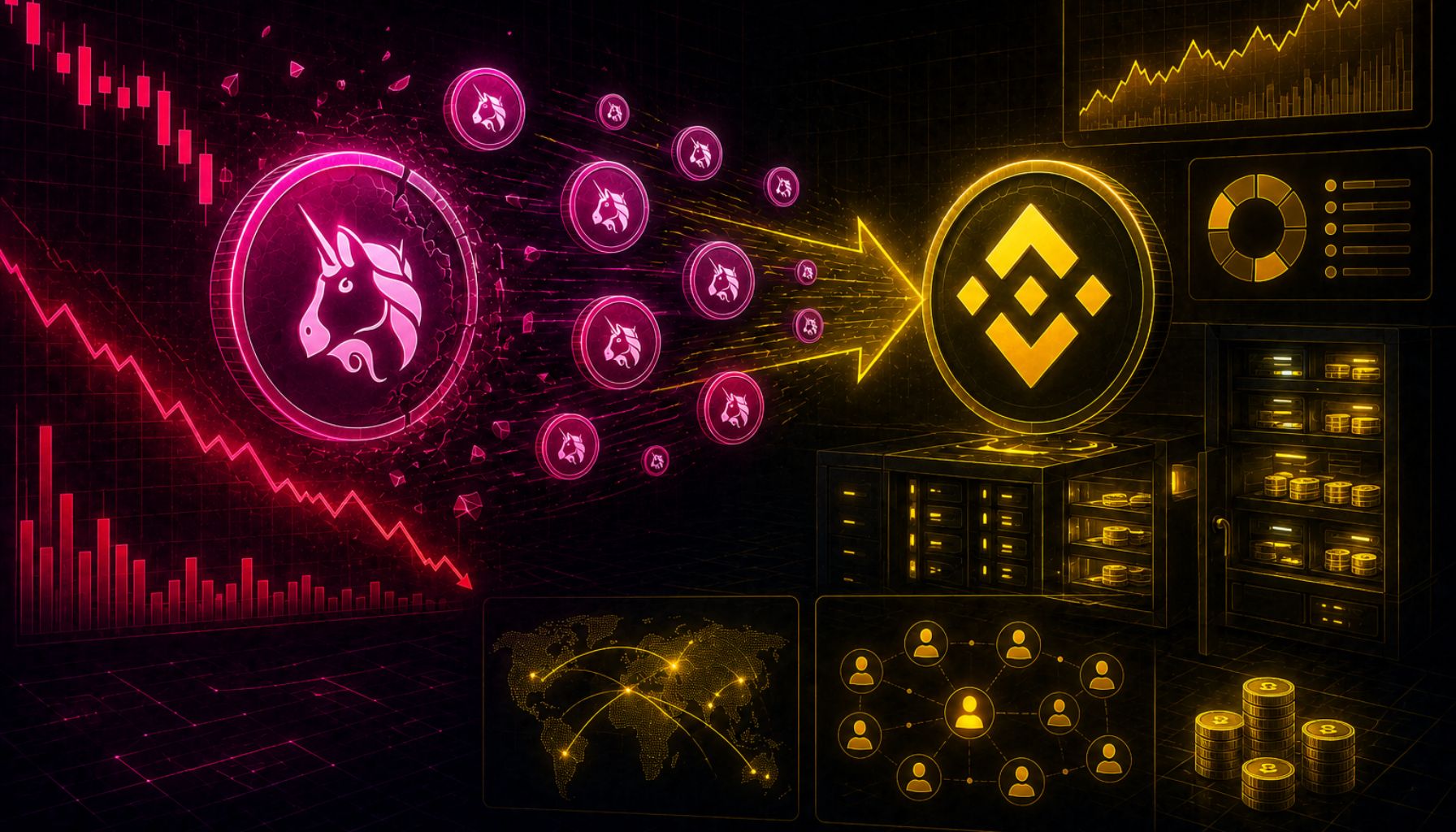
Uniswap Opens TJAR Fee Conversion Beyond Protocol as Robinhood Joins
TL;DR: Searchers compete to exchange the chosen payout token for assets accumulated in the jar. Open searcher competition does not...