Robinhood Shares Drop 20% After FTX Turmoil
The share price of NASDAQ-listed zero-free trading app Robinhood (ticker:HOOD) fell 19% on Tuesday after information that Binance, one of the leading cryptocurrency exchanges, agreed to acquire FTX, a crypto platform own...
Archive context
Older archive item. Useful for background and entity history, but not a fresh market-moving signal.

The share price of NASDAQ-listed zero-free trading app Robinhood (ticker:HOOD) fell 19% on Tuesday after information that Binance, one of the leading cryptocurrency exchanges, agreed to acquire FTX, a crypto platform owned by, a soon-to-be former billionaire, Sam Bankman-Fried.
The sharp price drop occurs amid concerns that the cryptocurrency mogul, who bought a 7.6% stake in Robinhood in May 2022, will have to sell at least some of it to solve his company's current crisis. This week, the liquidity of the FTX exchange collapsed as investors rushed to withdraw their funds following worrying news about the financial balance sheet of Alameda Research, the other cryptocurrency firm owned by Bankman-Fried.
The FTX CEO currently holds 56,273,469 shares in HOOD. Tuesday's steep decline brought the price from $11.72 to $9.74, which is the lowest price it has been in more than two weeks. For the company, it was the steepest one-day decline since August 2021. The whole of 2022 has definitely not been a successful year for Robinhood as year-to-date (YTD) shares have lost 45%.
Robinhood debuted on the stock market in July 2021, selling for $38 per share and raising $2 billion from investors. The company rose for only a short while, reaching a record price of $85 a few days after the initial public offering (IPO), and has been in a clear downward trend ever since.
Losses and Workforce Cuts
The major US commission-free stock trading and investing app reported a quarterly net loss of $175 million last week. While the total net revenue increased by 14% to $361 million compared to the previous quarter, revenue in the cryptocurrency segment fell by 12% to $51 million.
Robinhood states, that the volatile market environment and risk aversion are the main reason for the continued slump and the lowering number of monthly active users (MAU). During the last quarter, the company's user base fell to 12.1 million from the previously reported 14 million.
Current industry turmoil has caused two rounds of layoffs; first, in April 2022, when Robinhood laid off 9% of its workforce and second, in August 2022, when an additional 23% of the staff was left unemployed.
This article was written by Damian Chmiel at www.financemagnates.com.Why this matters
This cryptocurrency story adds another data point to the current market tape and is useful when read alongside nearby source coverage.
Original source
Read on Finance MagnatesRelated market context
Amundi Boosts Strategy (MSTR) Stake 44% to $291 Million as Shares Slide
Bitcoin Magazine Amundi Boosts Strategy (MSTR) Stake 44% to $291 Million as Shares Slide Amundi, Europe’s largest asset manager, r...
Bitcoin Price Drops Below $74,000 as Nvidia Probe and Regulation Fears Spark $1 Billion in Liquidations
Bitcoin Magazine Bitcoin Price Drops Below $74,000 as Nvidia Probe and Regulation Fears Spark $1 Billion in Liquidations Bitcoin p...
Dinari Adds Broadridge Voting Rails to Tokenized US Shares
TL;DR: Tokenized stocks have often promised easier access and faster settlement, but a less glamorous question keeps surfacing: ca...

Galaxy, Exodus Tokenized Shares Headed to Orca-Powered Solana Venue in 2027
A Solana venue for tokenized shares of Galaxy Digital, Exodus Movement and Forward Industries plans to operate without registering...
Strive (ASST) Adds 29 Bitcoin for $2.2 Million as Weekly Buys Slow After Crossing 43,000
Bitcoin Magazine Strive (ASST) Adds 29 Bitcoin for $2.2 Million as Weekly Buys Slow After Crossing 43,000 Strive bought another 29...
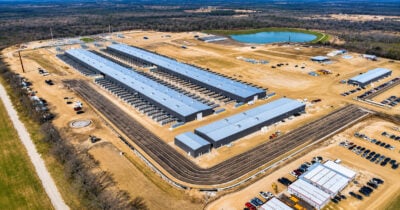
CoinShares says data center bans could make Bitcoin miners’ power assets more valuable
Data center restrictions may boost existing Bitcoin mining asset values, highlighting the growing importance of regulatory landsca...