Senators Introduce Bill to Limit Use of China’s Digital Currency in the US — ‘This Is a Major Financial and Surveillance Risk’
Several U.S. lawmakers have introduced a bill to prohibit app platforms in the country from hosting apps that enable transactions using China’s central bank digital currency, the digital yuan. “The Chinese Communist Part...
Archive context
Older archive item. Useful for background and entity history, but not a fresh market-moving signal.
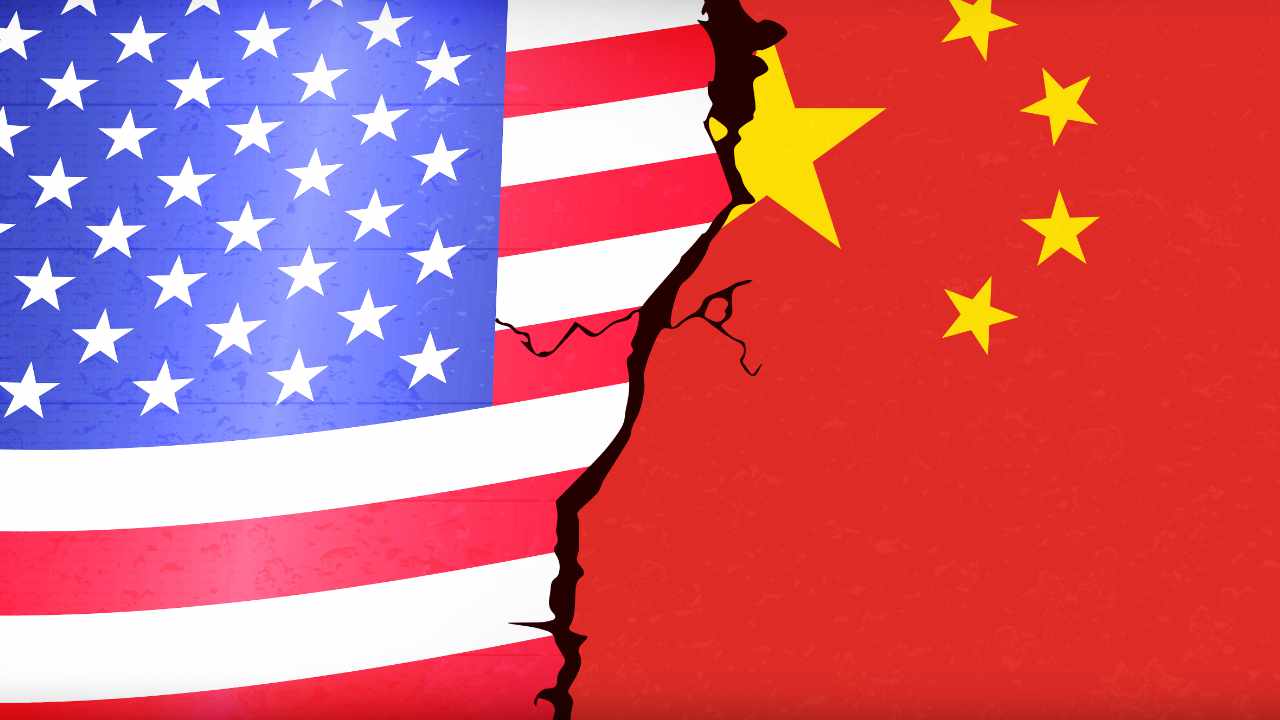
Several U.S. lawmakers have introduced a bill to prohibit app platforms in the country from hosting apps that enable transactions using China’s central bank digital currency, the digital yuan. “The Chinese Communist Party will use its digital currency to control and spy on anyone who uses it. We can’t give China that chance,” said the senator who introduced the bill.
U.S. Senator Tom Cotton (R-Arkansas) introduced the “Defending Americans from Authoritarian Digital Currencies Act” Wednesday. The bill is co-sponsored by Senators Mike Braun (R-Indiana) and Marco Rubio (R-Florida).
According to the text of the bill, the legislation seeks “To prohibit the use of the digital currency payment system operated by the government of the People’s Republic of China, and for other purposes.”
Senator Cotton commented:
The Chinese Communist Party will use its digital currency to control and spy on anyone who uses it. We can’t give China that chance.
Specifically, the legislation prohibits “app platforms in the United States from hosting apps that enable transactions using the Chinese Communist Party’s digital yuan (e-CNY),” the announcement details.
“The Chinese Communist Party’s digital yuan allows direct control and access to the financial lives of individuals. We cannot allow this authoritarian regime to use their state-controlled digital currency as an instrument to infiltrate our economy and the private information of American citizens,” said Senator Braun.
Senator Rubio opined, “It makes no sense to tie ourselves to the digital currency of a genocidal regime that hates us and wants to replace us on the world stage,” emphasizing:
This is a major financial and surveillance risk that the United States cannot afford to make.
China has been actively developing and testing its central bank digital currency (CBDC).
According to the latest data from the People’s Bank of China (PBOC), the digital yuan had 261 million unique users at the end of 2021. In addition, transactions worth more than 87.5 billion yuan ($13.8 billion) have been made using the e-CNY. In April, the Chinese central bank added more test cities for the digital yuan.
What do you think about the Defending Americans from Authoritarian Digital Currencies Act? Let us know in the comments section below.
Why this matters
This cryptocurrency story adds another data point to the current market tape and is useful when read alongside nearby source coverage.
Original source
Read on Bitcoin NewsRelated market context

AI Tops Fed Survey of Financial Risks—Why Crypto Investors Should Pay Attention
AI has become the most frequently cited financial-stability risk in a survey published with the Federal Reserve’s latest report, b...

Bitcoin ETFs Shed $2.35 Billion in Two Weeks as BlackRock’s Outflow Streak Hits 11
Bitcoin ETF outflows have reached $2.347 billion across the first two completed November trading weeks, leaving a persistent hole...

US seizes $1.2 billion frozen after North Korean Binance hack
The US Department of Justice (DoJ) yesterday announced the seizure of $1.2 billion in cryptocurrency stolen from Binance last mont...

Swiss National Bank holds $109.3 million in Strategy shares, a side door to Bitcoin
The SNB's indirect Bitcoin exposure highlights how digital assets are subtly integrating into traditional financial systems despit...

US Bitcoin ETFs Shed $1.91 Billion in Seven Sessions
BlackRock’s IBIT accounted for about $1.42 billion of the withdrawals as Binance Research pointed to tighter financial conditions...

Czech National Bank issues its first bonds on a blockchain ledger
The Czech National Bank's blockchain bond issuance could revolutionize financial markets by enhancing transaction speed and reduci...