South Korea’s Top Bankers Urge Lawmakers to Ease Crypto Exchange Partnership Rules
Top banking institutions in South Korea have called on lawmakers to relax regulations that restrict partnerships between banks and crypto exchanges.The request was made during a meeting on Wednesday with members of the r...
Archive context
Older archive item. Useful for background and entity history, but not a fresh market-moving signal.

Top banking institutions in South Korea have called on lawmakers to relax regulations that restrict partnerships between banks and crypto exchanges.
The request was made during a meeting on Wednesday with members of the ruling People Power Party, according to a report from local outlet Money Today.
Executives from the country’s five major commercial banks—KB Kookmin, Shinhan, Hana, Woori, and NH Nonghyup—alongside representatives from Jeonbuk Bank and Toss Bank, participated in the discussions.
Woori Bank Chief Calls for Multi-Bank Partnerships with Crypto ExchangesWoori Bank President Jung Jin-wan specifically urged policymakers to allow crypto exchanges to partner with multiple banks, arguing that the current one-to-one model presents risks to financial stability.
Under current South Korean law, crypto exchanges must establish formal partnerships with banks to offer fiat-to-crypto services.
This is part of the country’s anti-money laundering framework, requiring users to register real-name bank accounts for deposits and withdrawals.
However, the exclusive nature of these partnerships has led to disproportionate benefits for some banks.
For example, digital bank K-Bank saw explosive growth after forming a partnership with leading exchange Upbit in 2020.
South Korea's major banks are asking lawmakers to ease regulations on their partnerships with #crypto exchanges.
Banks want in on BTC! pic.twitter.com/d56b2SpBGd
According to Maeil Business News, its user base surged from 2.19 million to 6.6 million within a year and stood at 12.7 million by the end of 2024.
Jung emphasized that expanding the regulatory framework to allow one exchange to work with multiple banks would enhance consumer choice and better serve institutional clients.
This appeal comes as South Korean banks and crypto platforms prepare for an influx of institutional investors.
Regulators have begun easing restrictions, and exchanges like Upbit and Korbit are already seeing increased interest from corporations looking to open crypto accounts or manage digital assets, local media reports indicate.
South Korea Considers Allowing Foreign Crypto InvestmentLast week, South Korea’s top financial regulator indicated a potential policy shift that could allow foreign investors to access the domestic cryptocurrency market, provided that local exchanges meet strict anti-money laundering (AML) requirements.
Speaking at a seminar hosted at the National Assembly on Wednesday, Kim Sung-jin, head of the virtual asset division at the Financial Services Commission (FSC), said he “agrees with” the idea of opening the market to foreign investors.
Currently, foreign investors are barred from trading on South Korean crypto exchanges due to stringent know-your-customer (KYC) regulations.
Despite regulatory efforts, challenges persist.
Earlier this year, the Financial Intelligence Unit imposed a fine on Upbit, the country’s largest exchange, for allegedly processing transactions with unregistered foreign platforms.
The penalty has since been put on hold following a court injunction.
More recently, South Korean prosecutors launched a formal investigation into Bithumb, one of the country’s largest cryptocurrency exchanges, over allegations that company funds were misused to facilitate an apartment purchase for its former CEO.
The Seoul Southern District Prosecutors’ Office also executed a search and seizure operation at Bithumb’s headquarters in Yeoksam-dong.
South Korea remains a major player in the global crypto space, with March data showing that Upbit alone handled over $85 billion in trading volume.
The post South Korea’s Top Bankers Urge Lawmakers to Ease Crypto Exchange Partnership Rules appeared first on Cryptonews.
Why this matters
This cryptocurrency story adds another data point to the current market tape and is useful when read alongside nearby source coverage.
Original source
Read on CryptonewsRelated market context

Russia’s Central Bank Authorizes Sberbank to Exchange Cryptocurrencies
Bitcoin Magazine Russia’s Central Bank Authorizes Sberbank to Exchange Cryptocurrencies Russia’s central bank has added Sberbank t...
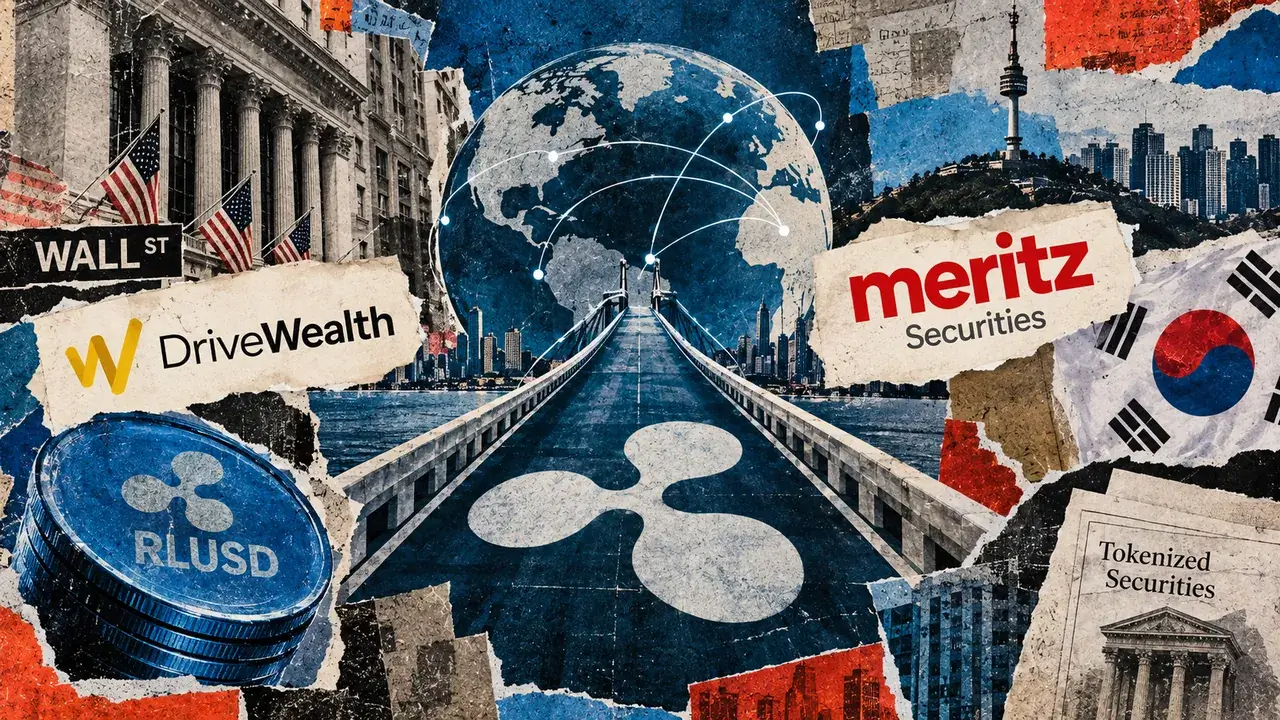
Ripple targets trillion-dollar securities markets with new US brokerage and South Korean deals
Ripple calls Meritz its fourth Korean institutional partner this year, with custody and tokenization cooperation to widen as regul...

Ripple’s Korean Expansion Reaches From Remittances to Government Bonds
Ripple’s Korean partnerships now connect cross-border business payments, bank-managed digital asset wallets, and blockchain-based...
Ripple Lands 4th Korea Deal, Bringing Custody and Tokenization to Meritz Securities
Key Takeaways: Ripple also signed an agreement with Meritz Securities, making it its 4th institutional deal in Korea this year. Th...

Kraken Parent Company Payward to Buy Saldo Bank in European Banking Push
Bitcoin Magazine Kraken Parent Company Payward to Buy Saldo Bank in European Banking Push Payward, the parent company of crypto ex...
EU Banking Regulator Takes Over Key Oversight of Circle’s USDC Stablecoin
The European Banking Authority (EBA) classified Circle's USDC as a significant e-money token under the Markets in Crypto-Assets Re...